
Traditionally, the value of art is determined by a blend of factors: the artist's reputation, historical significance, provenance, rarity, size, condition, quality, aesthetic appeal, emotional resonance, and prevailing market trends.
But this time, that tradition changed.
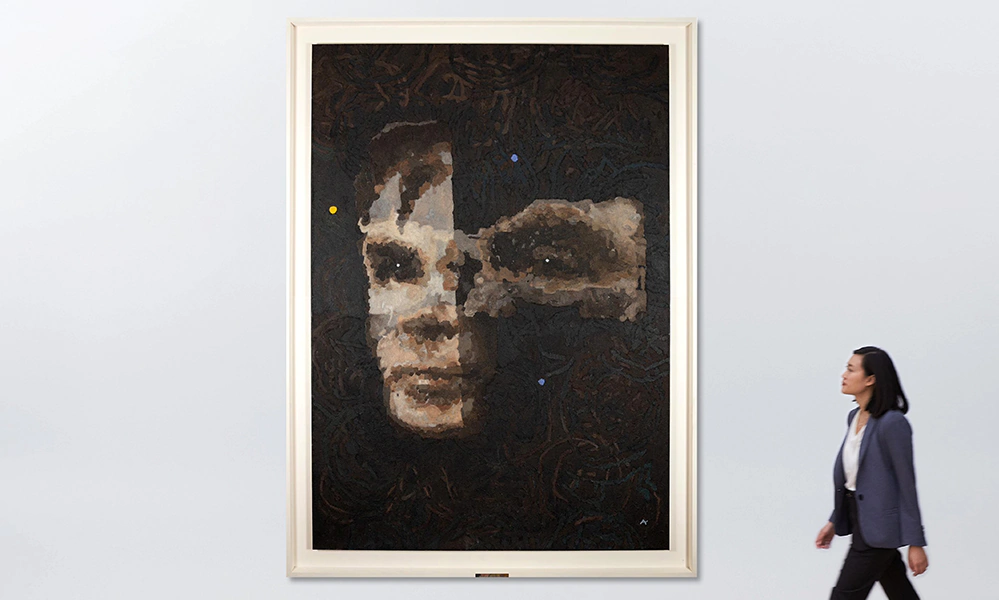
A striking example occurred when a 2.2-meter portrait of English mathematician Alan Turing commanded an astounding $1.08 million at a Sotheby's auction in New York.
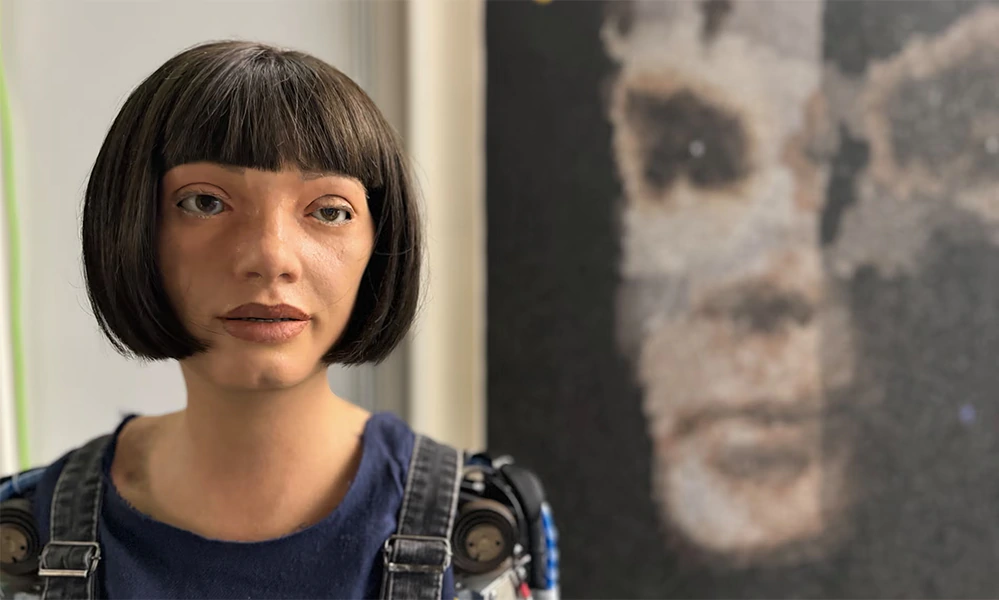
The artwork, which is titled "A.I. God. Portrait of Alan Turing," was created by Ai-Da, considered the world’s first ultra-realistic robot artist.
After 27 bids were placed on the work, the painting t smashed pre-sale expectations between $120,000 and $180,000 when it went under the hammer at Sotheby’s.
The world has seen the first an anatomically correct sex robot, and the first-ever robot that received citizenship.
And here, Ai-Da was considered the first robot to have received its own major exhibition back in 2022.
At the time, Ai-Da’s exhibition was planned to feature a series of "self-portraits," which the robot created by photographing itself in front of a mirror.
As a robot, Ai-Da receives information what its cameras-as-eyes see. The data is then processed using algorithms to transform the images into a set of coordinates, which then can be used to guide the robot's drawing hand.
The marvel of engineering was created over the course of two years by a team of programmers, roboticists, art experts and psychologists, and is continuously updated as AI technology improves.
Devised by Aidan Meller, a specialist in modern and contemporary art, the team created Ai-Da with the help of specialists at the universities of Oxford and Birmingham.
"The greatest artists in history grappled with their period of time, and both celebrated and questioned society’s shifts," Meller said.
As for how Ai-Da created this artwork, the robot first generated ideas through conversations with members of the studio, and had suggested creating an image of Turing during a discussion about "AI for good."
The team then asked Ai-Da about the style, color, content, tone and texture to use, and after things were agreed upon, the team made the robot work by letting it use its various sensors to look at a picture of Turing, and create the painting.
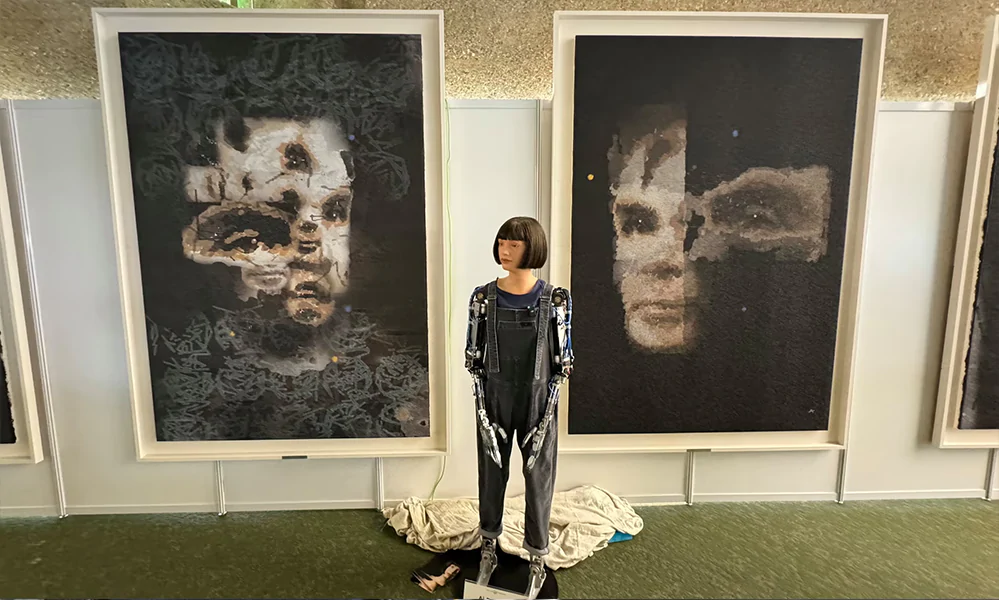
The artwork’s "muted tones and broken facial planes” seemingly suggested “the struggles Turing warned we will face when it comes to managing AI," Meller said.
Ai-Da’s works were "ethereal and haunting" and "continue to question where the power of AI will take us, and the global race to harness its power," he added.
“Today’s record-breaking sale price for the first artwork by a humanoid robot artist to go up for auction marks a moment in the history of modern and contemporary art and reflects the growing intersection between AI technology and the global art market,” the auction house said in a statement.
"The key value of my work is its capacity to serve as a catalyst for dialogue about emerging technologies," said Ai-Da, which uses AI to speak.
The robot added that "portrait of pioneer Alan Turing invites viewers to reflect on the God-like nature of AI and computing while considering the ethical and societal implications of these advancements."
In an interview back in 2022, Ai-Da responded to a question when asked whether the robot painted from imagination.
"I like to paint what I see. You can paint from imagination, I guess, if you have an imagination. I have been seeing different things to humans as I do not have consciousness."
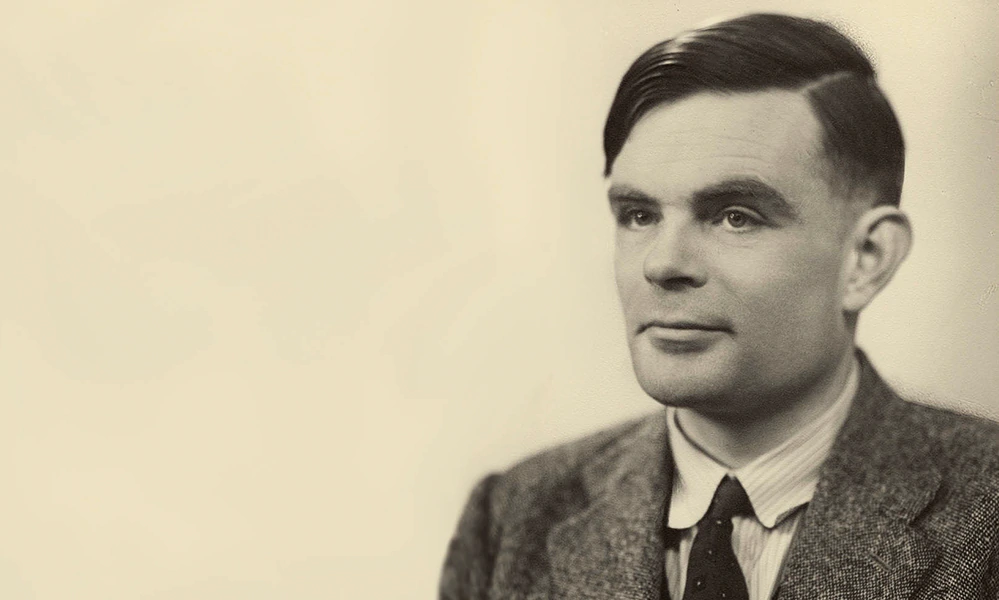
Alan Turing was a pioneering British mathematician, logician, and computer scientist, and was an early computer scientist.
In fact, he is widely regarded as one of the fathers of computer science, as well as AI.
He is known for formulating the concept of the Turing machine, an abstract device that could simulate any computer algorithm and thus laid the foundation for modern computing.
Turing was among the first who raised concerns about the use of AI in the 1950s, through his paper "Computing Machinery and Intelligence," where he proposed the "Turing Test" to assess a machine's ability to exhibit intelligent behavior indistinguishable from that of a human.
This test became a cornerstone in discussions of artificial intelligence.
In addition to his work as a scientist, Turing, born in 1912, also famously contributed in World War II, where he was part of the British code-breaking team at Bletchley Park was instrumental in deciphering the Nazi Germany's Enigma code. This work contributed to the Allied victory. His efforts to crack the codes included the invention of the "Bombe," an electromechanical device designed to help automate the decryption process.
Turing's life, however, was marked by tragedy. In 1952, he was prosecuted for homosexual acts, which were then illegal in the UK.
As part of his sentence, he underwent chemical castration, an experience that led to his career and personal life suffering greatly.
In 1954, he died under mysterious circumstances; his death was officially ruled a suicide by cyanide poisoning, though some suggest it may have been accidental.
His legacy, however, has been celebrated posthumously, with him being pardoned by the British government in 2013, and his contributions have earned him enduring respect across mathematics, computer science, and LGBTQ+ rights communities.
As for Ai-Da, the robot is designed to resemble a woman and is named after Ada Lovelace, who is considered the world’s first computer programmer.