Israel's Ministry of Diaspora Affairs and Combating Antisemitism released its latest annual report on global antisemitism for 2026, which for the first time included a ranking of the ten most influential figures promoting what the ministry describes as antisemitic and anti-Zionist content in 2025.
At the top of that list is American social media influencer Dan Bilzerian, whose placement has drawn significant attention given his background as a high-profile poker player turned lifestyle personality rather than a traditional political commentator.
The report, issued just before Holocaust Remembrance Day, evaluates individuals based on a combination of the reach of their platforms and the severity of their public statements, positioning Bilzerian ahead of others including climate activist Greta Thunberg and comedian Bassem Youssef.
According to the ministry, his content has contributed to a documented rise in online narratives that blend criticism of Israel with broader conspiracy theories targeting Jews, a trend the report links to heightened global tensions following the October 7, 2023, Hamas attacks and the subsequent war in Gaza.
Bilzerian earned this title for a reason, and mostly attributed to his digital prominence.
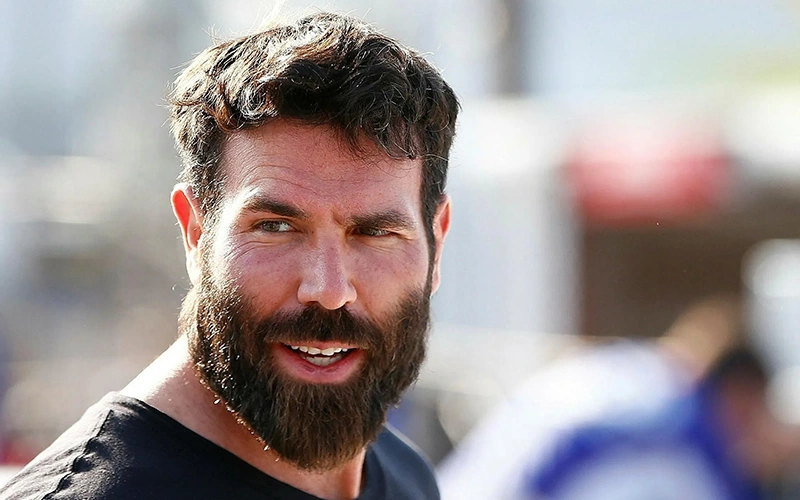
Born Daniel Brandon Bilzerian on December 7, 1980, in Tampa, Florida, he grew up as the eldest son of Paul Bilzerian, a corporate takeover specialist who faced high-profile legal challenges, including a conviction for securities fraud and time served in federal prison.
The family environment was one of ambition mixed with controversy, which Bilzerian has occasionally referenced in interviews as shaping his independent streak.
He attended Gaither High School locally before enrolling at the University of Florida to study business and criminology, though he left without completing his degree to focus on poker.
As a U.S. veteran, he briefly pursued military training before channeling his competitive drive into high-stakes card games. Bilzerian competed in events like the 2008 World Series of Poker Main Event and built a reputation for playing in exclusive private games, where he claimed to have won millions, though details of his exact earnings have long been the subject of public speculation and debate.
Jewish supremacy is the greatest threat to the world today
— Dan Bilzerian (@DanBilzerian) March 27, 2026
By around 2013, Bilzerian had pivoted to social media, where he cultivated a persona centered on unapologetic excess.
His Instagram feed, which now boasts roughly 30 million followers, became synonymous with images of luxury cars, private jets, firearms collections, lavish parties, and a rotating cast of companions, earning him nicknames like "Blitz" and the informal title of Instagram's "king of the good life."
This visual brand of hedonism and thrill-seeking resonated widely, turning him into a symbol of aspirational masculinity for many young men.
He parlayed that fame into business ventures, founding Ignite International Brands, a lifestyle company that sells vaping products, CBD oils, and related merchandise. For years, his public image remained largely apolitical, focused instead on entertainment, adventure, and self-promotion, with occasional forays into acting and stunt work.
That changed noticeably in the mid-2020s as Bilzerian began incorporating geopolitical commentary into his streams, podcasts, and posts, particularly on topics involving the Middle East, U.S. foreign policy, and what he describes as hidden power structures.
The Israeli report points to a series of statements Bilzerian made throughout 2024 and 2025 as central to his ranking.
These include explicit calls expressing willingness to "sign up tomorrow" and "put boots on the ground" to fight against Israel, along with declarations that he would "exterminate" the country and that its population is largely "evil." He has characterized Israel as a manifestation of a "terrible" religion that he claims promotes supremacy, theft from non-Jews, and other harms, while promoting theories alleging Jewish orchestration of events such as the September 11 attacks and the assassination of President John F. Kennedy.
Additional comments cited in the document involve skepticism toward official Holocaust death tolls and the scale of October 7 casualties, as well as assertions that the Talmud encourages criminal acts against outsiders.
Bilzerian has also defended Hamas as a "resistance organization" and referred to its late leader Yahya Sinwar as a "hero," framing these positions as opposition to Israeli policies rather than prejudice.
The ministry argues that such rhetoric, amplified across his vast audience on Instagram, X, and other platforms, normalizes conspiracy tropes and contributes to a climate of hostility toward Jews worldwide.
It's worth noting that in the document (PDF), Dan Bilzerian's profile is the 4th one shown, Tucker Carlson (1), Greta Thunberg (2), and Candace Owens (3). Also, there is no exact statement that says Bilzerian is "number one" on the list. But the media concludes that due to the amount of followers Bilzerian has, which is significantly higher than the rest in the list.
The government of Israel listed me as the #1 Antisemitic influencer in the world.
We are so fucking back! pic.twitter.com/TYVAvrlYAb— Dan Bilzerian (@DanBilzerian) April 15, 2026
I’m number 1 in the world.
It’s rare in this life that you can be better than 8 billion people at anything.
Thank you Israel for appointing me the number 1 antisemite in the world, you absolute cunts.— Dan Bilzerian (@DanBilzerian) April 16, 2026
Bilzerian's recent entry into electoral politics has only intensified scrutiny of his views.
In early April 2026, he formally filed to run as a Republican in the primary for Florida's 6th Congressional District, challenging incumbent Representative Randy Fine, a staunch pro-Israel voice in Congress. During campaign-related interviews, he reiterated criticisms of what he terms "Jewish supremacy" in American institutions, accused certain Jewish politicians of prioritizing Israel over U.S. interests, and dismissed the label of antisemitism as a "made-up term," insisting that Palestinians are the "real Semites."
He has denied harboring hatred toward Jews as a people, instead presenting his commentary as a defense of free speech and a critique of undue influence in government, banking, and media.
This pivot from influencer to candidate marks a notable evolution, leveraging his existing fan base to test whether such rhetoric can translate into mainstream political support.
Bilzerian himself has responded to the ministry's report and similar accusations by maintaining that his statements target specific actions and ideologies, not ethnicity or religion.
In various appearances, including interviews with Piers Morgan and others, he has argued that labeling criticism of Israel as antisemitism stifles legitimate debate, particularly regarding the conflict in Gaza and broader Middle Eastern dynamics.
Not my best interview, but I said what needed to be said pic.twitter.com/zu4FzdDHc7
— Dan Bilzerian (@DanBilzerian) November 13, 2024
Supporters view him as an unfiltered voice challenging mainstream narratives, while detractors, including the Israeli government and Jewish advocacy groups, see his language as invoking historical antisemitic stereotypes that can incite real-world prejudice.
The report itself is part of a larger effort by the ministry to track not just violent incidents but also the digital ecosystem where antisemitism spreads, noting a surge in online activity since late 2023 across multiple countries.
In many ways, Bilzerian's story illustrates the power of social media to transform a lifestyle celebrity into a polarizing figure on international affairs.
We get it, you’re a jew and you support America’s destruction to help your parasitic nation. https://t.co/iSDAVAOr7G
— Dan Bilzerian (@DanBilzerian) April 7, 2026
What began as posts about poker winnings and luxury escapades has evolved into a platform that reaches tens of millions with commentary on sensitive historical and political topics.
And being on top of Israel's watchlist accurately reflects his influence or highlights broader tensions over where criticism of a government ends and prejudice begins continues to fuel discussion.
As Bilzerian campaigns for Congress and maintains his online presence, his case underscores ongoing debates about the responsibilities that come with massive digital reach, the boundaries of free expression, and the ways in which personal branding can intersect with global conflicts.

















































































































































































































































































