
Watching pornography is probably one of people’s most common, yet least openly discussed, activities that happens to also be their guilty pleasures.
Despite the secrecy that often surrounds it, adult content consumption has become deeply woven into the fabric of the internet. From the earliest days of dial-up connections to today’s high-speed streaming platforms, pornography has been a consistent driver of traffic, technology, and even innovation.
What makes it especially interesting is the paradox between how private the act is and how public its influence has been.
Entire industries have risen, fortunes have been made, and social debates have raged, all centered around something that most individuals would rather not admit engaging with. The stigma attached to pornography hasn’t erased its demand; if anything, it has fueled an ongoing tension between personal habits and societal norms.
While watching pornography is probably one of people’s most common private activities, but for some, it’s not a choice, it’s a job.
MindGeek operates Brazzers, Pornhub, RedTube, YouPorn, Tube8, Xtube, Digital Playground, Men.com, Mofos, Nutaku, Reality Kings, Sean Cody, TransAngels, Twistys, and WhyNotBi.com.
At its peak, Pornhub, the biggest portfolio under MindGeek's umbrella, is an embodiment of an internet phenomenon.
By the late 2010s, the site had grown into the tenth most visited website in the world, drawing 3.5 billion visits a month and generating millions in revenue from nearly three billion ad impressions a day. Its free-for-all nature made it the dominant player in online adult entertainment, but it also turned into a breeding ground for controversy.
In 2020, allegations that the platform hosted child sexual abuse material, non-consensual footage, and stolen videos ignited a global campaign against it. Major financial partners including PayPal, Mastercard, and Visa swiftly cut ties, crippling its business model.
Under intense pressure, Pornhub’s parent company, MindGeek, removed 10 million videos overnight, slashing its library from 13 million to 4 million.
A Netflix documentary, Money Shot: The Pornhub Story, later chronicled this dramatic fall, exposing both the company’s unchecked power and the damage caused by its lack of oversight.
But one of the most damning revelations came from inside the company itself: moderators, working from MindGeek’s Cyprus office, claimed they were expected to review as many as 800 to 1,000 videos during an eight-hour shift, screening them for illegal or harmful material.
Doing the math, they had to watch around 125 videos per hour, which translates to one video every 30 seconds.
Due to the sheer number of videos uploaded per day, MindGeek is literally giving the employees the pressure of delivering the quotas. Since the number is high, it encouraged speed over accuracy.
Since videos on the platform can range from seconds long to hours long, this practice means that they had are "scrubbing" through clips at high speed, skipping through timelines: jumping to different frames or sections of the video rather than letting it play from start to finish.
They're often had to skip the audio entirely. But this potentially made them to miss some of the cries, or probably the pleading for help (like someone screaming "stop"), or the signs of coercion.
They're told to do this to "guess" the ages of the performers.
But in order to deliver the answers in such demanding situation, they often had to make snap judgments of the performers' age based purely on appearance, sometimes with only a few seconds of viewing.
In other words, the work was grueling.
Moderators weren’t truly "watching" in the normal sense. They were racing against the clock, barely scratching the surface of what they were reviewing.
Employees described watching thousands of hours of explicit content, not for pleasure like normal consumers would, but as gatekeepers, tasked with detecting illegal or harmful material.
“You can’t tell the age of somebody, they could be 14 or they could be 19. We would have to guess,” admitted one of the moderators.
So here, it’s easy to see how this system almost guaranteed that harmful or illegal content would slip through.
This cavalier approach meant disturbing videos slipped through, sometimes leaving victims unheard for years.
Critics such as Dani Pinter, Senior Legal Counsel at the National Center on Sexual Exploitation, argue that Pornhub was “knowingly profiting from sex trafficking.” Survivors came forward to say their rapes were uploaded to the site, some gathering millions of views, with little intervention from either law enforcement or the platform.
The backlash was severe, but not without collateral damage.
Many verified sex workers, those who had built careers producing consensual content, saw their livelihoods vanish overnight.
Creators like Siri Dahl and Gwen Adora argue that campaigns like #Traffickinghub promoted consensual porn with abuse, making it harder to protect victims while devastating the income of performers who relied on platforms like Pornhub’s ModelHub.
“I’ve never felt more exploited than I did working a retail job,” Dahl remarked, insisting her choice to create adult content was empowering compared to low-wage labor.
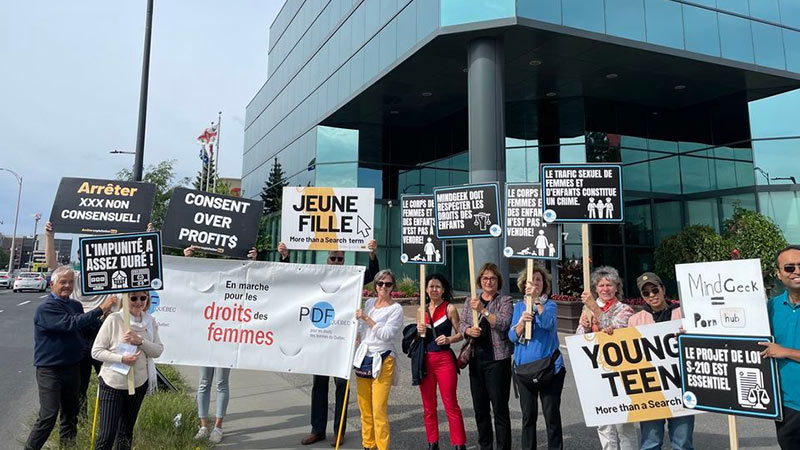
Yet for all the industry voices defending the autonomy of sex workers, the problem of moderation remains impossible to ignore.
Pornhub’s unverified upload system had, for years, allowed anonymous users to post anything, from stolen clips to child exploitation videos, with little accountability.
By the time Mastercard and Visa pulled support, the damage was done: millions of victims had seen their private abuse replayed as entertainment, and public trust in the platform had evaporated.
The Pornhub saga reveals a troubling contradiction.
On one hand, adult content is a mainstream part of online life, fueling billions in traffic and pushing the boundaries of digital culture.
On the other, the systems meant to safeguard its most vulnerable participants were woefully inadequate, sometimes leaving exploited children at the mercy of a faceless moderation system. The scandal didn’t just bring down one of the internet’s most notorious giants—it also forced the world to confront the uncomfortable reality that porn, while consumed in private, has consequences that reach far into the public sphere.
Further reading: Serena Fleites' Stand: How One Girl’s Trauma Sparked A Global Reckoning With Pornhub