In the vast landscape of the internet, content spreads at lightning speed, and many platforms are built to maximize traffic and profit.
Stories like that of Serena Fleites remind the world of the deep human cost of negligence and exploitation. Her name became tied to one of the most publicized scandals in the adult entertainment industry, a case that not only changed her life but also forced society to reckon with questions of consent, responsibility, and accountability in the digital age.
Serena learned this lesson the hard way, betrayed by someone she trusted.
Once an unassuming eighth-grader with straight-A report cards and a heart full of innocent curiosities, she later became the prime example of how cruel the internet can be.
And how brutal it becomes when demand collides with morality, and desire outweighs decency.
She has since become the face of a movement to dismantle online abuse.
Things began in in 2014, in the quiet suburbs of Bakersfield, California, where the summer heat shimmers off cracked asphalt and the dreams of adolescence often feel as boundless as the desert horizon.
Serena Fleites was thirteen, and embodied the fragile poetry of early teenagerhood: a girl who had yet to share her first kiss, whose world revolved around school hallways, whispered crushes, and the simple thrill of fitting in. It was in this tender phase of self-discovery that a single, impulsive act, born of youthful vulnerability, would unravel her life like a thread pulled too tightly from a fragile tapestry.
After only recently begun dating the boy, someone she reportedly had a genuine crush on, she was pressured to send a video of her naked. Her so-called boyfriend allegedly declared that if they were indeed in a relationship and she loved him as she said, she should have no problem making such personal, explicit clips for him.
Pressured by a boy she admired, just a year her senior, Serena finally complied. She sent him a private video showing her undressing.
It was made for his eyes only. It was meant to be a bid for affection in the uncharted territory of young love.
As days passed, she felt both reluctant and flattered at the same time, according to her own narrative.
What she could not have foreseen was how that video, shared to just the boy she loved, was carelessly shared among the boys at her school, before eventually uploaded to the vast, indifferent expanse of the internet, and would become the catalyst for a personal apocalypse, thrusting her into a battle against one of the digital age's most formidable giants: Pornhub, and its parent company, MindGeek.
The upload was insidious in its anonymity.
Sometime in 2014, the video appeared on Pornhub under a title that stripped away any illusion of privacy: "13-Year Old Brunette Shows Off For the Camera."
By the time Serena discovered it, months later, the damage was irreparable.
It was that moment onward, that her entire world literally turned upside down despite the fact she was merely an eighth grader.
More than 400,000 views had accumulated, each one a silent indictment, each click a dissemination of her exploitation.
Her school became a gauntlet of leering glances and vicious taunts; classmates, once casual acquaintances, now wielded her image as a weapon, texting threats that twisted her fear into compliance.
"A lot of people in the grades above me, mostly guys, they would try to harass me and blackmail me,” the teen once revealed, detailing a parts of the bullying she subsequently had to endure.
Serena continued, "[They would say] if I didn’t do stuff with them or I didn’t send them more videos…, they would send [old ones] to my family: my grandma, my mom, my sisters, my brother." Their words became a digital noose tightening around her psyche.
The girl who once excelled in quiet confidence withdrew into isolation, her grades plummeting as the weight of public scrutiny crushed her spirit.
School, once a sanctuary of potential, and a place were she can express herself as a teen with her peers, transformed into a theater of humiliation, where every whisper echoed the video's lurid permanence.
While the boy she was dating was already suspended after the news broke, she decided to switch school, and later, switch to another school, simply because she couldn’t attend any classes due to fear, caused by the fact that the video of her also reached these new places too.
Serena dropped out, her academic dreams dissolving into the ether of survival.
The worst part for Serena is that, she actually has a hormone disorder where she ages slowly, meaning she might've been 14 in the video, but she looked no older than 9 or 10. And this was evident.
In the ensuing spiral, the entire experience due to such a traumatic extent led Serena to have anxiety, depression, as well as suicidal thoughts going much beyond what a woman her age could have ever conceived. She cut herself deep with a blade, and once swallowed every anti-depressant pill she could find
She even attempted to hang herself in the bathroom, but thankfully medics arrived just in time to save her.
As a getaway to her ongoing problem, she was introduced to heroin by an older man. At first, she thought she could finally run away from this (at least in her head), but unfortunately for Serena, this man exploited her vulnerability. She found herself coerced into creating even more explicit content, videos that, horrifically, also ended up on Pornhub, perpetuating the cycle of abuse even as she remained a minor.
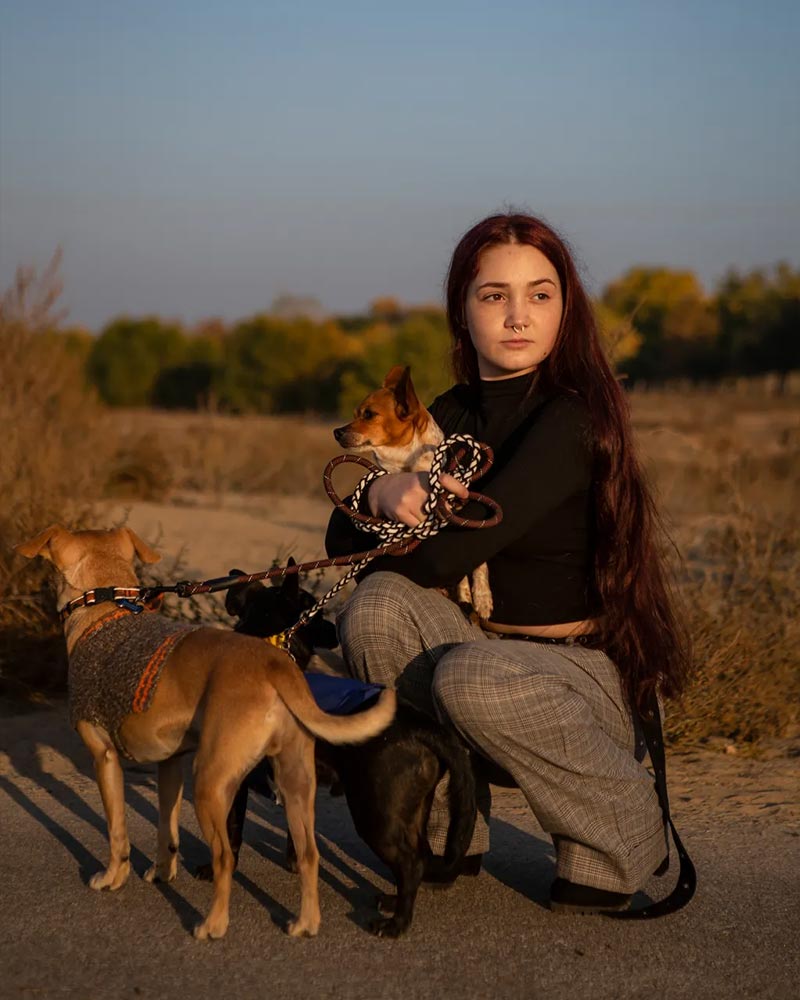
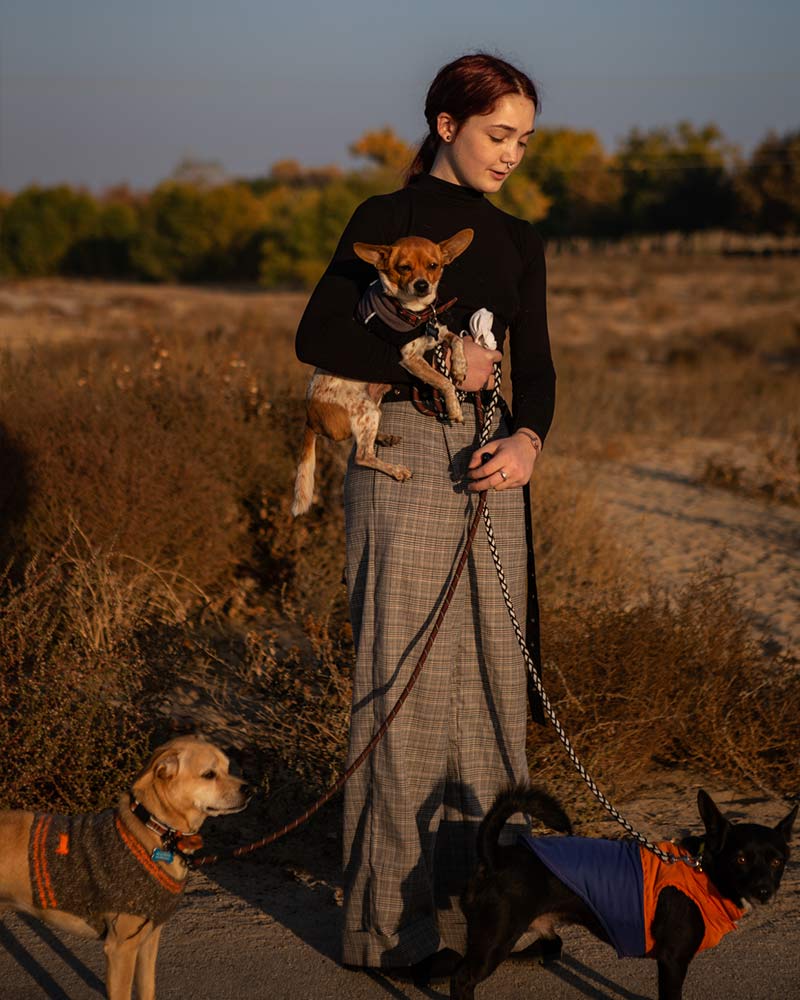
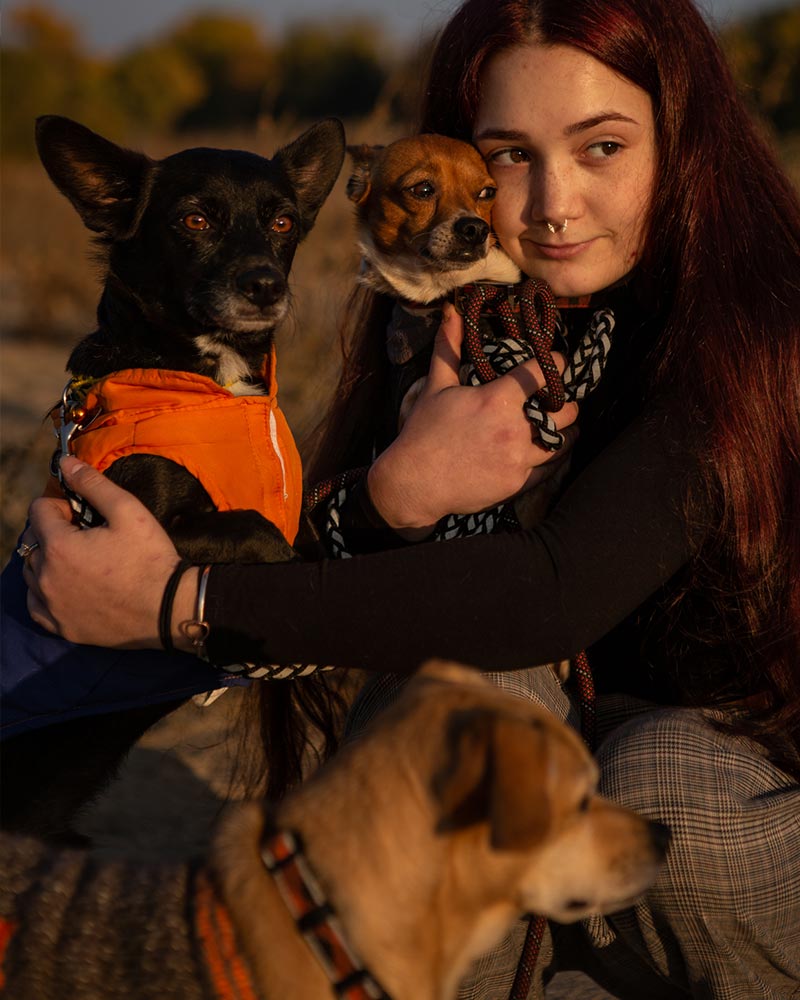
Homelessness followed, a nomadic existence in her car with her three loyal dogs as her only family, a stark emblem of how one non-consensual upload could evict a child from the very notion of safety and home.
And again, due to her addiction and that she had to find a way to afford buying, she was so desperate that she admittedly began selling nude photos and videos of herself through Craigslist. On one side, it was a way to keep the drugs coming, but on the other side, she believed that it was a good way to punish herself.
She thought that it was her, and her mistake only, that landed her in this situation. She thought that she was no longer worthy of anything because since everybody had already seen her body.
She was naive, but her thoughts was not far from the truth.
As more days accumulate, there was no way of not saying that hundreds of thousands of more people have been seeing her video.
This was no isolated tragedy, but a stark revelation of the underbelly of user-generated content platforms, where the line between consensual expression and predatory exploitation blurs into oblivion.
Pornhub, with its billions of monthly visitors and slick interface promising unbridled access, had long positioned itself as a liberator of adult desires. It's literally a paradise for those who pursue digital lust. But little was known about the fact that beneath its veneer lay a marketplace thriving on the illicit: child sexual abuse material (CSAM), revenge porn, and videos of rape and trafficking, often uploaded without verification or remorse.
Serena's case was emblematic of a systemic failure, where algorithms prioritized virality over ethics, and profits flowed unchecked from ads flanking the most heinous content.
When she first reached out to Pornhub for removal, the response was a bureaucratic nightmare that compounded her trauma.
Moderators demanded photographic proof that she was the child in the video. In other words, it was literally a grotesque inversion of victim-blaming, forcing her to relive the violation in pixels and paperwork.
Serena said that she once pretended to be her mother when she first contacted Pornhub, stating the tape was clearly child pornography. After a week or two, the website responded by taking it down. However, at this point, so many people had already watched the entire video, many of whom had also downloaded the video.
As a result of this, Serena's attempt was futile because the same video of her undressing was back on Pornhub a few days later.
This happened again, and again.
In other words, it only took a small amount of time before each iteration was taken down, only for mirrors to resurface, racking up more views and revenue. MindGeek, ensconced in Montreal's tech corridors, allegedly stalled these requests deliberately, allowing the content to monetize through Visa-processed advertisements.
Serena's pleas were met not with urgency, but with evasion, a pattern that would later be alleged as intentional in court filings. Court documents and reporting alleged that critics, including Serena, faced online harassment and dismissals such as being called a ‘grifter,’ though MindGeek has denied orchestrating such actions, a tactic to discredit rather than address the rot at the platform's core.
Serena's story might have faded into the anonymous churn of internet horrors, another statistic in the grim ledger of digital abuse, were it not for a seismic exposé that amplified her voice to the world.
In December 2020, Nicholas Kristof's New York Times opinion piece, The Children of Pornhub, which laid bare the platform's complicity in profiting from exploitation.
At its heart was Serena, then nineteen and living out of her pet. She's now clean, with no more drugs in her system. But her photos still show an expressionless face, haunted by her resilience amid ruin.
"A whole life can be changed because of one little mistake," she told Kristof, her words a poignant elegy for the girl she once was.
The article ignited a firestorm, galvanizing public outrage and prompting immediate repercussions.
Visa and Mastercard, the financial lifelines of MindGeek's empire, severed ties with Pornhub, halting payment processing for ads and premium content. The move drained the company's revenue streams overnight.
In a desperate bid for legitimacy, Pornhub announced sweeping changes: the deletion of 10 million unverified videos, comprising nearly 80% of its library, and the implementation of stricter upload protocols. Employees at MindGeek were told to watch more than 1,000 pornographic videos per day, and tasked to determine the age of the people.
A special thanks to those young women and men who shared their stories and documentation about Pornhub, because they didn't want other kids to endure what they had suffered. It was their courage, their stories, that made this happen. Teens like Serena: https://t.co/syVIjZgEy6
— Nicholas Kristof (@NickKristof) December 8, 2020
It was the largest content purge in internet history, a direct concession to the mounting pressure.
Yet for Serena, these reforms rang hollow; they came too late to erase the scars, and whispers persisted of lax enforcement, with reports of CSAM resurfacing through backchannels.
Emboldened by the spotlight, Serena transformed her pain into purpose, stepping into the role of plaintiff in a series of landmark lawsuits that would challenge the very architecture of online accountability.
In 2021, she joined dozens of other survivors: thirty-three anonymous women whose stories echoed hers in a California federal class-action suit against MindGeek, accusing the company of racketeering, sex trafficking violations, and the distribution of child pornography under federal laws like the Trafficking Victims Protection Reauthorization Act.
The 179-page complaint described MindGeek as a ‘classic criminal enterprise,’ likening it to a mafia syndicate, and alleged it knowingly cultivated a marketplace for non-consensual content to dominate the global porn industry.
Serena's testimony, raw and unflinching, became the emotional fulcrum: she recounted testifying before Canada's House of Commons ethics committee, where her words drew tears from parliamentarians and underscored the platform's Canadian roots.
"This is about rape, not porn," her lawyer, Michael Bowe, declared, framing the battle as one against systemic predation rather than mere titillation.
The suits expanded in scope, roping in Visa for allegedly conspiring in the monetization, processing payments for ads that ran alongside CSAM, even after warnings.
In a pivotal 2022 ruling by Judge David O. Carter of the Central District of California, Visa's motion to dismiss was denied, a landmark affirmation that financial enablers could not wash their hands of the crimes they facilitated.
"Visa quite literally did force MindGeek to operate differently," the judge noted, acknowledging the payment giants' leverage while holding them accountable for its prior abdication.
The legal salvos continued to escalate, weaving Serena's narrative into a broader tapestry of justice.
By 2023, she spearheaded amendments implicating hedge funds like Colbeck Capital and entities tied to MindGeek's enigmatic owner, Bernd Bergmair, for funneling billions into a machine that profited from abuse. These suits sought for compensations: millions for physical, psychological, financial, and reputational harms. Not just that, because the suits also demanded systemic reform, demanding transparency in content moderation and reparations for a class of survivors whose lives had been commodified.
Serena's courage extended beyond the courtroom; in 2023's Netflix documentary Money Shot: The Pornhub Story.
She appeared as herself, her interview a visceral testament to the human cost of unchecked digital capitalism.
Directed with unflinching clarity, the film juxtaposed her testimony with MindGeek executives' evasive denials, exposing the chasm between corporate platitudes and lived trauma.
"The trauma of child pornography is unending," she stated, her voice steady despite the shadows it evoked.
These platforms, she argued, were not neutral conduits but active participants, their algorithms a complicit echo chamber amplifying exploitation for profit.
The ripples of Serena's fight extended far beyond individual redress, crashing against the shores of global policy and reshaping the internet's moral landscape.
While no ban was enacted explicitly in her name, her story became a cornerstone of the international reckoning with Pornhub's impunity. In the United States, her exposé fueled a wave of state-level age-verification laws, designed to shield minors from the very pitfalls that ensnared her. By 2025, Pornhub had self-blocked access in more than a dozen states, from Utah's pioneering 2023 mandate to Texas, Florida, and Indiana, citing privacy concerns over ID uploads but effectively ceding ground to reformers.
These measures, born of bipartisan alarm over youth exposure to non-consensual content, echoed Serena's plea for protection, transforming her personal violation into legislative bulwarks.
Globally, the fallout was seismic.
France, Pornhub's second-largest market, saw the site withdraw entirely in 2025 rather than comply with stringent age checks, blocking millions in a standoff that highlighted the platform's vulnerability.
The European Union launched probes into Pornhub and peers like XNXX for Digital Services Act violations, prioritizing minor safeguards in a probe that invoked Serena's archetype of the exploited child.
In Canada, her parliamentary testimony spurred ethics inquiries into MindGeek's Montreal headquarters, contributing to fines and operational scrutiny.
Even in nations like Russia and China, where Pornhub had long been curtailed for "harmful content," her narrative amplified calls for outright prohibitions, underscoring a universal imperative: no platform should profit from innocence lost.
According to reports, Pornhub alone lost about one million viewers per day.

Yet amid these victories, Serena's journey remains a meditation on the limits of restitution.
The lawsuits grind on, with settlements elusive and MindGeek, rebranded as Aylo in a bid for absolution, facing over twenty-five actions from nearly 300 survivors.
Public fundraisers, sparked by Kristof's article, raised a lot of money to secure her housing and stability, a testament to collective empathy but a bandage on wounds too deep for dollars alone.
As things on her side kind of settled, Serena, now in her mid-twenties, navigates her life with therapy, advocacy, and the quiet reclamation of agency, with her dogs still her steadfast companions. Now that she can at least free herself from her past, she would probably follow her dreams of becoming a vet technician.
She has spoken of the ongoing battle, the flashbacks, the distrust of intimacy, the way a single Google search can summon ghosts.
"It zapped the happiness out of me," she reflected in one interview, her candor a beacon for others silenced by shame.
Her story is rare, and together with few others before her, create a chronicle of not just some girls' odyssey but a movement's genesis: from isolated victim to vanguard of accountability.
In the end, Serena Fleites's odyssey compels the world to confront the digital age's double-edged sword: a realm of boundless connection shadowed by unchecked predation.
Pornhub, the largest in Aylo's portfolio, generated much of the online adult entertainment industry's traffic.
During the lawsuits, it's said that Aylo's various streaming platforms received a combined 3.17 trillion monthly web impressions. In comparison, this is far above Amazon (2.58 trillion) and Netflix (2.47 trillion), and Reddit (1.55 trillion). In all, its massive portfolio earned $460 million in 2018 alone.
And Pornhub is the largest platform of them all, generating much of the online adult entertainment industry's traffic.
As for Serena, her non-consensual videos on Pornhub was not merely a personal infringement but a microcosm of broader failures: platforms built on user trust yet riddled with exploitative loopholes, financial titans enabling the unseen commerce of suffering, and societies only rousing to reform when the vulnerable cry loud enough to pierce the algorithmic din.
Through lawsuits that ensnare enablers, bans that redraw borders of access, and testimonies that humanize the statistics, Serena has forged a legacy of disruption.
She reminds the rest of the world that true consent is not a footnote in terms of service but the bedrock of shared humanity.
In an era where every click risks complicity, her voice endures as both warning and clarion: one frame may shatter a life, but collective resolve can rebuild worlds. As the battles against digital exploitation rage on, from courtrooms to capitols, Serena's unyielding spirit stands as proof that even from the depths of violation, resilience can birth revolution.
But that does not put an end to the problem faced by other thousands of women, especially young girls who are too ‘young’ to cope with such abuses.
In recent years, Pornhub has increased moderators, and is actively taking problematic content down. But still, that isn't enough.
Each year, thousands of videos either of minors or those published without consent are being published on the site for users to view or download.






















































































































































































































































































