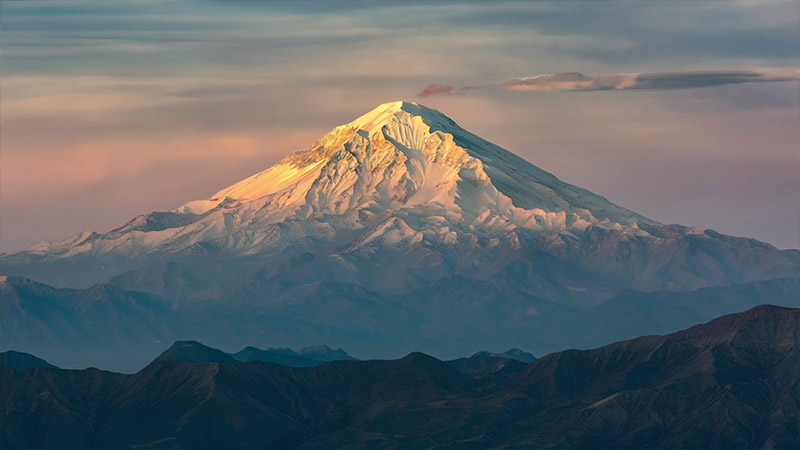
During Iran's escalating unrest, browsing throught the internet, or scrolling through social media feed from inside the country reveal an unexpected motif amid the flood of exchange rate screenshots and grainy protest clips: Mount Damāvand, the majestic snow-capped volcano that dominates Tehran's skyline on rare clear days.
Photos and videos of its peak appear repeatedly, sometimes pristine against azure skies, other times blurred from a moving car. Observers abroad ask the same question: Why this mountain, now?
Damavand carries deep symbolic weight in Persian culture.
In ancient mythology, it is where the tyrant Zahhak was chained by the blacksmith Kaveh after a people's revolt against his cruelty. The story of a corrupt ruler demanding endless sacrifices until the oppressed rise up resonates strongly today. Sharing images of the mountain allows Iranians to evoke tyranny and resistance without directly naming names, a subtle yet powerful form of dissent amid heavy surveillance.
This symbolism has gained traction as protests, sparked by economic collapse, spread nationwide.
This happened after the national currency of Iran, the rial, has hit record lows in late December 2025, plunging to around 1.45 million IRR per USD in the black market, where most transactions occur, before settling near 1.35–1.36 million by early January 2026.
The official rate remains frozen at about 42,000 IRR per USD, but it's meaningless for many of its population's everyday life.
Hyperinflation, hitting 42-48% year-on-year, has driven food and essential prices up sharply, eroding wages and savings.
Businesses and merchants in the capital's Tehran Grand Bazaar and electronics markets have closed their shops starting December 28, 2025, triggering strikes that quickly drew students, workers, and residents into broader anti-regime demonstrations.
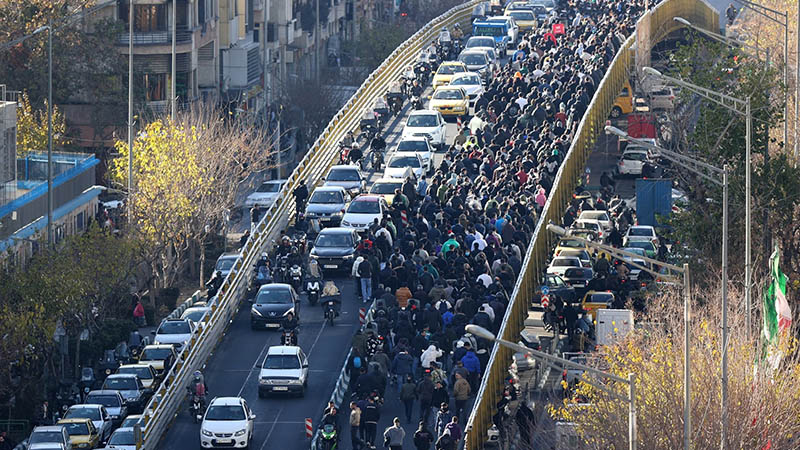
The unrest has spread to cities like Isfahan, Mashhad, Shiraz, and smaller towns such as Fasa in Fars province, where crowds attempted to storm government buildings, and Noorabad Mamasani, where clashes turned violent.
Chants of "Death to the dictator" and calls for Reza Pahlavi, the exiled crown prince, have echoed in streets and online.
At least six deaths have been reported in confrontations, with security forces using tear gas, live fire, and arrests.
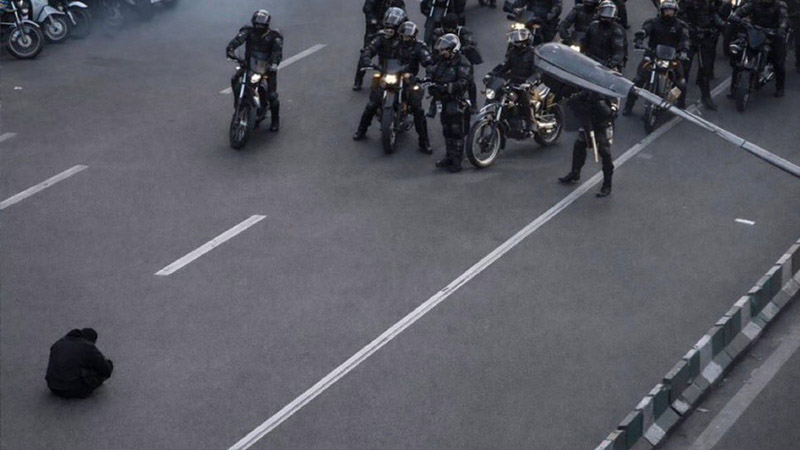
Authorities declared unexpected holidays in many provinces, citing weather or energy concerns, but many see it as an effort to clear public spaces.
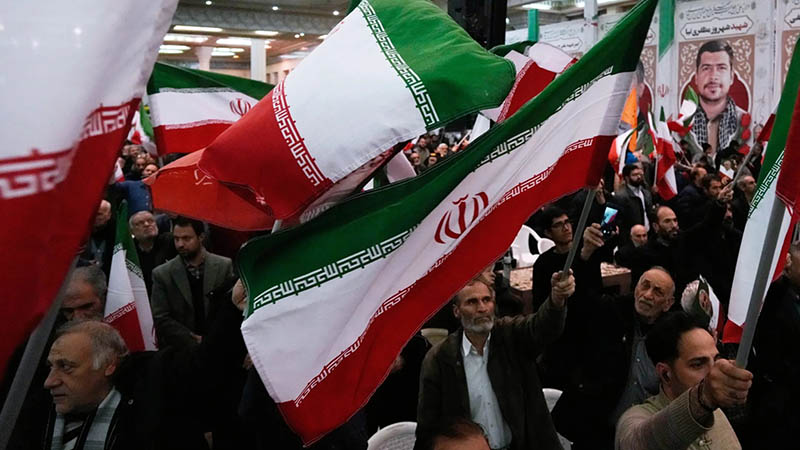
The regime's response mixes repression with limited concessions, offering dialogue on economic grievances while framing unrest as foreign-instigated.
Yet the protests have evolved from purely financial complaints into demands for fundamental change, uniting diverse groups: students, merchants, laborers, against the government.
Complicating the digital landscape, Iran repelled a massive cyberattack on December 28–29, 2025, considered one of the largest DDoS assaults on record, peaking at over 720 million packets per second from 125,000 sources from around the world.
Minister Sattar Hashemi described it as targeting telecom infrastructure: "On Sunday afternoon, the country witnessed one of the biggest and most extensive cyberattacks against its communications infrastructure. The attacks were launched from more than 120,000 different sources across the world and specifically targeted one of the country’s telecommunications service providers."
He added that preventive measures neutralized it:
"With the arrangements that had been made, the attack was completely thwarted and neutralized."
Behzad Akbari, head of the Telecommunications Infrastructure Company, confirmed:
"Last night, the infrastructure network identified and countered the largest DDoS attack in recent years in terms of packets per second, targeting one of the country’s operators."
The incident caused temporary slowdowns but no major outage.
شب گذشته سامانه زیرساخت بزرگترین حمله DDOS در سالهای اخیر به لحاظ تعداد بسته در ثانیه را به مقصد یکی از اپراتورهای کشور شناسایی و مقابله کرد. این حمله بیش از ۷۲۰ میلیون بسته در ثانیه بود که 502 pps آن با سامانه خود زیرساخت و مابقی در خارج از کشور مقابله شد. این حمله که از… pic.twitter.com/t3ztTPbY7O
— Behzad Akbari (@behzad_akbari54) December 29, 2025
Internet restrictions remain a key battleground.
Iran ranks among the world's most censored online environments, with blocks on major platforms and arrests for speech.
During unrest, targeted disruptions occur, mobile outages in hotspots, throttling to hinder coordination. Yet full blackouts are rare now, as they harm the economy. With over 73 million users (about 80% of the population), people adapt by shifting to apps like Telegram for updates and Instagram for sharing. VPNs are essential, with Minister Hashemi noting: "The fact that more than 80 percent of people rely on VPNs shows there is a real demand."
Usage spikes dramatically during crises, often over 700%, despite warnings about risks.
These tools amplify voices: urban youth post first, diaspora verifies footage, and clips circulate globally before returning stronger.
The nation's selective throttling and intimidation aim to contain without total collapse, but Damavand's viral presence signals a shift, from quiet endurance to open judgment.
As one observer put it, the mountain, long hidden by smog, is visible again on clear days, much like the people's resolve emerging from years of suppression. The fight for narrative and access continues, with legitimacy hanging on who can sustain the shared story of resistance.






















































































































































































































































































