Since the late 2025 and into January 2026, Iran finds itself gripped by one of the most severe crises since the 1979 Islamic Revolution.
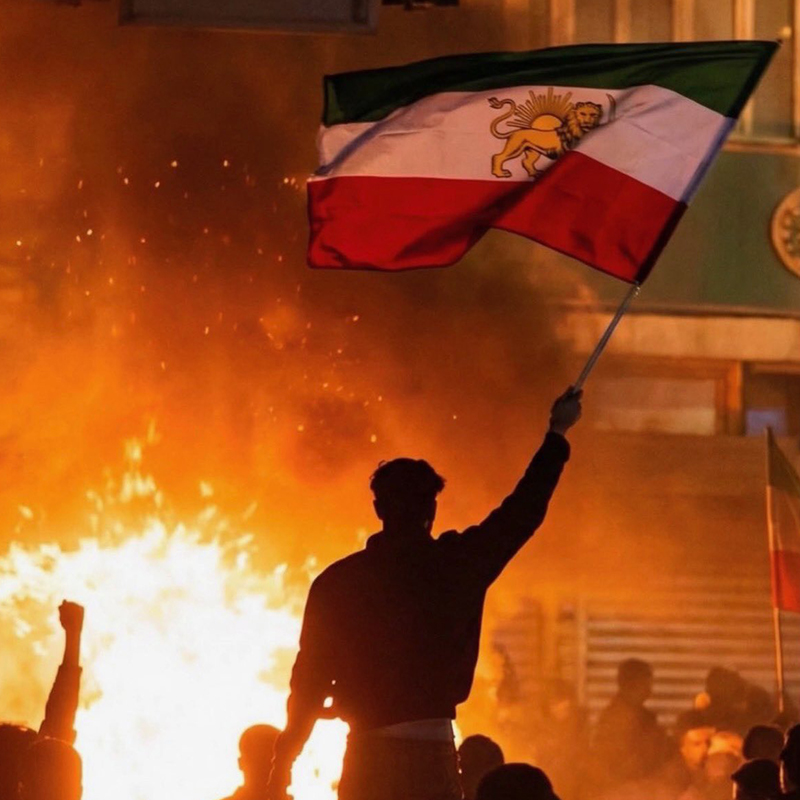
What began as scattered demonstrations in late December 2025 over skyrocketing prices and a collapsing currency has exploded into nationwide protests demanding the fall of the Islamic Republic itself. Millions have taken to the streets across all 31 provinces, chanting slogans like "Death to the Dictator" and "Freedom, freedom," while some explicitly call for the return of Reza Pahlavi, the exiled crown prince.
The economic triggers are stark and unrelenting.
The Iranian rial has plummeted to record lows, trading at over 1.4 million to the U.S. dollar on unofficial markets in early January, a devastating drop fueled by years of sanctions, mismanagement, and the lingering fallout from the brief but destructive 12-day war with Israel in June 2025.
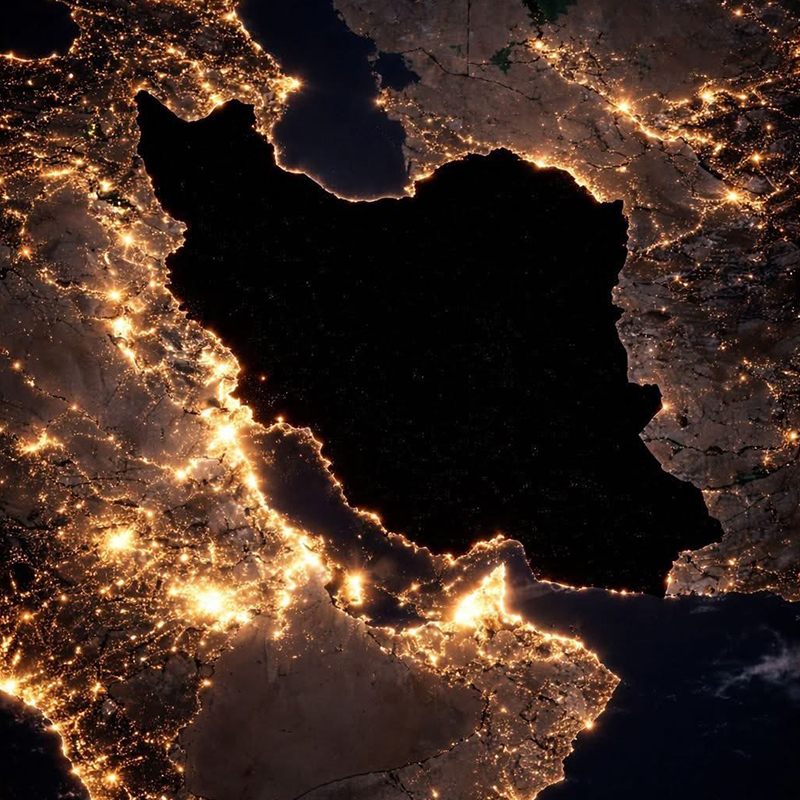
And to curb the relentless protests and unrest, the government has literally imposed a nationwide blackout of the internet.
Iran boasts one of the world's oldest continuous civilizations, with roots stretching back to the ancient Persian Empire under Cyrus the Great, renowned for its innovations in governance, art, and tolerance across vast territories.
This rich historical legacy evolved through centuries of dynasties, invasions, and cultural flourishing, shaping a nation proud of its poetry, architecture, and intellectual traditions. In the 20th century, this heritage took a dramatic turn with the rise of the Pahlavi dynasty. Reza Shah Pahlavi, who seized power in 1925, pursued aggressive modernization, building infrastructure, promoting secular education, and emulating Western models while centralizing authority.
His son, Mohammad Reza Shah, who ascended in 1941 and ruled until 1979, intensified these efforts through the White Revolution, introducing land reforms, women's suffrage, and rapid industrialization. Backed by Western powers, particularly the U.S., the Shah's Iran became a regional powerhouse, with gleaming cities, growing middle class, and a secular society that embraced global influences.
Yet beneath this facade of progress simmered widespread discontent.
Many Iranians viewed the Shah's regime as corrupt, repressive, and overly dependent on foreign interests, especially after the 1953 CIA-orchestrated coup that reinstated him following the ousting of popular Prime Minister Mohammad Mossadegh.
Economic inequality, political repression by the secret police (SAVAK), and cultural alienation fueled opposition from diverse groups: leftists, nationalists, intellectuals, and crucially, the Shia clergy who decried the erosion of Islamic values. Ayatollah Ruhollah Khomeini, exiled for his criticisms, emerged as a unifying voice, blending religious fervor with anti-imperialist rhetoric.
Mass protests in 1978–1979 culminated in the Shah's flight and the Islamic Revolution, overthrowing the monarchy and establishing the Islamic Republic in 1979. Under Khomeini as Supreme Leader, Iran transformed into a theocratic state governed by Islamic principles, with ultimate authority vested in religious jurists through the doctrine of velayat-e faqih.
The new regime at the time promised justice, independence from Western dominance, and a return to authentic Islamic governance, though it soon faced internal purges, the devastating Iran-Iraq War, and international isolation.
Fast forward, thanks to Western influence, the internet, globalization of information, a lot of Iranians began to see themselves as isolated, restricted, shackled.
They want to be free of what they are imposed to from the rules of the Islamic Republic.
That conflict has damaged infrastructure, further isolated the economy, and accelerated inflation, which hovered around 42% in late 2025 and shows no signs of easing. Food prices have surged by over 70% year-on-year, rendering basic goods unaffordable for many families, while energy shortages and power outages compound daily hardships.
Shopkeepers in historic bazaars like Tehran's Grand Bazaar shuttered their stalls in solidarity, sparking a general strike movement that quickly spread.
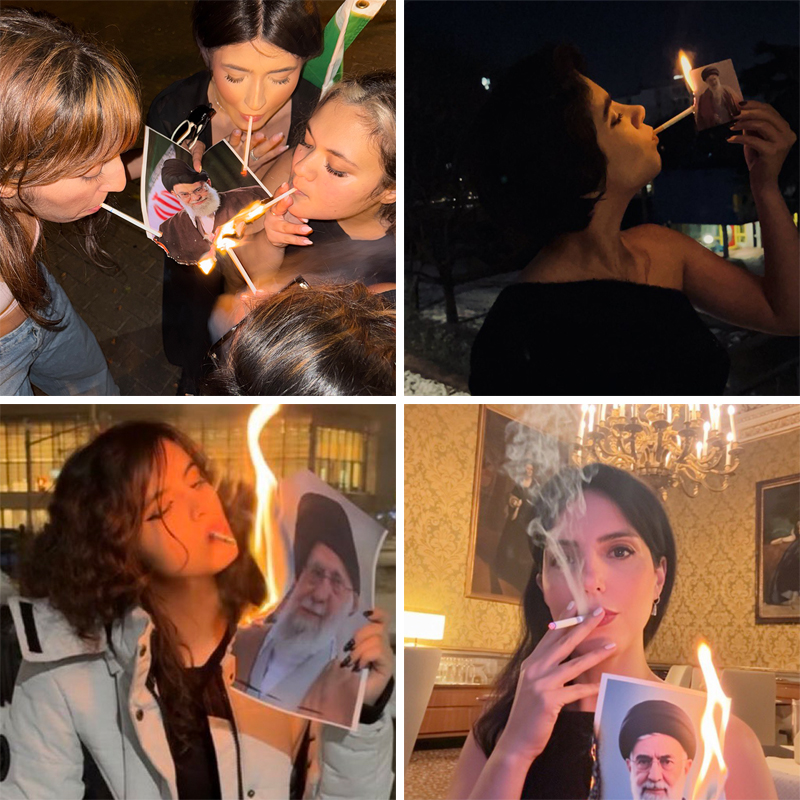
Whereas men mostly hit the streets, protests over hyperinflation, a crashing rial, and power shortages, evolving into chants of 'Death to Khamenei' and calls to end the Islamic Republic, the women lead the charge by burning hijabs and defying mandatory veiling laws, echoing the 2022 Mahsa Amini unrest but fueled by deeper desperation as families struggle for basics.
The US President who judges arrogantly about the whole world should know that tyrants & arrogant rulers of the world, such as Pharaoh, Nimrod, Mohammad Reza [Pahlavi] & other such rulers saw their downfall when they were at the peak of their hubris. He too will fall.
— Khamenei.ir (@khamenei_ir) January 9, 2026
Last night in Tehran & some other cities, a bunch of people bent on destruction came and destroyed buildings that belong to their own country in order to please the President of the US and make him happy.
— Khamenei.ir (@khamenei_ir) January 9, 2026
The US President has said that if the Iranian govt. does such-and-such, I’ll take the side of the rioters. The rioters have put their hopes in him. If he’s so capable, he should manage his own country.
— Khamenei.ir (@khamenei_ir) January 9, 2026
In the 12-Day War, more than a thousand of our country’s citizens were martyred. The US President said he ordered this. So, he confessed that the Iranians’ blood was on his hands. Now he’s saying that he’s on the side of the Iranian nation!
— Khamenei.ir (@khamenei_ir) January 9, 2026
Activists report over 2,000 deaths from security crackdowns and internet blackouts, while pro-regime voices share videos of women shopping freely to claim normalcy persists.
The regime's response has been swift and brutal.
The Iranian people will not tolerate the hirelings of foreign powers.
— Khamenei.ir (@khamenei_ir) January 9, 2026
Today, the Iranian nation is even more equipped and armed than that day [before the Revolution]. Both our spiritual strength and hard, conventional weapons can’t be compared to what we had before.
— Khamenei.ir (@khamenei_ir) January 9, 2026
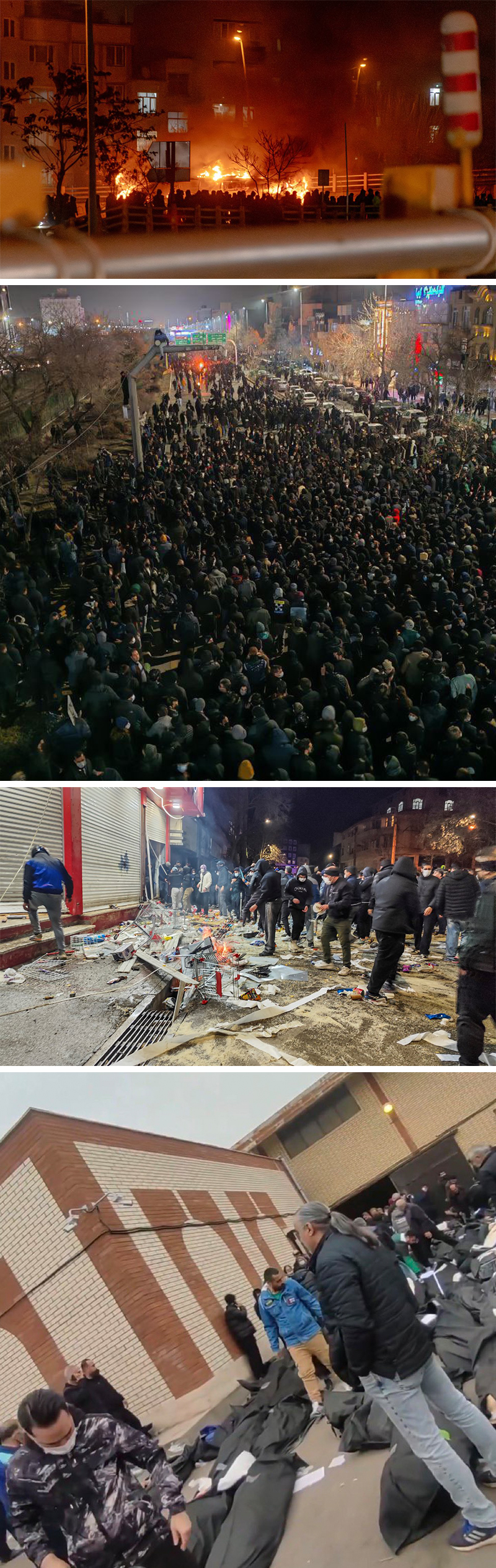
Security forces have deployed live ammunition, tear gas, and mass arrests, with human rights groups reporting hundreds killed, with thousands wounded or detained since late December.
Hospitals in Tehran and Shiraz have been overwhelmed, some reportedly raided to detain injured protesters. The violence escalated dramatically around January 8-10, with eyewitness accounts describing streets littered with bodies amid intense clashes.
At the heart of the regime's strategy lies a sophisticated and unprecedented digital blackout.
On January 8, as protests reached their peak on the twelfth day, authorities imposed a near-total nationwide internet and telecommunications shutdown.
Read: Firepower And Firewall: How Israel And Iran Wage War Online In A Battle For Public Perception
Today like the past, the US is wrong in its calculations about Iran.
— Khamenei.ir (@khamenei_ir) January 9, 2026
Our enemies don’t know Iran. In the past, the US failed due to their flawed planning. Today too, their flawed scheming will cause them to fail.
— Khamenei.ir (@khamenei_ir) January 9, 2026
Connectivity dropped to roughly 1% of normal levels, mobile networks collapsed, international calls failed, and even satellite services like Starlink faced aggressive jamming in many areas.
Monitoring groups such as NetBlocks and Cloudflare confirmed the outage, describing it as the most severe in Iran's history, far more comprehensive than previous blackouts during the 2019 fuel protests or the 2022 Woman Life Freedom uprising.
As a matter of fact, news suggest that the Iranian government went as far as deploying military-grade jammers, reportedly supplied by Russia, to shut down access to Starlink Internet.
This deliberate disconnection serves a clear purpose: to sever protesters' ability to coordinate actions, share evidence of abuses, or broadcast videos that could galvanize further support or draw global outrage.
By plunging the country into digital darkness, the government obscures the scale of its crackdown, prevents families from locating loved ones, and hinders journalists from documenting events.
Officials frame the restrictions as necessary for "national security" against foreign interference, blaming the U.S. and Israel for inciting "rioters" and "terrorists," while allowing selective government communications to continue.
Experts note this "kill switch" approach, while effective in the short term, comes at enormous economic cost, draining millions from the economy hourly.
ملت عزیز ایران، هموطنان شجاعم،
شما در دو هفته گذشته بویژه در چهار روز اخیر با تظاهرات میلیونی، پایههای رژیم نامشروع جمهوری اسلامی را به لرزه در آوردهاید. اینک، با اتکا به پاسخ میلیونی شما به فراخوانهای روزهای گذشته، و با مشروعیت و مقبولیتی که از شما دریافت کردهام، مرحله… pic.twitter.com/mZNo2wLlSg— Reza Pahlavi (@PahlaviReza) January 11, 2026
Yet Iranians have shown remarkable resilience.
Many rely on VPNs, smuggled satellite links, or pre-planned offline networks honed during past unrest and the recent war.
Despite the blackout, reports of protests persist, with crowds defying curfews and security forces in cities from Tehran and Isfahan to Kermanshah and Shiraz. The movement draws strength from diverse groups: youth, bazaar merchants, workers, and even some disillusioned regime supporters, united by exhaustion with corruption, repression, and endless hardship.
Update: It has been 108 hours since #Iran introduced a nationwide internet shutdown leaving Iranians isolated from the rest of the world and each other
The rights to free speech and free assembly are inviolable and must be protected #DigitalBlackoutIran pic.twitter.com/2pfCOpf6dm— NetBlocks (@netblocks) January 13, 2026
This moment echoes Iran's turbulent history: the 1979 revolution that toppled the Shah amid economic grievances and anti-imperialist fervor, only to birth a theocracy that now faces similar accusations of detachment from the people's suffering.
The current uprising, larger in scope than any since 2022, tests the regime's grip as never before.
With the Supreme Leader issuing stern warnings of no retreat and threats of harsher measures, the blackout provides cover for escalation, but it also highlights vulnerability: when information flows freely, dissent spreads; when silenced, the regime buys time at the price of legitimacy.
As the world watches through fragmented reports, the question looms: can this digital iron curtain hold back a people determined to reclaim their voice, or will the pressure of economic collapse and unrelenting courage finally force change? Who is benefiting the most if the Islamic Republic is no more? Iranians? Or the West and its allies, like Israel?
In a nation with such a proud, revolutionary past, the battle for the future is unfolding not just in the streets, but in the struggle to stay connected.
Further reading: Iran Crisis: Rial Collapses To Record Low, Massive Cyberattack, And How Population Depends On VPNs