
In the early hours of May 20, 2009, YouTube, the rising king of online video, woke up to a terrible digital nightmare: what users search for music videos, gaming clips, celebrity interviews, or family-friendly content, the algorithms would surface an avalanche of explicit hardcore pornography.
Tagged with popular, often child-friendly keywords like "Jonas Brothers," "Hannah Montana," "Twilight," and even "swine flu," these videos flooded search results, recommendation feeds, and the platform's homepage trends.
BBC News detailed how videos were uploaded under names of teenage idols that began with innocuous children's footage before cutting to graphic sex acts. One infamous comment on a video titled "Jonas Brothers Live On Stage" captured the shock perfectly: "I'm 12 years old and what is this?" This phrase has since become an internet meme in its own right.
News outlets across the globe scrambled to cover the unprecedented breach.
YouTube worked day and night to pull away those results, but reports suggest that the explicit digital assault bypassed security filters and remained visible for hours, with some explicit thumbnails lingering even days later.
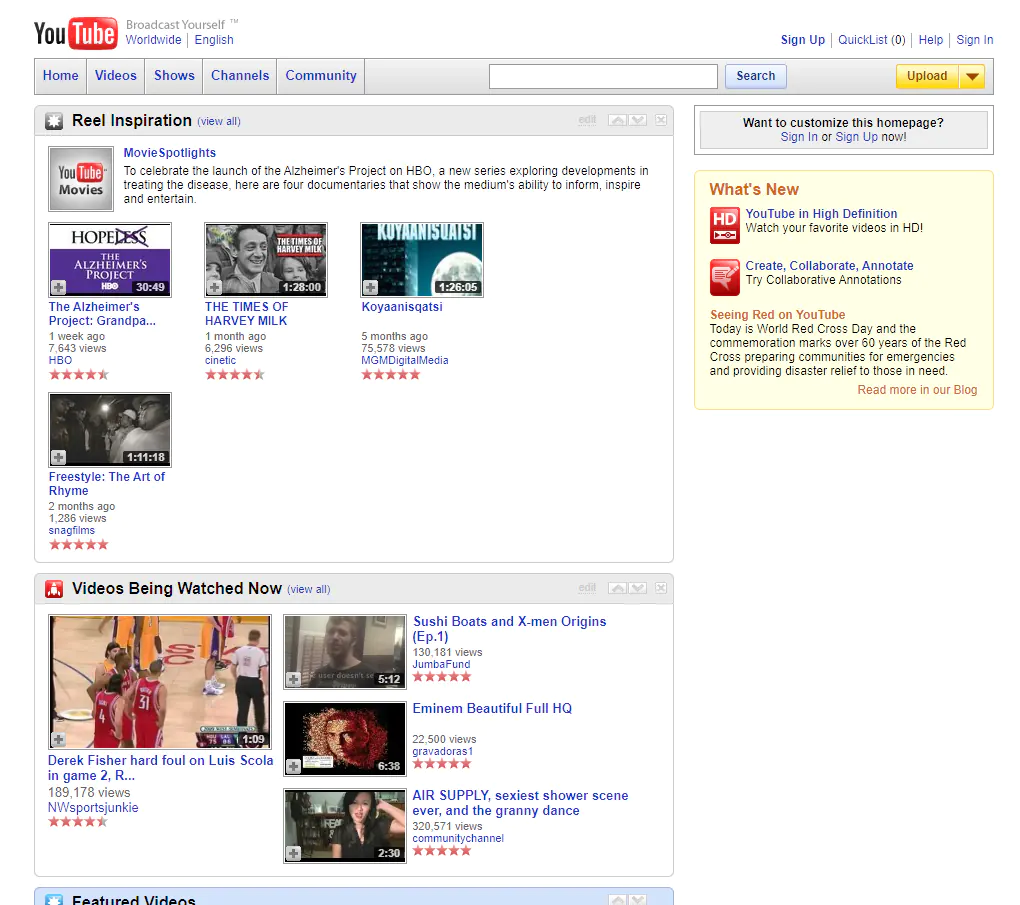
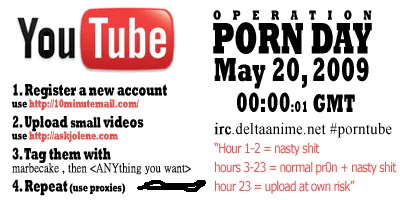
The coordinated assault, quickly dubbed "Operation Porn Day" (or "YouTube Porn Day") by its orchestrators on 4chan's /b/ (random) board and eBaum's World forums, exposed critical weaknesses in YouTube's young content moderation systems.
The raid originated in the chaotic corners of the early internet: internet users were curious when a user of a board casually asked what would happen if porn was uploaded to YouTube. The conversation escalated into a full-blown plan for mass uploading. Participants from 4chan's /b/ and later /k/ (weapons) boards joined in, turning it into a classic Anonymous-style raid.
The operation was originally slated for a specific start time, but eager participants jumped the gun on May 19, 2009.
Initial waves used a code tag "marblecake" (a nod to an earlier meme), leading to pages upon pages of porn videos appearing under that search.
As YouTube moderators began filtering those, raiders adapted quickly, switching to mainstream tags and popular searches to maximize visibility and overwhelm reporting systems.
One participant, a 21-year-old German user named "Flonty," later spoke to the BBC, claiming responsibility as part of a 4chan raid. His motivation? Frustration with YouTube's aggressive copyright takedowns of music videos.
"I did it because YouTube keeps deleting music," he said. "Children will find inappropriate material around the internet anyway. This kind of raid showed how easy it is to upload porn to a website that millions of people browse on a daily basis."
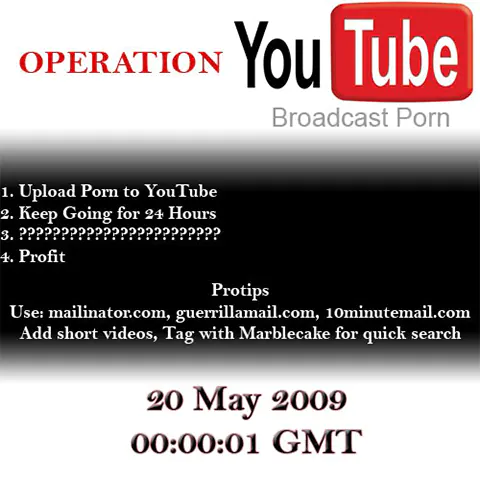
The raid's success stemmed from clever exploitation of YouTube's automated systems, which didn't filter content before making them available. The algorithms heavily relied on initial video segments, metadata, titles, tags, and basic hash-based detection rather than full-video AI analysis. Knowing this fact, the attackers initiated the following:
- Metadata Manipulation: Videos were titled and tagged with highly searched mainstream terms (Jonas Brothers concerts, popular songs, viral trends) to hijack search results and recommendations.
- Intro Bait-and-Switch: Many uploads started with 20-30 seconds (or up to half a minute) of innocuous footage (news clips, music intros, vlogs, or even children's content) before abruptly transitioning to graphic hardcore pornography, including explicit sex acts. This tricked automated scanners that prioritized the beginning of uploads.
- Thumbnail and Visibility Gaming: Explicit thumbnails remained visible in search results even after videos were taken down, prolonging exposure.
- Mass Volume and Distraction: Thousands of videos (estimates varied from hundreds to tens of thousands in a short window) overwhelmed flagging queues. Raiders also mass-flagged legitimate videos to create chaos for moderators.
YouTube, owned by Google, responded by removing videos via its flagging system and disabling accounts created specifically for the attack. Spokesperson Scott Rubin noted that while videos were pulled quickly, thumbnails and search cache could take days to clear.
The attack blindsided YouTube at a time when it was bombarded by around 20 hours of pornographic videos per minute.
For Google, this wasn't just embarrassing. It highlighted real risks to users, especially families and younger audiences who might stumble upon hardcore content disguised as teen pop. Parents reported shock at seeing explicit material in recommended feeds.
The event spawned memes, including the "I'm 12 and what is this?" catchphrase, and became a landmark in internet trolling history.
While some viewed it as harmless chaotic fun or protest against copyright policies, critics condemned it as reckless and harmful, especially for exposing minors to graphic content.
Regardless, Operation Porn Day marked a turning point for user-generated content platforms.
It exposed the limitations of purely reactive, community-flagged moderation and the vulnerabilities of early automated tools. In response, YouTube and the broader tech industry accelerated investments in newer technologies, like digital fingerprinting, proactive scanning, account and upload controls, AI, and more.
This incident, alongside growing concerns over copyright, violence, and extremism, helped usher in the end of the Wild West era of YouTube.