The world of mainstream pornography has long harbored dark undercurrents, where the line between fantasy and real-world exploitation blurs into outright crime.
Back in 2020, the spotlight turned harshly on Pornhub after explosive reporting revealed it was hosting and profiting from videos of actual rapes, including assaults on unconscious or drugged women and even child sexual abuse material. Victims came forward with harrowing stories of their most traumatic moments being uploaded, viewed millions of times, and monetized through ads and premium features.
Public outrage swelled, fueled by campaigns like Traffickinghub led by activist Laila Mickelwait.
Pressure mounted on payment giants Visa and Mastercard, whose cards were facilitating transactions on the site.
In December 2020, both companies cut ties, confirming violations of their policies against unlawful content. Within hours, Pornhub responded by deleting roughly 80% of its user-uploaded videos (over 10 million clips) because it could not verify they were free of abuse, non-consensual acts, or underage involvement.
But people on the internet were somehow smarter.
Read: Former Beauty Pageant Sues Pornhub, Alleging The Website Benefits From Her Rape Video
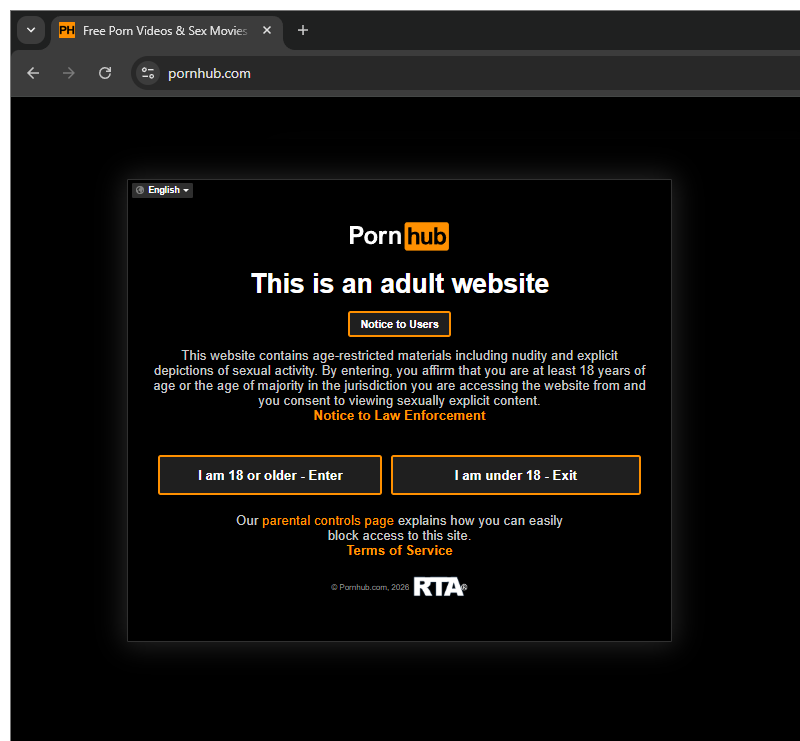
When Pornhub was forced to overhaul its moderation, banning unverified uploads and downloads in a scramble to survive the financial hit, the strategy was messy and incomplete.
Lawsuits piled up from hundreds of plaintiffs alleging the site had profited from their rapes and trafficking. The company, later rebranded under new ownership, faced ongoing scrutiny, state-level age-verification blocks across much of the U.S., and regulatory headaches in places like the UK. It cleaned up significantly on the surface, verified performers and stricter rules reduced some of the worst excesses, but the damage to victims lingered, with videos sometimes reappearing elsewhere on the web.
The episode proved one thing clearly: when the money stops flowing through major card networks, even the biggest porn tube sites feel the pain and make changes.
Uploaders don't care about these things.
If they cannot upload what they want (for free or for money), they'll do it elsewhere.
This is the reason why a similar pattern is emerging on a grittier, more extreme platform: Motherless.
A recent CNN investigation exposed a hidden online network of men trading tips on how to drug their partners, often wives or girlfriends, with sedatives to render them unconscious for sexual assault, then filming and sharing the footage.
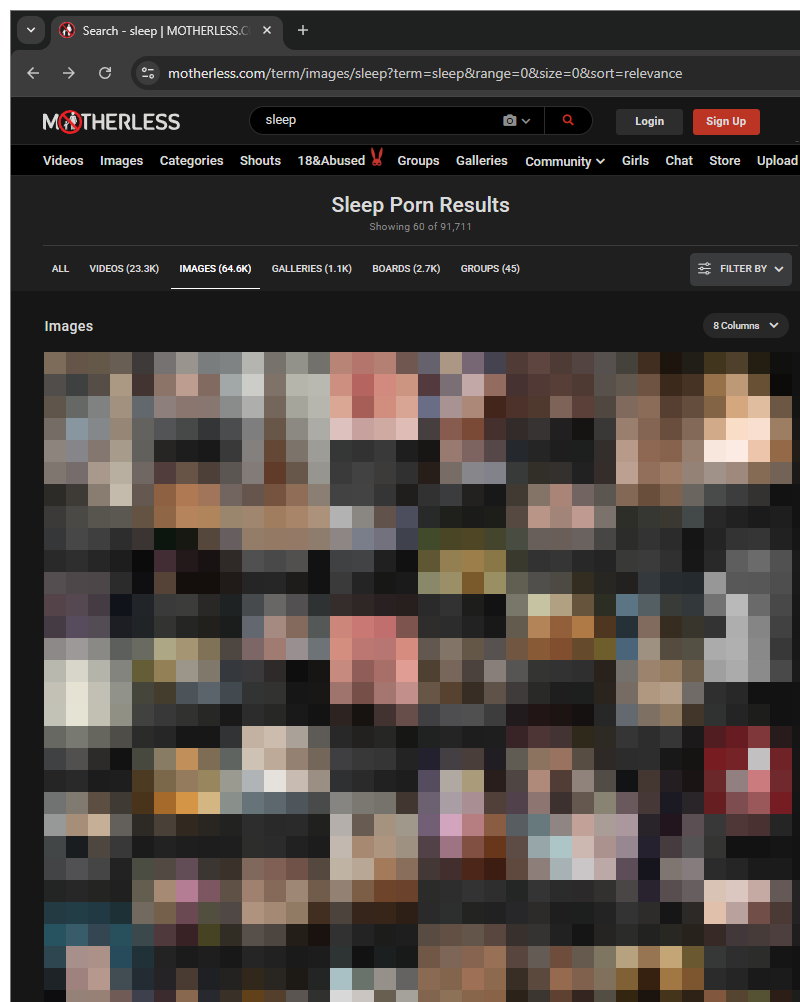
These videos, frequently labeled as "sleep" or "zzz" porn, appear in dedicated sections and groups on Motherless, with titles and descriptions openly suggesting non-consent.
Read: Pornhub Bans 'Girls Do Porn': Steps Toward Stopping Online Sex Trafficking
From Motherless website TODAY—
No verification of age or ID
No verification of consent
Totally anonymous uploading
No consequences…yet. pic.twitter.com/PgiTZ7UpQv— Laila Mickelwait (@LailaMickelwait) March 28, 2026
One category alone hosts tens of thousands of such clips, racking up hundreds of thousands of views.
The site, operated by Kick Online Entertainment, allows completely anonymous uploads with no requirements for age verification, identity checks, or proof of consent from the people featured. Users can post raw, unmoderated content depicting what looks like real rapes of incapacitated women, and the platform profits through advertising, including ads processed via Visa and Mastercard networks.
Mickelwait highlighted this exact issue in a widely viewed post this week, contrasting Pornhub's past with Motherless's present.
She pointed out screenshots from the site showing groups like "Porn Wives That Dont Know They Are" and "Sleep Beauties," where videos of seemingly unaware or drugged women circulate freely.
The CNN piece included interviews with survivors and even tracked down perpetrators boasting about their actions in group chats.
One woman featured was Gisèle Pelicot, whose high-profile French case involved her husband drugging her for years and inviting strangers to rape her while unconscious, content that echoes the "sleep" material thriving on Motherless.
The site has drawn regulatory fire in the UK, where Ofcom launched investigations under the Online Safety Act for potential failures around child sexual abuse material, extreme pornography, and inadequate risk assessments.
In early 2026, Ofcom fined the operator £800,000 for not implementing effective age assurance to keep porn away from minors, plus additional penalties for ignoring information requests. Yet the core problem of non-consensual uploads persists.
This isn't just about isolated bad actors. Motherless has long cultivated a reputation as a no-holds-barred destination for extreme fetish content that other mainstream tubes shy away from after their own scandals. Anonymous uploading means anyone with a phone can film an assault, drugged, coerced, or outright violent, and upload it for global distribution and ad revenue.
No third-party verification stands in the way to confirm the performers are adults or that genuine consent was given and documented. Laws requiring age records for commercial porn production have existed in the U.S. since 1988, but they were built for studio shoots, not the Wild West of user-generated tube sites where a single unverified clip can spread like wildfire.
Exposing a global 'rape academy.'
A months-long CNN investigation uncovers a hidden network of men encouraging each other to drug and assault their partners, and swap tips on how to get away with it.
New from @SaskyaCNN @karadaniellefox @Niamh__Kennedy https://t.co/zByM8dlmQh— CNN International PR (@cnnipr) March 26, 2026
The explicit reality is disturbing: these videos don't stay fantasy.
They capture real bodies, real violations, and real trauma that follows victims for life as the footage gets downloaded, reuploaded, and searched by millions.
What makes the harm even more insidious is the nature of the internet itself. Once a video is uploaded, whether it shows a drugged assault, a leaked intimate moment, or any form of explicit content, it spreads rapidly across a vast, decentralized network of servers, caches, and personal devices. Copies multiply instantly through downloads, mirrors, torrents, and reposts on forums, offshore sites, and darker corners of the web.
Even if the original platform removes the content under pressure, it rarely disappears.
Archived versions, screenshots, and private file-sharing ensure that it can resurface months or even years later. The phrase "the internet never forgets" becomes a devastating reality in cases of non-consensual material, where some users actively preserve and redistribute what they find arousing.
For victims, the impact is enduring. Many describe it as a permanent digital scar, with each reupload reopening the wound, transforming a single violation into ongoing exposure, humiliation, and retraumatization. The consequences can ripple through every aspect of life, affecting relationships, employment, and long-term mental health.
When payment processors such as Visa and Mastercard continue to facilitate advertising revenue on platforms hosting such content, they risk perpetuating this cycle.
Read: Serena Fleites' Stand: How One Girl’s Trauma Sparked A Global Reckoning With Pornhub
Go inside the fight and uncover the dark secrets of a p*rn empire. TAKEDOWN reveals the never-before-told inside story of how P*rnhub was exposed for enabling and profiting from countless videos of child rape and trafficking.
But the fight for justice isn’t over yet...— Laila Mickelwait (@LailaMickelwait) July 10, 2024
Activists like Laila Mickelwait argue that a straightforward solution exists: mandatory third-party age and consent verification for individuals appearing in content, not viewers.
Such a system, they contend, would create a meaningful barrier against the upload of material involving abuse, coercion, or trafficking, bringing outdated regulations into line with the realities of the digital age without eliminating adult content altogether.
Critics, however, warn of unintended consequences.
Broad identity verification requirements could erode online anonymity and open the door to expanded surveillance, extending far beyond their original intent.
Instead, they argue, existing laws should be enforced more aggressively through direct prosecution of perpetrators and stronger legal action against platforms that profit from clearly illegal material.
Others caution that removing content from one platform often disperses it across less visible channels, from encrypted messaging apps to offshore websites, making enforcement even more difficult.
At its core, the debate is deeply complex: how to protect victims and prevent exploitation without compromising fundamental online freedoms. The challenge lies in finding solutions that hold platforms, enablers, and offenders accountable without normalizing harm or surrendering the open nature of the internet.

What happened to Pornhub showed that financial pressure works when combined with public exposure and legal action.
Motherless now faces its own moment of truth, with regulators watching and activists demanding the same cutoff. Whether through payment processor decisions, stronger enforcement of existing laws, or smarter verification requirements for uploaders, the goal remains the same: stop the easy monetization of real harm.
Real change requires holding platforms, processors, and criminals accountable without sacrificing the open internet entirely.
Until then, unconscious women in "sleep" videos will keep appearing, viewed, and profited from, turning private nightmares into public entertainment.
The question is how much longer society will tolerate it before demanding better safeguards.
Further reading: Lana Rhoades, And The Impossible Feat To Remove All Of Her Porn Videos From The Internet

















































































































































































































































































