In the ever-evolving digital world, where websites appear and vanish overnight and information can be altered or erased with a few keystrokes, the Internet Archive's Wayback Machine has long served as the web's most reliable time capsule.
For more than thirty years, this nonprofit’s crawler has quietly archived over a trillion web pages, creating an unparalleled public record of online life. From vanished news stories and old fan sites to political speeches and corporate announcements that might otherwise be lost forever, the Wayback Machine has it all. Journalists, historians, lawyers, students, and everyday users rely on it daily to verify facts, reconstruct timelines, or simply revisit the internet of yesterday.
Yet, despite its usefullness, this vital tool stands on the brink of a slow, grinding decline.
Not because of a single dramatic lawsuit that could bankrupt its operators, but because the very publishers who once benefited from its existence are increasingly blocking its crawlers in an attempt to shield their content from AI companies.

The immediate threat is straightforward but devastating.
Major outlets, including USA Today (Gannett), The New York Times, The Guardian, and Reddit, have begun restricting or outright blocking the Internet Archive's web crawler, known internally as ia_archiverbot. Dozens more, and increasing number of news sites are also starting to off-limit the crawler from ever accessing their websites.
This trend is driven by fears that the Wayback Machine could act as an unwitting backdoor for AI firms scraping vast troves of copyrighted material to train their models.
The irony is thick: just weeks ago, USA Today itself drew on archived pages for an investigative report on ICE detainment policies, yet it has since joined the wave of publishers locking the door. Mark Graham, director of the Wayback Machine, has pointed out the deeper problem: as more of the public web gets walled off, society’s collective ability to understand its own recent history steadily erodes.
This new pressure arrives after the Internet Archive has already weathered years of bruising copyright battles that nearly sank the organization.
High-profile lawsuits from book publishers over its Open Library’s controlled digital lending and from music labels over its preservation of historical 78rpm recordings in the Great 78s project once threatened damages in the hundreds of millions.
Those cases were settled confidentially by late 2025, allowing the nonprofit to survive, though not without painful concessions, including the removal of hundreds of thousands of books from lending and a sense among its leadership that parts of its mission had been permanently diminished.
With the legal storm clouds finally cleared, the Archive’s team turned its attention to rebuilding. Instead, they now face a subtler existential challenge: the gradual starvation of fresh data that keeps the Wayback Machine comprehensive and useful.
The stakes extend far beyond nostalgia or academic curiosity.
As local newspapers close and traditional libraries struggle to preserve digital-only reporting, the responsibility for safeguarding journalism's record increasingly lands on the Internet Archive. Over a hundred journalists, including Rachel Maddow, Kat Tenbarge, Taylor Lorenz, and Laura Flynn, have joined the Electronic Frontier Foundation and Fight for the Future in an open letter emphasizing exactly this point.
Without the Wayback Machine, accountability journalism loses a critical safety net; lawyers lose easy access to historical evidence in court; researchers lose the ability to trace how narratives shifted over time; and ordinary citizens lose a neutral, public archive in an age when private companies can rewrite or delete their own digital footprints at will.
The tool has powered everything from tracking editorial changes at The New York Times in 2016 to helping union organizers recover old job postings. They are small, but essential threads in the fabric of public memory.
Publishers argue they are simply protecting their intellectual property in a world where AI scraping threatens their business models.
Yet critics, including the Archive's supporters, counter that blocking a nonprofit library does nothing to stop determined AI companies while actively erasing the historical record for everyone else. The New York Times and The Guardian have cited compliance concerns and "backdoor threats" as reasons for limiting access, sometimes going beyond standard robots.txt rules to implement harder blocks.
The Internet Archive is reportedly in quiet talks with some of these outlets to reverse the restrictions, but the momentum is clearly toward more closures rather than fewer. In the broader landscape of an internet increasingly carved up by paywalls, robots.txt files, and anti-scraping measures, the public’s shared digital heritage is quietly shrinking.
What makes this moment feel especially urgent is the absence of any real alternative.
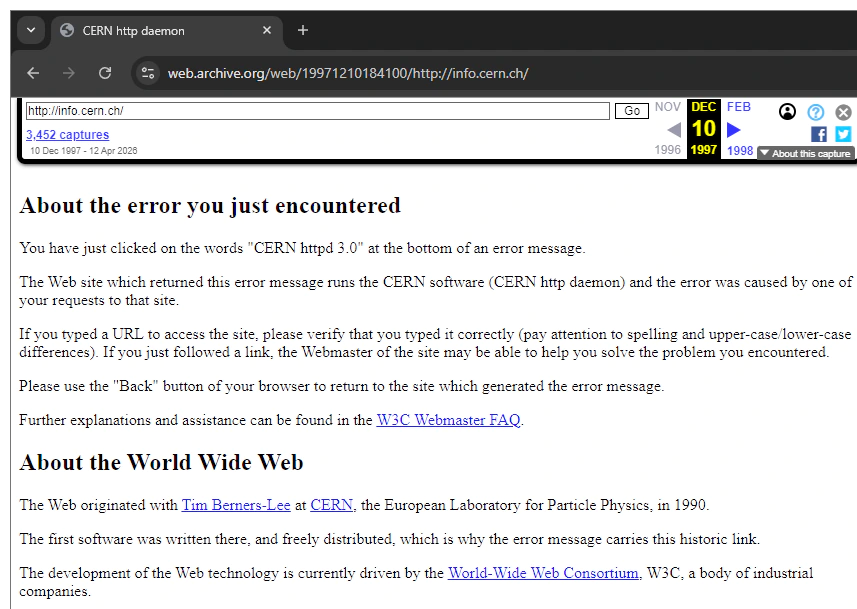
While there are others that provide similar to the Wayback Machine, none of them matches the scale, accessibility, or independence of the Wayback Machine.
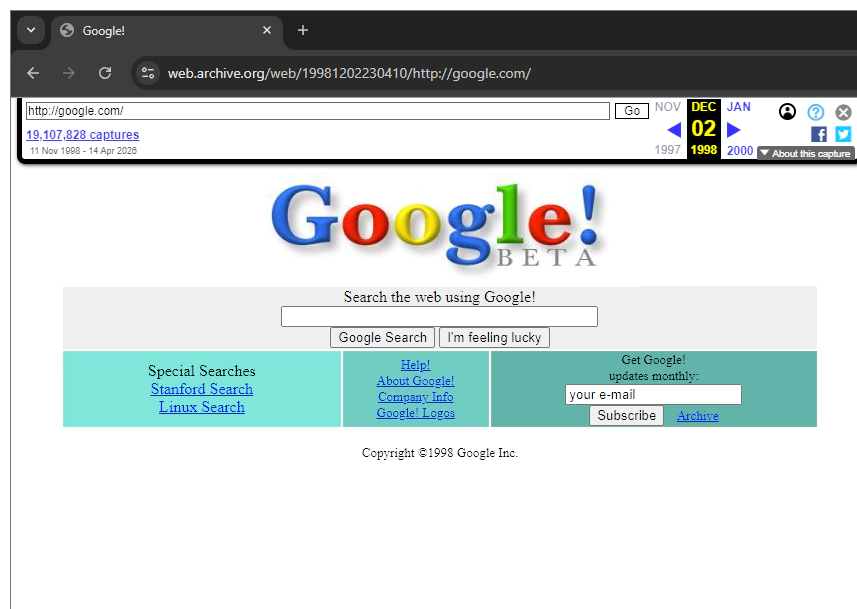
From major news articles where shifts in political headlines and wording can be tracked over time, to deleted tweets and public statements from Donald Trump, as well as full transitions of the White House website, its reach is vast. It also preserves the broader fabric of internet history: Google's first webpage, early versions of Apple's site, the earliest days of Facebook and YouTube, along with old celebrity websites, fan pages, forums, and even the origins of viral memes. Beyond that, it safeguards entire corners of the web that no longer exist, including GeoCities pages, Myspace profiles, Flash-era game portals, deleted corporate claims, old job listings, and countless other fragments of digital history that would otherwise be lost.
“We are collateral damage.” - @MarkGraham, dir. of the @waybackmachine
When preservation is caught in the crossfire, it’s not just libraries that lose—it’s the public’s access to history & knowlege.
The web shouldn’t disappear behind closed doors. https://t.co/T5MkjnfBrU— Internet Archive (@internetarchive) April 12, 2026
If the blocks continue to spread, future generations will inherit a fragmented, incomplete picture of the world and its history: one where inconvenient truths can simply disappear from the record because the organizations that published them decided preservation was too risky.
The internet's memory has never been more fragile, and the Wayback Machine has never been more essential.






















































































































































































































































































