During war, one must brainstorm for ideas to defeat the opponent.
When it comes to Russia's invasion to Ukraine, the smaller Ukraine must be able to make use of its more limited resources, and keep its invaders at away from its lands.
And among its strategies, include having drones patrolling and launching strategic attacks, with communication links using the internet.
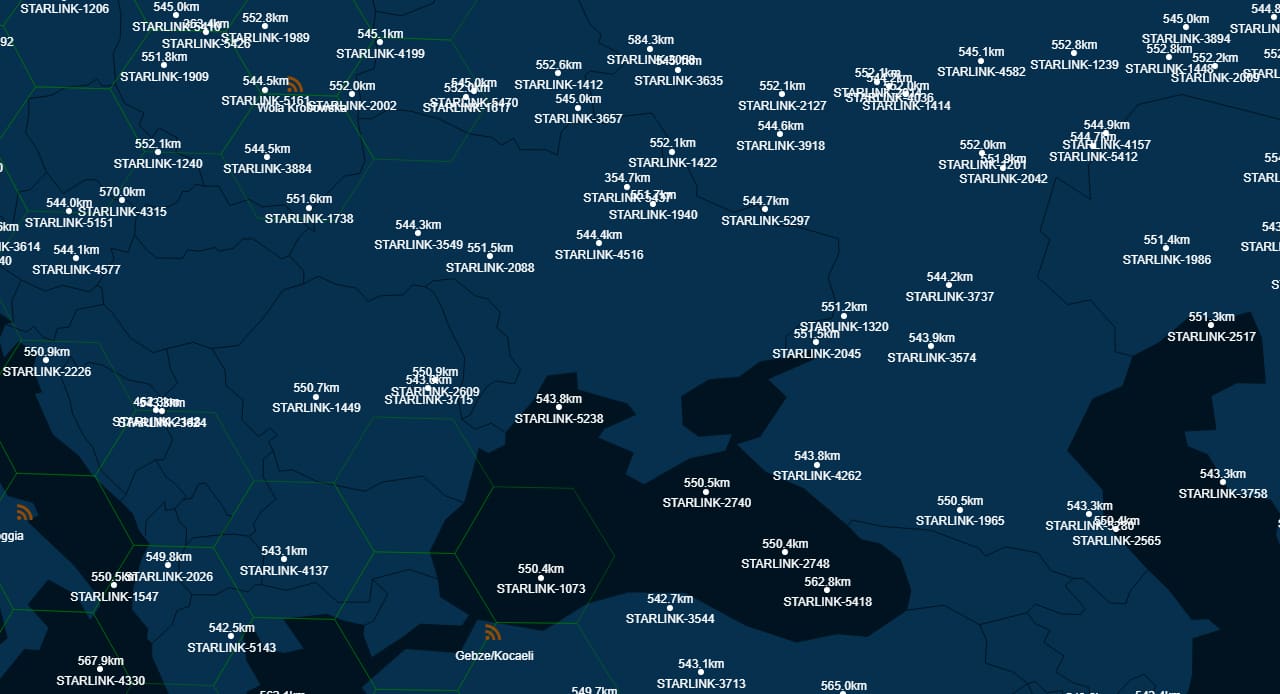
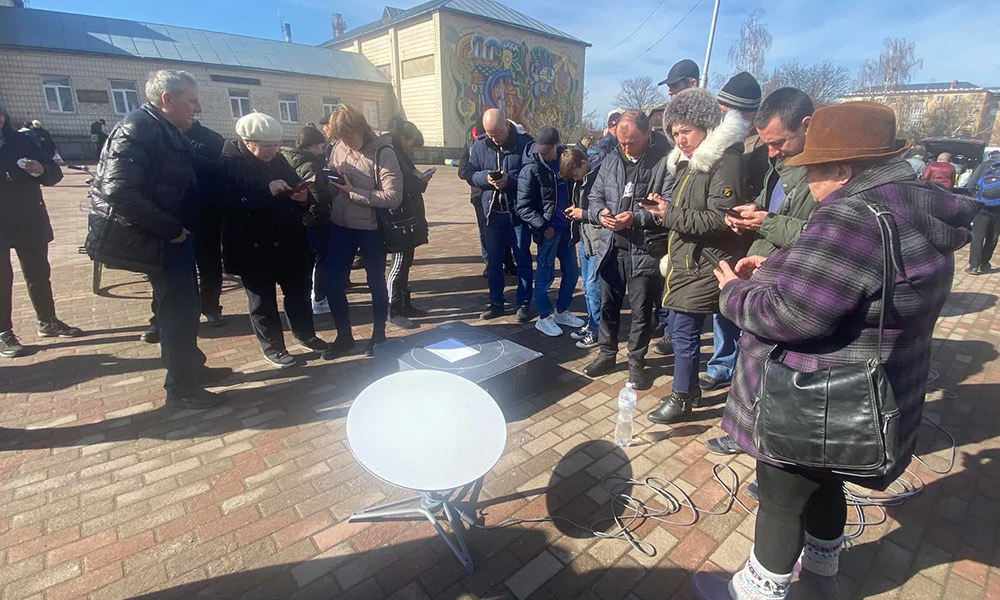
The thing is, during the war, SpaceX’s Starlink satellite internet service has been providing Ukraine’s military with broadband communications in its defense against Russia’s military. This happened because other internet services were unavailable because of war damage, power outages, jamming or simply because the locations were remote.
And according to the U.S-based company, using its internet for violence is not allowed.
It was “never never meant to be weaponized,” said Gwynne Shotwell, SpaceX’s President and Chief Operating Officer.
"However, Ukrainians have leveraged it in ways that were unintentional and not part of any agreement,” she said.
Using Starlink for personal and commercial purposes is great. But using it with drones, especially to aid in offensive attacks, is beyond the scope of an agreement SpaceX has with the Ukrainian government, Shotwell said.
She said that the contract was intended for humanitarian purposes such as providing broadband internet to hospitals, banks and families affected by Russia’s invasion.
"We know the military is using them for comms, and that’s ok," she said. "But our intent was never to have them use it for offensive purposes."
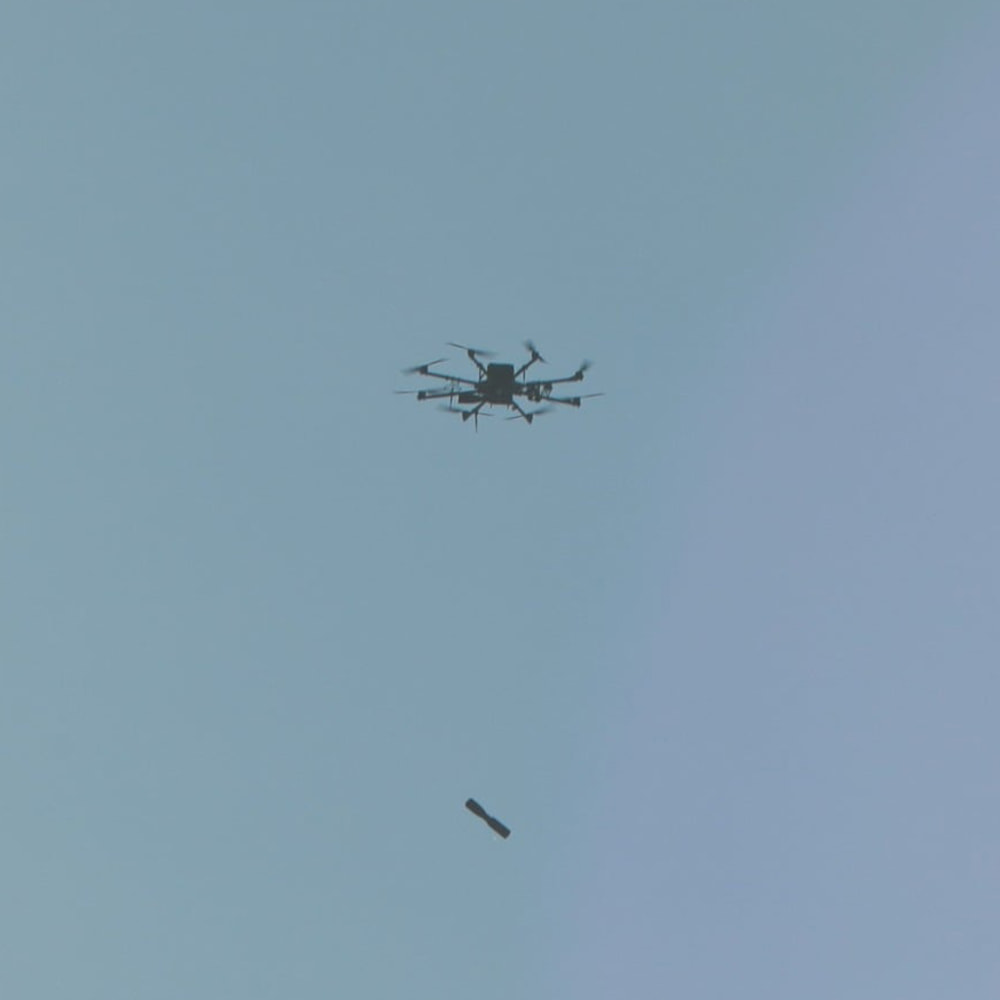
According to Shotwell, the military of Ukraine was found using Starlink services to control drones, and use the flying unmanned aircraft for spotting enemy positions, targeting long-range fires and even dropping bombs.
In particular, according to reports, Ukraine's aerial reconnaissance unit Aerorozvidka was found using Starlink internet services to monitor and coordinate unmanned aerial vehicles (UAVs), enabling soldiers to deploy anti-tank weapons with targeted precision.
The Aerorozvidka is known for using R18 unmanned combat aerial vehicle it developed in house. While R18s were originally designed for both military and civilian applications, during the war, the octocopter is more often being used to destroy enemy cannons, tanks, armored vehicles, and trucks.
The accuracy of hitting a target with a RKG-1600 anti-tank grenade is one square meter from a height of 300 meters.
During the war, only Starlink's high data rates can provide the stable communication required for these to happen.
"We use Starlink equipment and connect the drone team with our artillery team," an officer with the Aerorozvidka unit described the system. "If we use a drone with thermal vision at night, the drone must connect through Starlink to the artillery guy and create target acquisition."
It's also reported that the Aerorozvidka team ran about 300 information-gathering missions each day, in order to launch attacks at night.
Even in total darkness, the team could carry out their attacks because some of the drones are equipped with thermal cameras.
And by carrying out the mission at night, there are little risk of being shot down, since it's almost impossible to see the drones at altitude from the ground in the dark.
During this kind of mission, Aerorozvidka works with the Special Operations Forces of the Armed Forces of Ukraine.
After realizing that its internet is used to power drones at war, SpaceX has taken steps to prevent Ukraine’s military from it in the region during the country’s war with Russia.
"There are things that we can do to limit their ability to do that," she said.
"There are things that we can do, and have done."
And when Shotwell was asked whether SpaceX had anticipated Starlink’s use for offensive purposes in Ukraine when deciding to ship terminals into conflict zones, she said:
“We didn’t think about it. I didn’t think about it. Our Starlink team may have, I don’t know. But we learned pretty quickly."
"There are things that we can do to limit their ability to do that," she said, referring to Starlink's use with drones.
"There are things that we can do, and have done."
Read: After 4 Years, SpaceX's Starlink Is Still Losing Money, According To Elon Musk
It all began in 2022, when a Ukraine Minister asked U.S. tech companies for help.
Ukraine Minister of Digital Transformation Mykhailo Fedorov said that he asked the CEOs of Google, YouTube, Meta, Apple, Netflix, and others to block or limit their Russian services in an effort to elicit discontent among Russians and to put pressure on Moscow's leaders.
And to ensure that Ukraine can continue having internet connection, Fedorov asked Elon Musk to provide Ukraine access to Starlink.
Starlink is a satellite internet constellation operated by SpaceX, which provides satellite-based internet access. With mass-produced small satellites orbiting in low Earth orbit (LEO), Starlink's constellation can deliver internet connection to any place on Earth.
And in his country's war with Russia, Fedorov asked Musk for assistance.
"Dear Elon Musk! While you are trying to colonize Mars, Russia is trying to colonize Ukraine! While your rockets are successfully landing from space, Russian rockets are attacking Ukrainian kindergartens and hospitals! We need support. I ask you to provide Ukraine with Starlink stations and access to satellite Internet as soon as possible," Fedorov said in a message on Telegram.
The Minister thanked Musk when the Starlink dishes arrived.
"You are most welcome," Musk responded.
The deal between Ukraine and SpaceX involved no secret dispatches, no debates, no governmental or parliamentary controls.
All happened in a very public tweet between a politician whose country has been attacked, and an enigmatic billionaire who went on to challenge the aggressor, Russian President Vladimir Putin.
Read: Ukraine Minister Asks U.S. Tech Companies For Help, And Ask Them To Also Pressure Russia
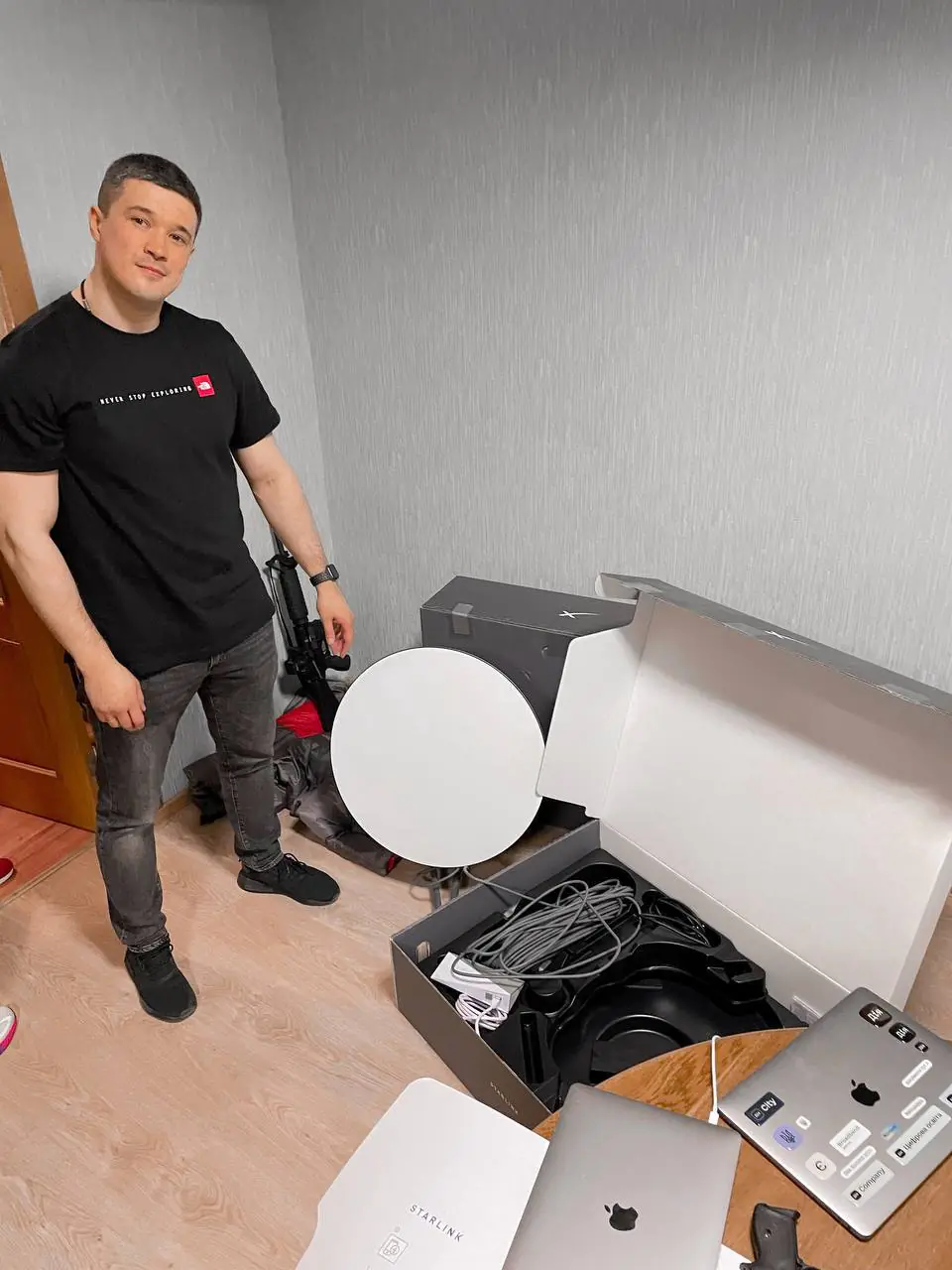
Governments including the United States and France have crowdfunded payments for shipments of Starlink terminals to Ukraine, on top of those funded privately by SpaceX.
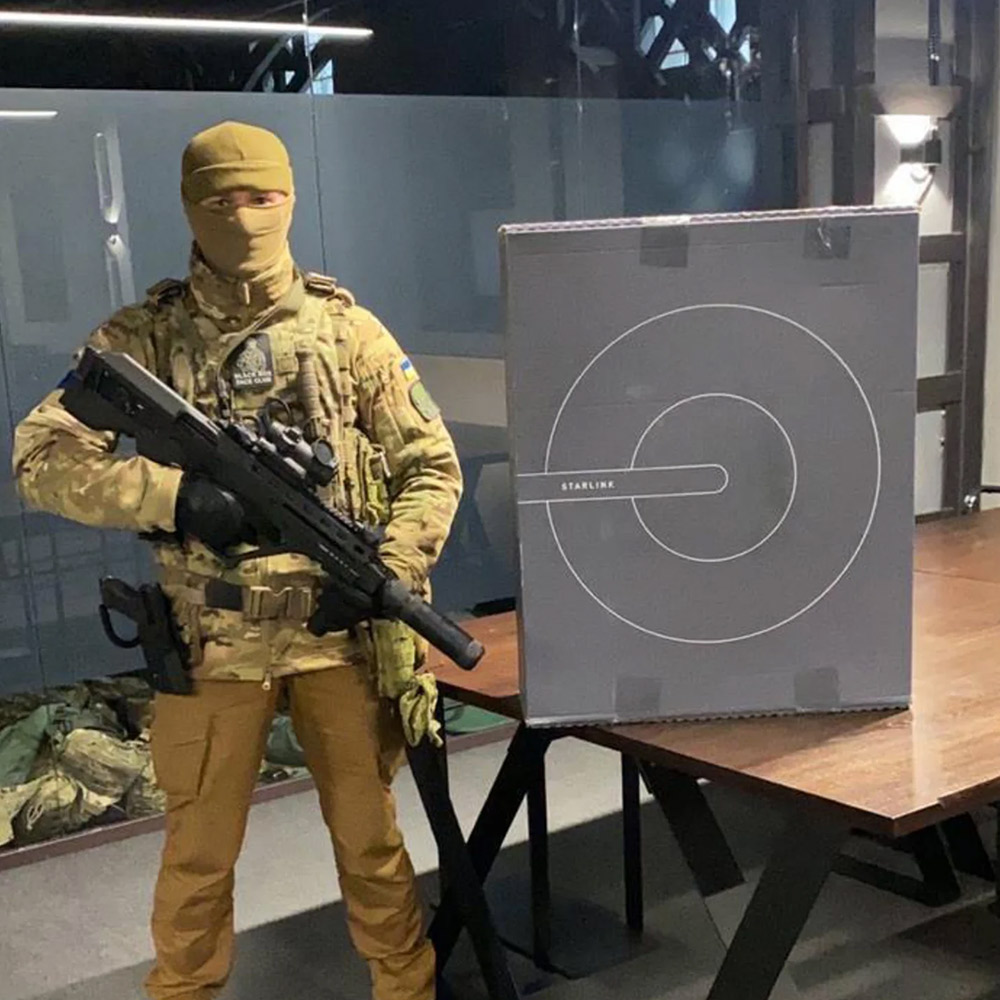
And since, SpaceX has privately shipped truckloads of Starlink terminals to Ukraine, allowing the country’s military to communicate by plugging them in and connecting them with the thousands of satellites SpaceX has launched into low-Earth orbit..
But again, in a war, where resources should be spent effectively and efficiently, the Ukraine military realized that they can use the internet to help power the drones.
The military realized that Starlink's portable internet hubs can be a game-changer for Ukraine’s military, in which it they aid with communications amid the devastation of Ukraine’s electricity and internet infrastructure.
In response to SpaceX's decision, a senior Ukrainian presidential aide has reacted with anger after hearing Elon Musk’s SpaceX had taken steps to prevent its Starlink satellite communications service from controlling drones.
Mykhailo Podolyak, a senior adviser to Ukraine’s president, Volodymr Zelenskiy, argued that Musk’s business had failed to recognize Ukraine’s right to self-defense.
Companies, Podolyak tweeted, had to decide if they were “on the side of the right to freedom” or “on the Russian Federation’s side and its ‘right’ to kill and seize territories” after its unprovoked invasion in 2022.
A year of resistance & companies have to decide:
-Either they are on the side of & the right to freedom, and don’t seek ways to do harm.
-Or they are on RF’s side & its "right" to kill & seize territories.#SpaceX (Starlink) & Mrs. #Shotwell should choose a specific option— Михайло Подоляк (@Podolyak_M) February 9, 2023






















































































































































































































































































