In the chaotic swirl of global headlines and endless social media scrolls, few figures have captured the raw, unfiltered pulse of Iranian dissent quite like Mooné Rahimi.
A young Iranian-American woman balancing the life of a PhD in engineering with the fire of exile activism, she burst onto the international stage earlier this year not through dry policy debates or gloomy interviews, but with a joyful, defiant dance video that seemed to embody the hope of millions of Iranians.
What began as a personal celebration quickly became a viral phenomenon, turning Rahimi into an unlikely symbol for those who dream of a free Iran: one without the grip of the Islamic Republic.
Yet her story runs far deeper than a single clip; it’s a tale of escape, resilience, personal loss, and an unwavering belief that liberation might finally be within reach.
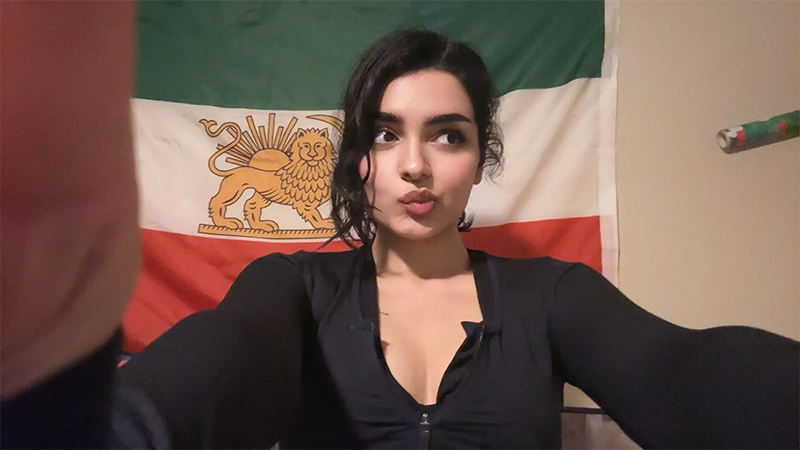
Iran, officially the Islamic Republic of Iran and historically known as Persia, is a country in West Asia.
Despite social and technological changes over time, Iran has undergone a lot of changes. But still, it remains a tightly controlled society. Mooné Rahimi grew up under the regime's strict rule, where women's daily lives were shaped by morality police, mandatory hijab laws, and the risk of punishment for even minor acts of defiance.
She has spoken openly about these experiences and how that constant sense of fear overshadowed her youth.
The left picture is me at 7 yo when I was living in Iran under the Islamic regime. They forced me to wear a full hijab to attend school, if I didn’t, they wouldn’t let me enter. They made me wear it from a young age to avoid “provoking” men in society, claiming it was all… pic.twitter.com/ayOQMGkvdH
— Mooné Rahimi (@hiitsmemooneh) March 20, 2026
She later had the opportunity to relocate to the U.S. to pursue her doctorate, a move that opened the door to an entirely different way of life.
There, she experienced freedoms that had once felt out of reach: the ability to study openly, express her thoughts without restraint, and live without the constant pressure of surveillance.
For the first time, even something as simple as dancing became an act of joy rather than risk, no longer shadowed by fear or consequence.
Yet, that same freedom would eventually carry unintended incident.
What began as an expression of liberation may have drawn attention she never anticipated. As her fame grew, she was left grappling with the reality that her openness came at a personal cost.
Her breakout moment came in late February and early March 2026.
Amid reports of U.S. and Israeli airstrikes targeting key sites in Iran, including those tied to the regime’s leadership. When news broke of Supreme Leader Ayatollah Ali Khamenei’s death, Rahimi didn't respond with solemn analysis or cautious statements. Instead, she posted a video of herself dancing energetically to the Village People’s Y.M.C.A., mimicking then-President Donald Trump’s signature moves with a wide, radiant smile.
The clip was pure, unbridled joy: arms pumping, hips swaying, the kind of carefree celebration that felt revolutionary for someone who had once risked everything just to live authentically.
It racked up more millions of views almost overnight, spreading like wildfire across Instagram, X, and beyond.
Ok yall, if you looking for that Iranian baddie who was dancing Trump song, hi! Das me.
I left Iran few years ago, now doing my PhD in engineering in the US.
I’m beyond grateful for the freedom here, the dream so many Iranians are fighting for.
Thank you, America, for your… pic.twitter.com/Kjutd6xMUy— Mooné Rahimi (@hiitsmemooneh) March 2, 2026
For many watching, it wasn't just entertainment; it was catharsis.
Iranians who live outside Iran, they mostly live abroad due to the long weary of the regime's oppression. Many of them seek freedom of pretty much anything they cannot experience in their home country. And here, they saw in her dance a mirror of their own suppressed hopes.
Rahimi later reflected on the moment simply: if you were looking for "that Iranian woman who was dancing to a Trump song," it was her.
She framed the strikes not as aggression but as a long-overdue "rescue mission" for the Iranian people, a chance to finally dismantle the machinery of tyranny that had claimed so many lives.
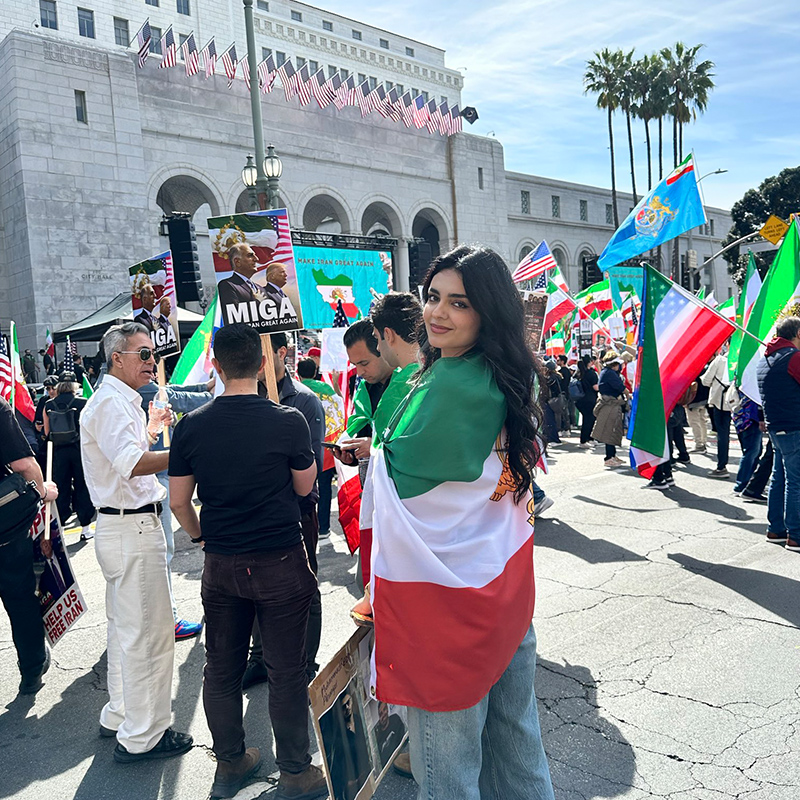
But leaving didn’t mean forgetting.
Instead, it fueled a fierce patriotism rooted in monarchist ideals: she proudly identifies as a supporter of restoring Iran's pre-revolution heritage under the banner of "Javid Shah," or long live the Shah.
On her social media profiles, where she calls herself "your favorite Iranian baddie," she blends this seriousness with a vibrant, unapologetic personality: part engineer, part influencer, fully committed to what she terms MAGA (Make America Great Again) and MIGA (Make Iran Great Again).
Her posts mix cultural pride, political commentary, and that signature blend of sass and sincerity that has won her a dedicated audience among Iranian exiles and American conservatives alike.
The backlash was swift and predictable.
Critics, including some Western activists and online commentators, accused her of insensitivity or even celebrating violence without grasping its human cost. Feminists online questioned how a woman could cheer military action against her homeland. Rahimi pushed back hard, drawing from her own experiences to explain why so many Iranians viewed the developments differently.
She appeared on platforms like Dana Loesch’s show and Fox & Friends, recounting firsthand the regime’s brutality: the morality police encounters, the enforced silence on women, the daily erosion of basic freedoms.
This morning I was interviewed on Fox & Friends and talked about my experience in Iran and the executions of innocent people happening there.
I will keep talking about Iran until this country is free of the Islamic regime.
I’m so grateful for this opportunity! https://t.co/NuYDIBJh16— Mooné Rahimi (@hiitsmemooneh) March 21, 2026
In one interview, she described how growing up under such rules made the idea of regime change feel less like war and more like salvation.
Living in the U.S. where she is having the freedom of speech and expression she wouldn't have back in Iran, she said that she's committed to being a voice for the Iranian people who cannot speak freely.
"Women in Iran are fighting for their freedom," she said.
This was a great conversation I had with @VanessaBNews on @RealLindellTV about Iran’s current situation and some of my experiences as a woman in Iran!
Thank you so much, @VanessaBNews, for this opportunity to speak about Iranians inside Iran, especially since they cannot do it… https://t.co/nOmEExXfzT— Mooné Rahimi (@hiitsmemooneh) March 16, 2026
Her message resonated because it wasn’t abstract theory.
Instead, it was lived reality from someone who had fled the very system now under fire. Far from a detached observer, Rahimi positioned herself as a bridge between two worlds: the America that had given her safety and the Iran she still loved enough to fight for from afar.
This is me on the left with my beloved cousin, whom I lost last week. He would be alive if there was no Islamic regime. I’m writing this with tearful eyes.
This picture was probably the last time I was really happy in my life, before I realized where I was born and where I live.… pic.twitter.com/p5Rf9P4a1L— Mooné Rahimi (@hiitsmemooneh) March 25, 2026
Yet even as the viral fame brought her into the spotlight, reality delivered a heartbreaking reminder of the conflict's toll.
Just weeks after the dance video dominated feeds, Rahimi shared a sad news: her cousin had been killed in the escalating violence. On March 25, she posted a childhood photograph of the two of them together, writing with raw honesty,
"This is me on the left with my beloved cousin whom I lost last week. He would be alive if there was no Islamic regime."
The grief was palpable. She described the pain of watching her homeland unravel from the safety of the U.S., admitting that the move abroad hadn’t brought the unclouded happiness she once imagined.
"I thought I would finally be happy if I moved to a great country like the USA," she wrote, "but it didn’t happen because I’m watching my hometown getting ruined and my sisters and brothers getting murdered."
Social media erupted again, with some twisting her words to suggest hypocrisy: celebrating strikes one day, mourning a family loss the next.
Rahimi refused to let the narrative shift.
She clarified repeatedly that this was no "war" in her eyes, but a rescue operation gone necessary because of the regime's own actions.
The blame, she insisted, lay solely with the Islamic Republic's forces, not the U.S. or Israel. In follow-up posts and videos, she shared clips of regime atrocities against civilians, challenging critics to confront the daily executions and oppression that predated any foreign intervention.
"The USA and Israel are doing Iranians a favor by helping them get rid of this brutal regime," she declared, turning personal tragedy into renewed resolve.
She also openly support Reza Pahlavi, the former Crown Prince of the Pahlavi dynasty of Iran, currenly a dissident in exile living in the U.S..
This man taught me what it feels like to be a patriot and to love your country.
Before that, I was kinda lost, and because of all those mullahs who took over Iran 47 years ago and did awful things to it, I couldn’t realize how much I love Iran.
Thank you, Prince Reza Pahlavi,… pic.twitter.com/PPGJQStqW1— Mooné Rahimi (@hiitsmemooneh) March 18, 2026
What makes Rahimi’s voice stand out in the crowded arena of exile activism is this refusal to sanitize or simplify.
She doesn't present Iran's struggle as a neat ideological battle; she lives it in the tension between joy and sorrow, between viral dances and quiet mourning. As a PhD student, she brings an analytical edge to her advocacy, often pointing to the regime’s propaganda machine and the funded influencers she says distort the truth.
At the same time, her "baddie" persona that is playful, stylish, unapologetically feminine, challenges the regime's narrative of what Iranian women should be.
Dancing in public, supporting Trump, embracing American freedoms while waving the flag for a restored monarchy: these aren't contradictions to her, but proof that liberation can look vibrant and multifaceted.
In the end, Mooné Rahimi represents something larger than one influencer's fifteen minutes of fame.
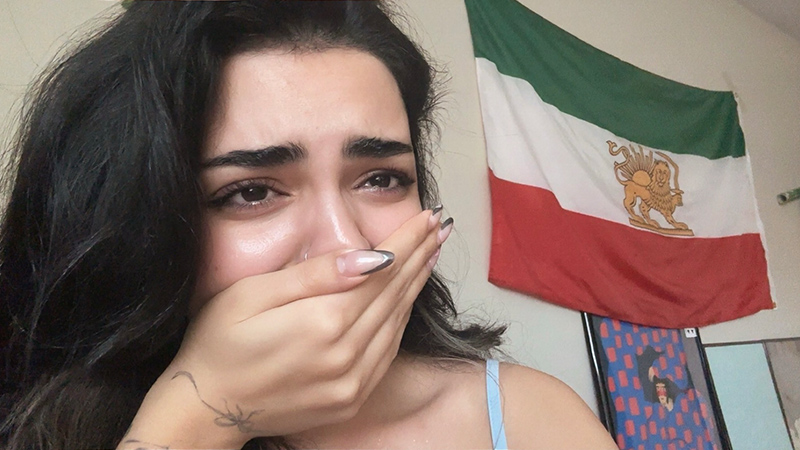
She embodies the complicated emotions of a diaspora watching history unfold in real time, facing the internet's judgement, and having hope but to eventually lace a heartbreak. Her celebration was met with a loss.
Her story cuts through the noise because it's authentic: a young engineer who escaped the darkness, only to shine a light back toward home.
Ultimately, one thing is clear: in an era when so many voices on Iran feel scripted or distant, Rahimi's stands out as deeply, defiantly human.






















































































































































































































































































