The adult entertainment industry is undergoing profound changes, caught between tightening government regulations and the explosive rise of AI that could redefine content creation forever.
Some of the world's biggest porn websties have far more traffic coming to them than Netflix, and Pornhub is the biggest of them all.
Along with its sister sites YouPorn and RedTube, together, they made headlines with a bold move announced by its parent company, Aylo. Effective February 2, 2026, new users in the United Kingdom will be completely blocked from accessing these sites. Only those who previously created accounts and completed age verification will retain access.
This stems from the UK's Online Safety Act (OSA), implemented in summer 2025, which requires strict age checks like facial scans, ID uploads, or credit card verification for adult content.
Aylo has criticized the system as ineffective, claiming it has driven a massive 77% drop in UK traffic while pushing users toward unregulated, potentially riskier sites. The company views this as a "difficult decision" to protest what it calls a failed policy that endangers privacy without truly protecting minors.
Similar restrictions already affect Aylo platforms in 23 U.S. states and France, often bypassed via VPNs, highlighting a global patchwork of porn bans and age-verification battles.

This regulatory squeeze coincides with AI's rapid infiltration of the industry, sparking intense debates about the future of human performers.
At events like the recent AVN Expo in Las Vegas, discussions centered on whether AI-generated content could displace porn stars entirely. Advances in generative tools, including image and video synthesis powered by large language models (LLMs) and diffusion models, allow for instant creation of hyper-realistic scenes, and custom fantasies, and even interactive "dream girls."
The market for AI-driven adult content is booming, projected to reach billions in value with annual growth rates exceeding 25%.
Platforms dedicated to synthetic porn are proliferating, offering users endless variations without the need for real actors, cameras, or consent negotiations.
Deepfakes and non-consensual synthetic media remain a dark undercurrent, with experts warning that misuse, ranging from revenge porn to fabricated child exploitation imagery has only just begun, amplified by "jailbreaking" techniques that bypass safeguards in models like Grok.
On top of that, AI-powered chatbots that are unrestricted, can also engage in intimate conversations, making the trend and needs shift even further.
Read: 'GirlsDoPorn' Boss Tries To Present Himself As A Reformed Man, Ahead Of His Sentencing
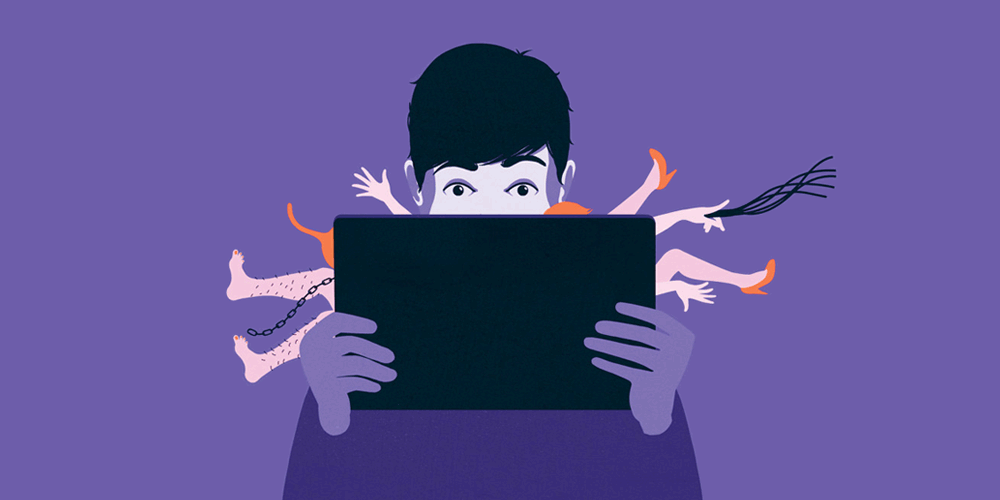
The shift has hit subscription platforms hardest, particularly OnlyFans, which revolutionized the space by empowering individual creators to monetize direct fan relationships through personalized videos, chats, and a sense of authentic intimacy.
Surging during the COVID-19 pandemic, OnlyFans shifted power from traditional studios to performers who could earn substantial incomes with greater autonomy. While it resist pure AI replacement to preserve the "real connection" premium, yet AI threatens this model profoundly: virtual influencers and AI chatbots can provide 24/7 availability, multilingual interactions, and perfect customization at minimal cost.
Some creators already experiment with AI "twins" for efficiency, generating images or handling routine messages, while fully synthetic accounts on competing platforms like Fanvue rake in revenue.
Predictions vary wildly: optimists see AI as a tool for enhancement, while pessimists fear it could erode the human element that drives subscriptions, with audiences craving real connection over flawless but soulless digital replicas.
Iconic brands like Playboy illustrate how far the landscape has shifted from its golden era. Once selling millions of print copies monthly as a cultural touchstone blending erotica with interviews and lifestyle content, Playboy's print edition largely ended after Hugh Hefner's 2017 death, crippled by free online porn and changing habits.
The magazine paused entirely in 2020 amid pandemic disruptions and digital-first pivots. Though a limited annual print revival launched in February 2025, with centerfolds, celebrity features, and events tied to major occasions, its influence feels nostalgic in an era dominated by instant, user-generated, and increasingly AI-produced material.

The "LLM war," the fierce competition among AI developers to build ever-more-capable models, has spilled directly into adult content, enabling everything from erotic storytelling to full video generation.
This accelerates innovation but intensifies ethical concerns around consent, exploitation, addiction, and the devaluation of human labor.
Some performers adapt by emphasizing live interactions, niche authenticity, or anti-AI branding to highlight real emotion and unpredictability that algorithms struggle to replicate. Others worry about job losses in an already precarious field.
As platforms evolve, regulators grapple, and technology races ahead, the porn industry's fate mirrors broader societal questions: Will humans retain value in intimacy's digital frontier, or will synthetic alternatives satisfy desires more efficiently? At this time, the answers remain unfolding, blending opportunity, disruption, and unease in equal measure.
Further reading: Serena Fleites' Stand: How One Girl’s Trauma Sparked A Global Reckoning With Pornhub






















































































































































































































































































