Telegram has announced that it is going to share users' IP addresses and phone numbers with authorities in response to valid legal requests, such as search warrants.
This update to its terms of service and privacy policy is intended to "discourage criminals," according to CEO Pavel Durov in a Telegram post.
“While 99.999% of Telegram users have nothing to do with crime, the 0.001% involved in illicit activities create a bad image for the entire platform, putting the interests of our almost billion users at risk,” Durov added.
This marks a significant shift for Durov, the Russian-born co-founder of Telegram.
The move comes less than a month after his arrest by French authorities at an airport near Paris, where he was later charged with enabling criminal activity on the platform, including accusations of complicity in the distribution of child abuse material and drug trafficking, as well as non-compliance with law enforcement.

Telegram, one of the world’s biggest messaging apps, with nearly a billion users, is also a giant black market and gathering place for the likes of terrorists and white supremacists.
Critics argue that Telegram has become a haven for misinformation, and also child pornography, due to its feature allowing groups of up to 200,000 members - much larger than the 1,000-member cap on Meta-owned WhatsApp.
In the past, the United Arab Emirates-based platform has been notoriously nonresponsive to takedown requests from governments around the world, and often ignored requests for information about suspected criminals.
But following the 39-year-old CEO’s arrest and his statement to change Telegram's terms of service, he ignited a debate about free speech protections online.
Telegram has long marketed itself as a platform that would resist government demands attracted people that wanted to feel safe sharing their political views in places like Russia, Belarus, and the Middle East.
Under Durov, Telegram has drawn the ire of governments ranging from the European Union to authoritarian regimes in Russia and Iran. It has been used by protesters seeking to organize against the authorities, while also becoming a hub for conspiracy theorists and extremists.
Because the move represents a marked difference from Telegram’s approach to government requests for data and its reputation for lax moderation, now, many start questioning whether Telegram remains a safe space for political dissidents.
Many have begun scrutinizing Telegram's announcement with a basic question in mind: does this mean the platform will start cooperating with authorities in repressive regimes?
Fueling even more concern, Telegram has not clarified how it will handle requests from such regimes.
This time, Durov said that the app had implemented a "dedicated team of moderators," and AI, to to hide harmful content from search results.
Telegram has also disabled new media uploads, which Durov said was aimed at stopping bots and scammers.
Long story short, Telegram, the privacy-focused messaging app, had been that repulsive type when someone asked for its data.
But somehow, following Durov's arrest and the immense pressure, the company now has to discloses a more proactive approach to reporting infringers to authorities.
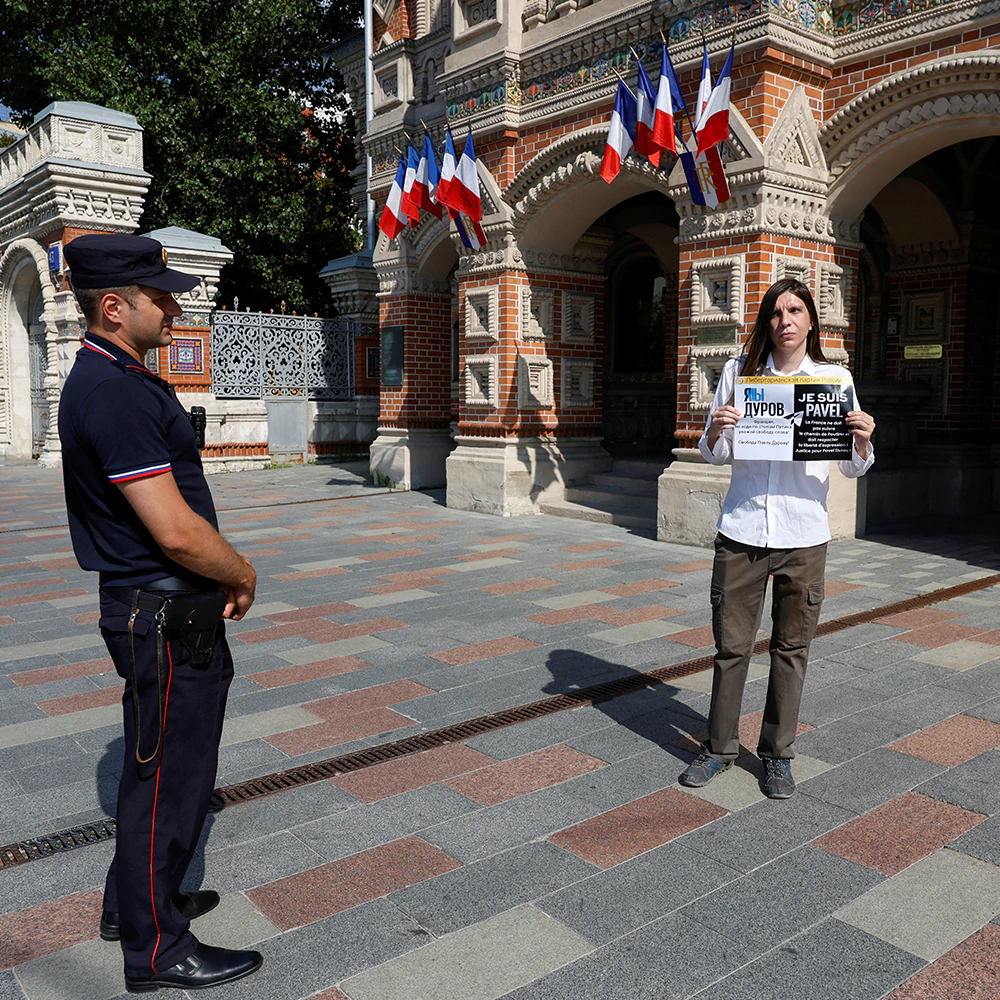
When Durov made his statement, Durov who who denied any charges, is out on bail, but has been ordered to stay in France until the investigation is closed.
It's worth noting that previously Telegram would only provide information on terror suspects.
Telegram has previously faced pressure from Russian authorities, who attempted to ban the app in 2018 and led Durov to move to Europe.
At the time, Kremlin failed to shut down the service, because its attempt to block Telegram inadvertently crippled many parts of the government's IT systems.














































































































































































































































































