Google Street View is a Google's technology showcased on Google Maps and Google Earth.
What it does, is providing interactive panoramas from users' positions for many streets and places around the world.
Launched back in 2007, initially in several cities in the United States, Street View has since expanded to include cities and rural areas worldwide. Places with Street View imagery available are shown as blue lines on Google Maps.
And this time, in 2022, Google Street View is 15 years old.
Celebrating its birthday, Google introduces a bunch of features to make Street View even better, especially in the world where an increasing number of people are on mobile.
In a blog post, Google said that:
First up, is Google in bringing historical Street View data to iOS and Android phones.
The feature has long existed on desktop browsers. This time, mobile users can finally use it. To do this, users can click into Street View mode and then time travel through Google's image archives. When users tap on a place to see Street View imagery, a "see more dates" button will appear next to the current age of the photo.
This allows users to browse all the photos for that area going back to 2007.
Next, is Google in adding four new collections of Street View imagery: The Pyramids of Meroë in Sudan, The Duomo in Milan, Les Invalides in Paris and the Sydney Ferries in Australia.
And not just that, as Google also introduces a smaller, modular Street View camera system:
Google said that the new hardware has all the capacity and the resolution, as well as the processing power of its full Street View camera system, but with in a package that only weighs 15 pounds.
That is “roughly the size of a house cat.”
The camera system that is a tenth of the weight of its predecessor, should make it a lot easier to be mounted on any type of vehicles, and also on top of someone's backpack, if Google ever wants to capture Street View images at more remote locations.
In the past, Google has to customize its Street View camera to whatever vehicle it needed to be fit in. But with this upgraded camera system that is significantly smaller and lighter, the camera's modular capability makes it much more customizable.
It’ll serve as the "base" system that can be added to should the circumstances require it.
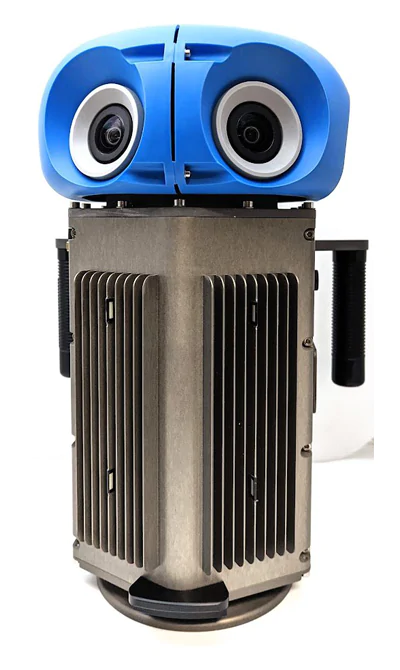
For example, Google noted at initially, the new camera doesn’t have the LiDAR scanner, a system typically found on Street View cars that operate in cities. But Google said that the camera's modular system makes it easy to add more sensors whenever it's needed.
Google said that the new camera system, which looks like Steven Spielberg's E.T., is being tested and expects to be fully rolled out in 2023.
For users who wish to help Google with its plan to photograph the entire world, the company is launching "Street View Studio."
Google calls this "a new platform with all the tools you need to publish 360 image sequences quickly and in bulk."
The Street View app is still around for people who want to build a 360 photosphere from a regular smartphone camera, but Google imagines Street View Studio as a tool for people with consumer 360 cameras. Google has a store-style page that lists compatible 360 cameras.














































































































































































































































































