Deaths and the internet never seem to get along. Every time death is caught on camera, that moment will be shared on social media networks.
And when the death involves someone famous or influential, the more the people would share the evidence.
The same goes to Shinzo Abe, when he was shot by a man in Japan's Nara.
The shocking videos, recorded by people who were attending the scene, have all gone so viral, that both Facebook and its properties, as well as Twitter, are struggling to contain its spread.
While the footage is disturbing to watch, netizens across the world are reacting to how terrifying the attack was on the former Japanese Prime Minister.
Netizens were also posting videos from the site of the attack, the aftermath, and how people were running across the streets in search for shelter, using hashtags like #ShinzoAbe, #Shocking, #BreakingNews, #Nara, and Shinzo, among others.
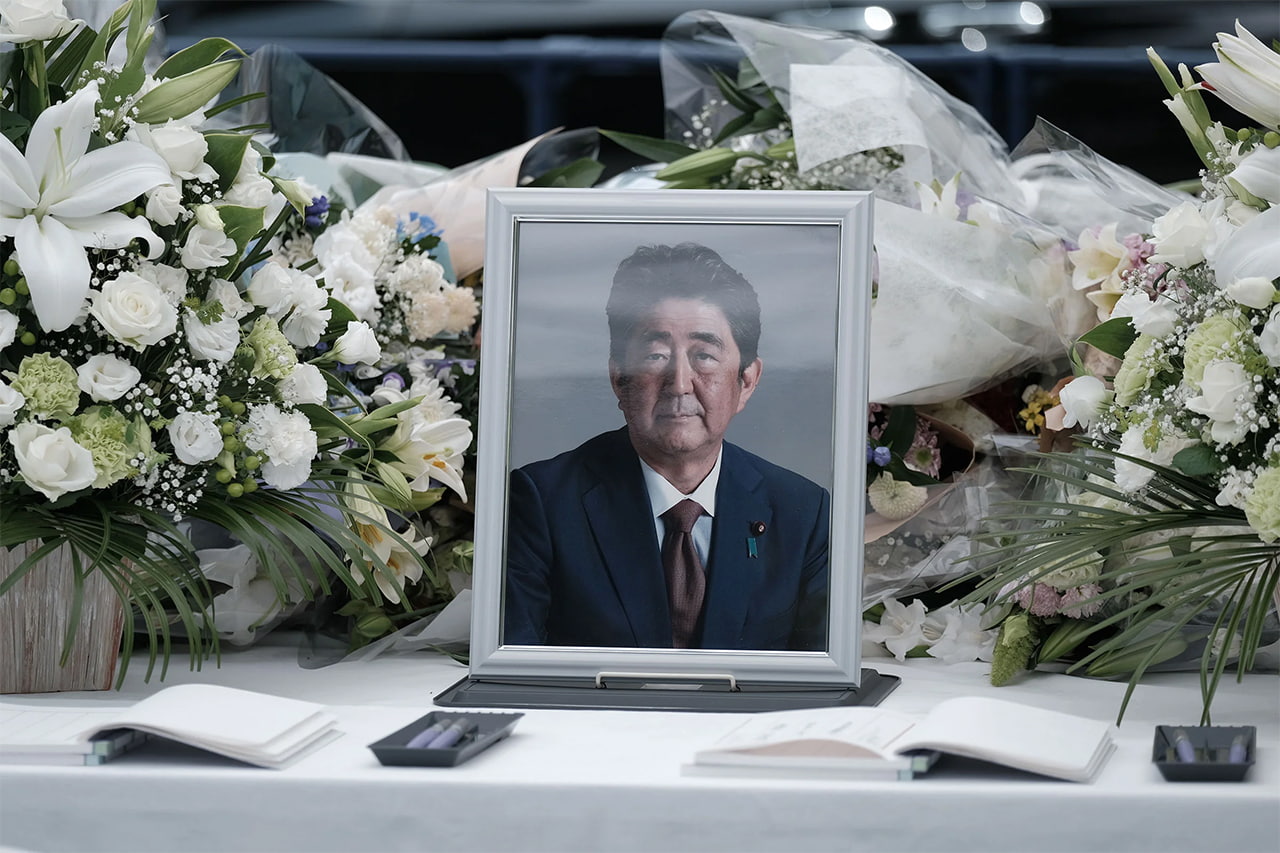
Shinzo Abe was attacked in broad daylight, at around 11. 30 a.m. local time near the Yamato-Saidaiji Station in Nara, Nara Prefecture, Japan.
The 67-year-old former leader was making a speech for a Liberal Democratic Party candidate's election campaign when the attack happened.
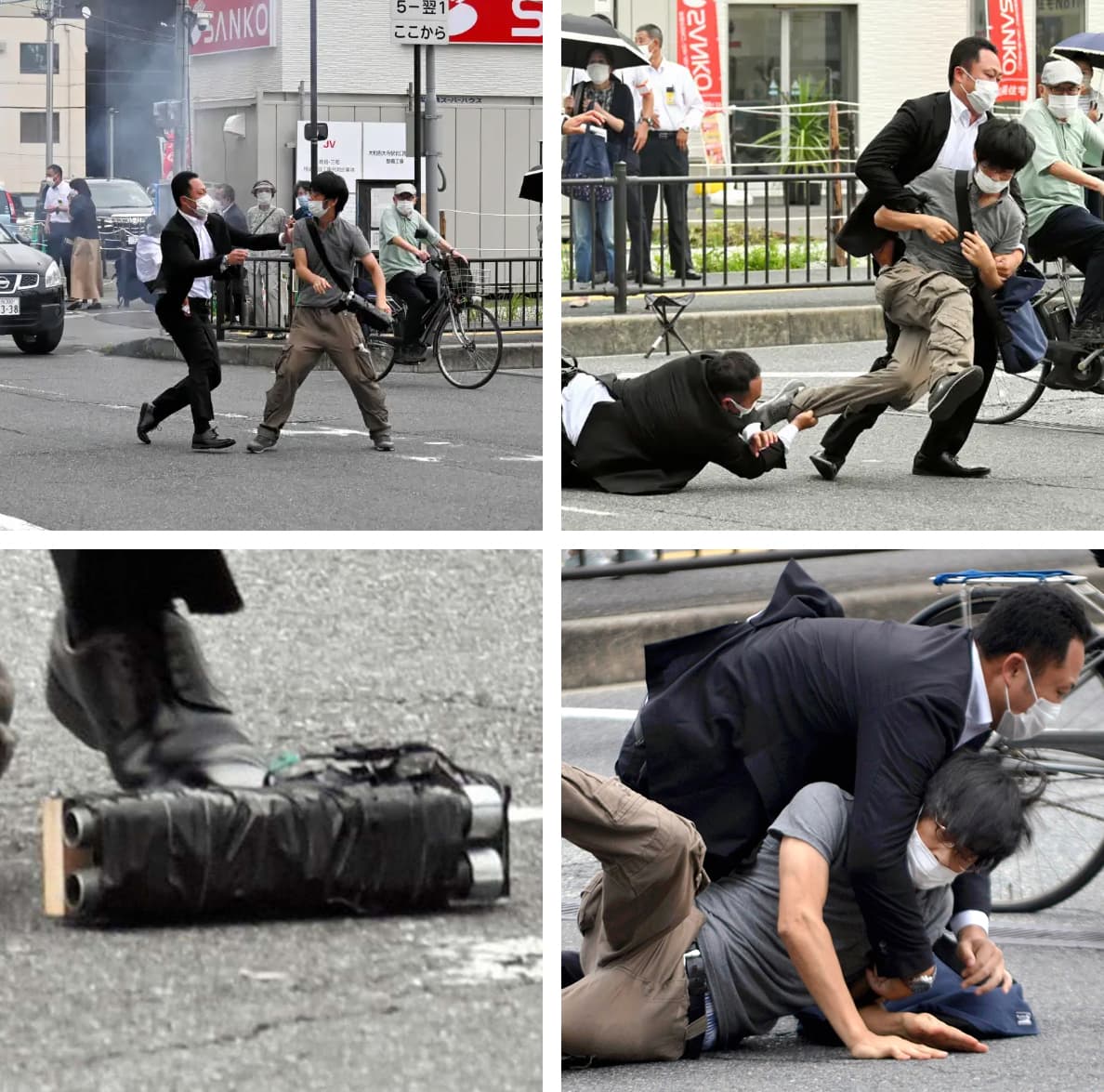
He was shot at close range using a handmade gun resembling a sawed-off, double-barreled shotgun, while he was addressing an election rally in the city.
The first shot was made from behind, and missed the target. But this prompted Abe to turn around in a reflex move, inadvertently making him face his attacker. The second shot was then made, and hit Abe, injuring his neck and chest.
Shinzo Abe, who was Japan's longest-serving Prime Minister and a serving member of the House of Representatives, collapsed soon after the second shot.
Abe was then seen bleeding, state media said in a report.
The local fire department had shared that Abe was still conscious and communicative after being shot. He was then transferred by a medical helicopter to Nara Medical University Hospital in Kashihara City in the prefecture.
However, Abe suffered from cardiopulmonary arrest due to the pellet projectiles that struck his heart.
Abe suffered sever blood loss, despite the emergency team has given him four hours of blood transfusions that saw the administration of 100 units of blood.
The "doctors [were] doing everything they [could]," reports said, but they couldn't save him.
Abe was confirmed dead around 5 hours later.
The suspect, Tetsuya Yamagami, was arrested at the scene.
Yamagami told investigators that he held a grudge against the Unification Church over his mother's bankruptcy and shot Abe out of a belief that he was close to the group. Yamagami, who is in his early forties, accused Abe of spreading the church's influence in Japan.
This is because Abe, as well as his father, Shintaro Abe, and also his grandfather, Kishi Nobusuke, had longstanding ties to the Unification Church, a controversial new religious movement founded and based in South Korea. The church had been publicly known for receiving support from the Liberal Democratic Party (LDP) since Nobusuke's tenure in the late 1950s.
However, the Japanese media has long ignored this as a news.
As a high-profile figure, the world, and the internet mourned. But others, made use of the situation to spread the assassination videos in the hopes to get clicks and income.
Others made jokes about it.
For example, on message boards 4chan and the microblogging platform Twitter, irresponsible individuals made fake news about Abe's death and his murderer, making several international media outlets to misidentify the culprint.
In this case, among others, many have mistakenly accused video game developer Hideo Kojima as the assassin. Kojima's company, Kojima Productions, condemned the fake news, and has made threats about filing legal action against those perpetuating the rumor.
In Iran, a news agency initially reported that the suspect was "passionate about Che Guevara".
There was also someone who claimed that the assassin was Samzuki Hydaiko, saying the the person is a political extremist and Yakuza member. The man in the photo that went viral however, isn't Tetsuya Yamagami, but a photo of an American comedian, writer and actor, Sam Hyde.
With so many people discussing Abe's assassination, too much noise was generated.
Social media giants Twitter and Meta said they are continuously removing videos related to the assassination of the former Japanese prime minister Shinzo Abe.
Meta, which owns Facebook and Instagram, said that videos are being deleted as they are posted because they violate the social media firms’ rules on harmful content. Meta also said since the action is under its policy on dangerous individuals, it’s also labelling still photos of the attack as "disturbing."
To also contain the spread and prevent misinformation, Meta stated that it has also disabled the killer's Facebook and Instagram accounts.
"We are deeply saddened and shocked at the passing of the former Prime Minister of Japan, Mr. Shinzo Abe,” a Meta statement read. "We do not and will not tolerate any violent behaviour on our platform. To keep our platform a safe place to connect, we are working to remove any violating content related to the incident."

As for Twitter, the company said that it is working to "address harmful content" related to the incident by "proactively removing" content that breaks its rules, which include restrictions to sensitive media that include graphic violence.
Twitter also urged users to flag up any potentially sensitive material of the attack so it can quickly take action.
YouTube as the largest video-streaming platform, said that its systems are giving prominence to videos related to the attack from "authoritative sources" such as news organizations, but will remove any content that breaks its rules, which include a ban on violent or graphic content.
TikTok also had something to say, saying that it’s working to rapidly "identify content, accounts and hashtags related to this tragic incident" and removing any content and accounts that violates its rules.
But regardless of how swift the internet companies are trying to stop the spread of the content, videos of the attack are still spreading on various blogs, websites, as well as other streaming platforms.














































































































































































































































































