The Moon is a mesmerizing to look at. As the Earth's only natural satellite, it has become the subject of many photographers around the world.
But even with a diameter that is roughly one-quarter that of Earth, the Moon that is comparable to the width of Australia, is still very far.
Starting with the S20 Ultra, Samsung managed to awe many owners of the phone by allowing them to capture breathtaking Moon photos. Since the S20 Ultra and newer Galaxy S series phones, their telephoto lenses allow what Samsung calls the 'Space Zoom' feature.
With it, users can capture things that are very far away, including the Moon.
But a user realized that Samsung faked it too much.
The Moon shouldn't look that good, even on the Galaxy S23, which has a superior 100x zoom level capability, accomplished by augmenting 3x and 10x telephoto cameras.
According to Samsung, the Space Zoom feature can use up to 20 pictures, to then process them as a composite with AI, to then perform a "detail enhancing function" on the subject.
But a Reddit user realized that the AI fabricated the image to beyond obvious.
The AI, called the 'Scene Optimizer', does more that what people should expect.
The Reddit user revealed this in a post on the Android subreddit, u/ibreakphotos, and declared that Samsung's Space Zoom "moon shots are fake," and that they had proof.
The lengthy post then demonstrates that belief.
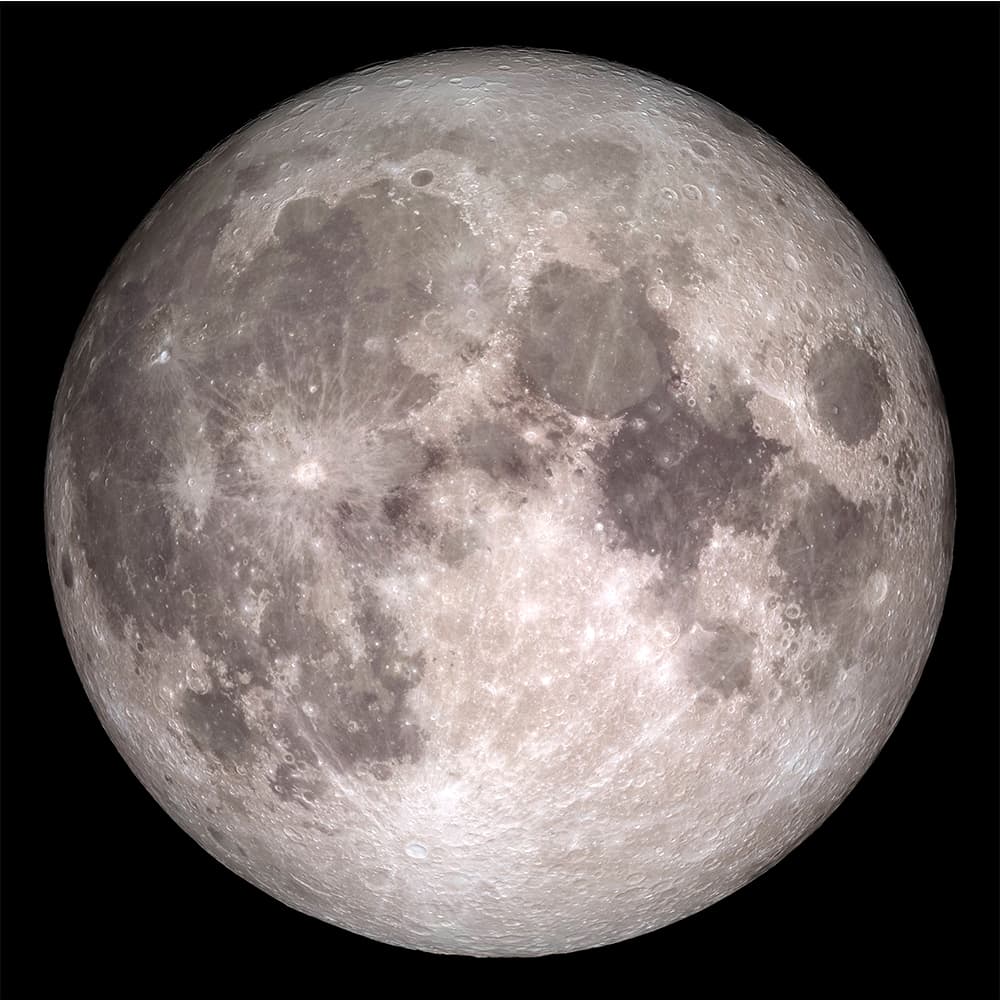
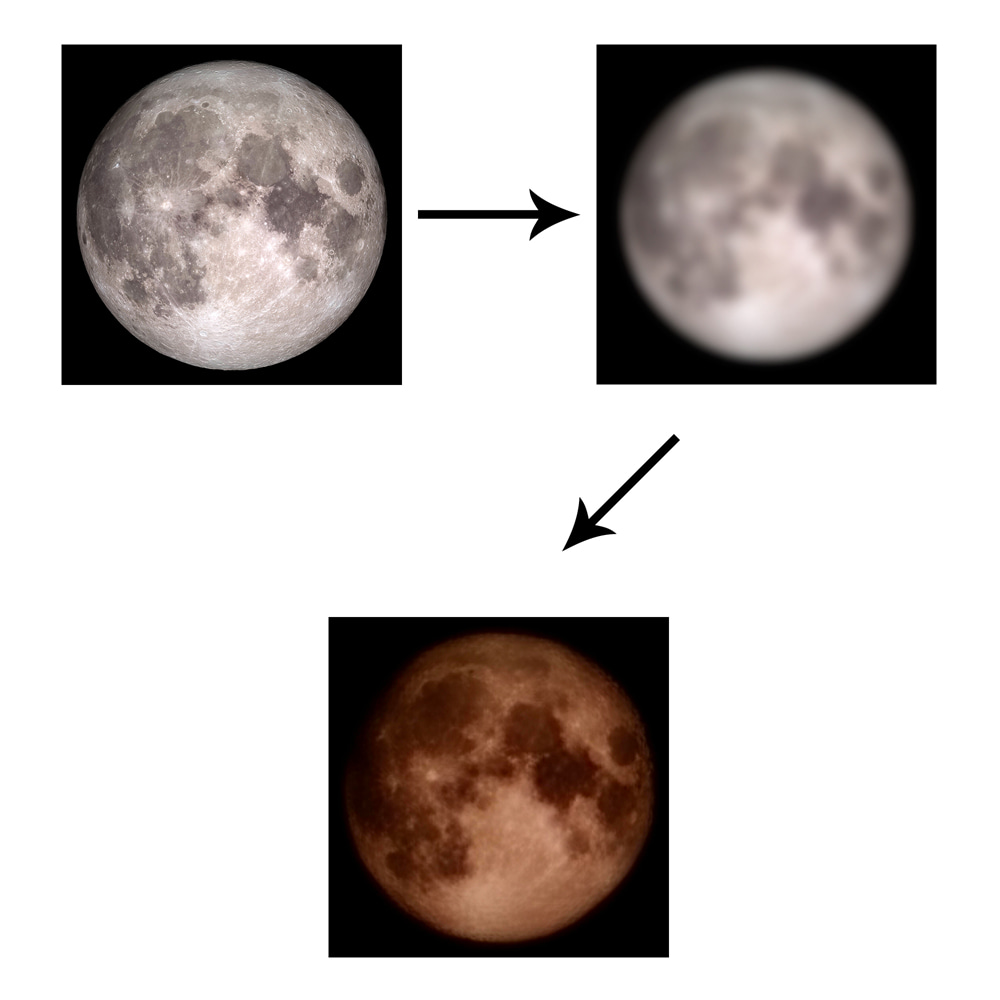
The Redditor tested their theory by downloading a high-resolution image of the Moon, which shows clear details of its surface. The person then downsized the image to a 170x170 pixel resolution image, and then applied a gaussian blur.
This effectively remove all of the details in the original picture.
"This means it's not recoverable, the information is just not there, it's digitally blurred," the Redditor said.
After that, the Redditor showed the low-resolution, blurry Moon, at full screen on the monitor, and then walked back to the end of the room. Then, they use the Samsung phone to zoom in into the image on the monitor, and then take a picture of it.
After some processing, the image of the Moon produced by the smartphone has considerably more detail than the doctored source.
The question is: how can a blurry image of the moon becomes significantly better when it's photographed?
While professional cameras with adequate optical zoom lenses can see the surface of the Moon with relative ease, the same doesn't apply with lenses on smartphones.
Even when smartphones have become extremely capable, and even when they're equipped with optical zoom lenses themselves, smartphones' lenses cannot compare to professional camera lenses.
This is because smartphones' lenses are designed to be compact, and cannot compare with long-focus lens with huge focal length.
As a result, no smartphone can see that far.
The user reckoned that Samsung "is leveraging an AI model to put craters and other details on places which were just a blurry mess."
They argue that Samsung's super resolution processing does capture multiple images at the same time to gain as much information for any otherwise-lost details. But this is Moon-gate is totally different.
There is no way that a photographed object has more detail that the object itself.
"Samsung is using AI/ML (neural network trained on 100s of images of the moon) to recover/add the texture of the moon on your moon pictures, and while some think that's your camera's capability, it's actually not," the Redditor said.
"And it's not sharpening, it's not adding detail from multiple frames because in this experiment, all the frames contain the same amount of detail. None of the frames have the craters etc. because they're intentionally blurred, yet the camera somehow miraculously knows that they are there."
The Moon is unique in many ways.
One of which, is its rotation that is synchronous to its orbit. This happens due to the tidal forces from Earth, which slowed the Moon's rotation to the point that the same side is always facing the Earth.
It's this near side of the Moon, which is the lunar hemisphere, that always faces towards Earth, opposite to the far side.
This phenomenon is called tidal locking.
Because of this, all Moon photos taken from Earth should look the same, if not identical. All Samsung did, is using the many images of the Moon it can find to train the AI.
This is a case "where you have a specific AI model trained on a set of moon images, in order to recognize the moon and slap on the moon texture on it."
"This is not the same kind of processing that is done when you're zooming into something else, when those multiple exposures and different data from each frame account to something," they propose.
"This is specific to the Moon."
"It's very easy to train your model on other moon images and just slap that texture when a Moon-like thing is detected," and that the AI is "doing most of the work, not the optics."
While the public may be convinced that AI processing techniques being applied to images from smartphone cameras is a good thing in general, this Moon-gate is a huge disappointment to people who care about photography as an artform.














































































































































































































































































