Bhutan is a landlocked country in South Asia, located in the Eastern Himalayas.
Tucked between China, India and Nepal, Bhutan is perhaps best known for its emblematic “thunder dragon,” its Buddhist monasteries, and commitment to "gross national happiness” over domestic product.
As a mountainous country, rivers that flow in it travel relatively short in length, but huge in height, thanks to the towering peaks of the Himalayas.
The result of this, is the abundance of renewable energy from hydropower.
It's then realized that Bhutan, the small and the isolated nation, is hiding a tech-driven secret.
And that is years-worth of cultivating a significant cryptocurrency portfolio.
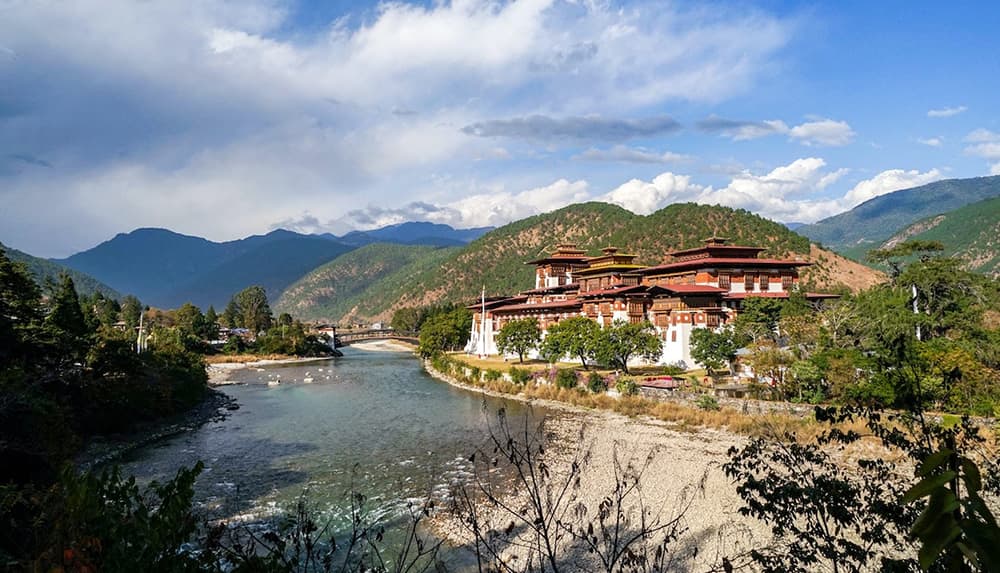
In an article by Forbes, titled "The Kingdom Of Bhutan Has Been Quietly Mining Bitcoin For Years," it was revealed that Bhutan has been using its abundant hydroelectric resources to mine cryptocurrencies.
According to Forbes, the rivers fed by ancient glaciers at the Himalayas provide the power for this secretive venture, turning Bhutan into one of the world's notable players in the cryptocurrency mining industry.
Forbes’ sources indicated that Bhutan’s plans to develop state-run cryptocurrency mining operations began back in 2020, with Bhutanese officials confirming that mining had begun when Bitcoin was valued at about $5,000.
The increased activity also happened during the time China started banning cryptocurrency activities in 2021, and when countries like Kazakhstan and Sweden started limiting or taxing cryptocurrency miners.
The situations forced many operations to find new homes with cheap sources of electricity.
After all, cryptocurrencies require huge amount of resources to run.
With increasing competition and calculations, ordinary computers are no longer sufficient. Cryptocurrency mining require dedicated devices, working in a network, devouring electricity like never before.
Because of this, Bhutan, with its abundant hydropower reserves, is tapping on this renewable energy source to power its cryptocurrency mining activities, without having to spend much.
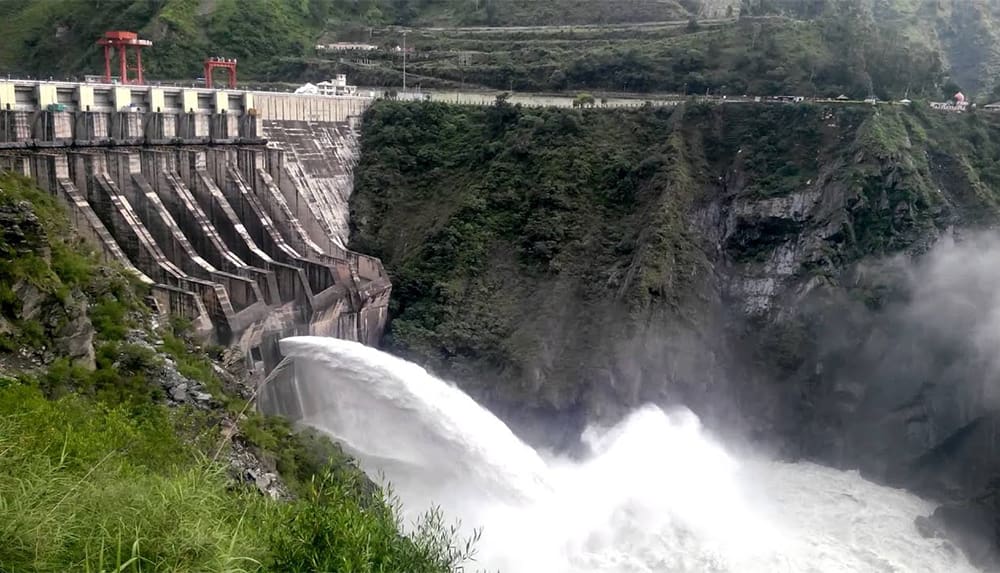
In fact, Bhutan has commitment to renewable energy since 1980, and has since seen great successes with developing its large hydropower projects through technical and financial assistance from India.
Its first hydropower plant opened in Chukha, followed by a plant in Kurichhu. Soon after those two, more plants opened in Basochhu, and later, in Tala.
Bhutan is so optimistic that at COP 15 in 2009 (2009 United Nations Climate Change Conference), Bhutan made its first promise to remain completely carbon neutral, and even reaffirmed this promise at COP 21 in 2015 (2015 United Nations Climate Change Conference).
It's worth noting that the exact details of this operations are not disclosed, and that the Bhutanese Ministry of Finance has also not provided specifics on the scheme’s start date, location, and profitability, which raises questions about its transparency.
Regardless, it's reported that Bhutan is in talks with NASDAQ-listed mining company Bitdeer for a potential collaboration.
Its state-owned holding company, Druk Holding & Investments, has reportedly invested millions in cryptocurrencies without public disclosure, before it was inadvertently exposed by the bankruptcies of lenders BlockFi and Celsius.
Forbes also pointed out that in Bhutan, there is a significant surge in computer chip imports over years, hinting at the growth of Bhutan’s Bitcoin mining operation.
While the country has been open about its interest in the blockchain as an economic boon, like when it piloted a "central bank digital currency" with the exchange Ripple in 2021, its investments in the cryptocurrency field were made through a sovereign entity created to manage the country’s wealth on behalf of its people, and its citizens were never told.
Cryptocurrency mining activities can help the economics and the financial conditions in Bhutan, but Bhutan’s international supporters have cautiously observed this trend, and and have voiced their concerns, saying that that the $193 million spent on computer chips has fueled a yawning trade deficit and tallied with a sharp drop in the country’s foreign currency reserves.
And considering its size, Bhutan customs data hints the the scale of its mining operation.
Whereas the landlocked country’s inbound trade is normally dominated by gasoline, steel and rice. the millions of dollars have been spent on "processing units" or computer chips, with purchases that surged to the top of its imports in 2021 and 2022, according to data published by Bhutan’s Ministry of Finance.
In 2022, Bhutan saw around $142 million worth of computer chips imported into the country. This number accounted for around a tenth of the kingdom’s total $1.4 billion of inbound trade, or around 15% of the government’s $930 million annual budget. The country also imported $51 million of chips in 2021.
By comparison, Bhutan custom officials recorded just $1.1 million of these chips were imported in 2020.
The cost of Bitcoin mining rigs tracks the cryptocurrency’s value as it swings, but industry insiders say even at 2021’s sky-high prices, this level of spending would equate to a data center the size of several football fields.
It's said that Bhutan sourced most of these hardware from both China and Hong Kong.
Bhutan’s Ministry of Finance noted (PDF) that the country’s total imports soared in 2022, partially due to spending on these computer hardware.
It's worth noting that Bhutan's cryptocurrency's mining activities is pale in comparison with massive farms like Riot’s Rockdale facility in Texas. But still Bhutan's would be on par with other large projects, such as Russia’s Bitriver mine, and the mining activity in Itaipu, Paraguay, which draws electricity from one of the world’s largest dams.

On-grid hydropower which has been Bhutan's main energy source, and due to its massive potential, has been exporting 70% of its hydroelectric power to India, saving 4.4 million tons of CO2 per year.
Despite efforts to expand the types of renewable energy used in Bhutan, hydroelectric power is still the leading source of clean energy in the nation.
Bhutan, with its significant potential for hydropower, estimated to have around 30,000 MW, of which 23,760 MW has been identified as economically feasible
The renewable resource has become an economic engine, accounting to around 30% of the country’s gross domestic product, and fueling the homes of nearly all of its 800,000 residents.
Besides hydropower, Bhutan is also tapping into wind energy, with notable location in Rubesa, solar energy, and biogas.
At this time, it's estimated that Bhutan has around 13,500 stoves and 2,800 biogas plants installed throughout the country.














































































































































































































































































