For years, PayPal's Honey browser extension has been widely praised for helping users find online coupons.
However, it recently found itself at the center of controversy after a YouTuber accused Honey of engaging in unethical practices that allegedly harm both consumers and content creators.
As debates over whether or not Honey is truly a scam, Google has stepped in.
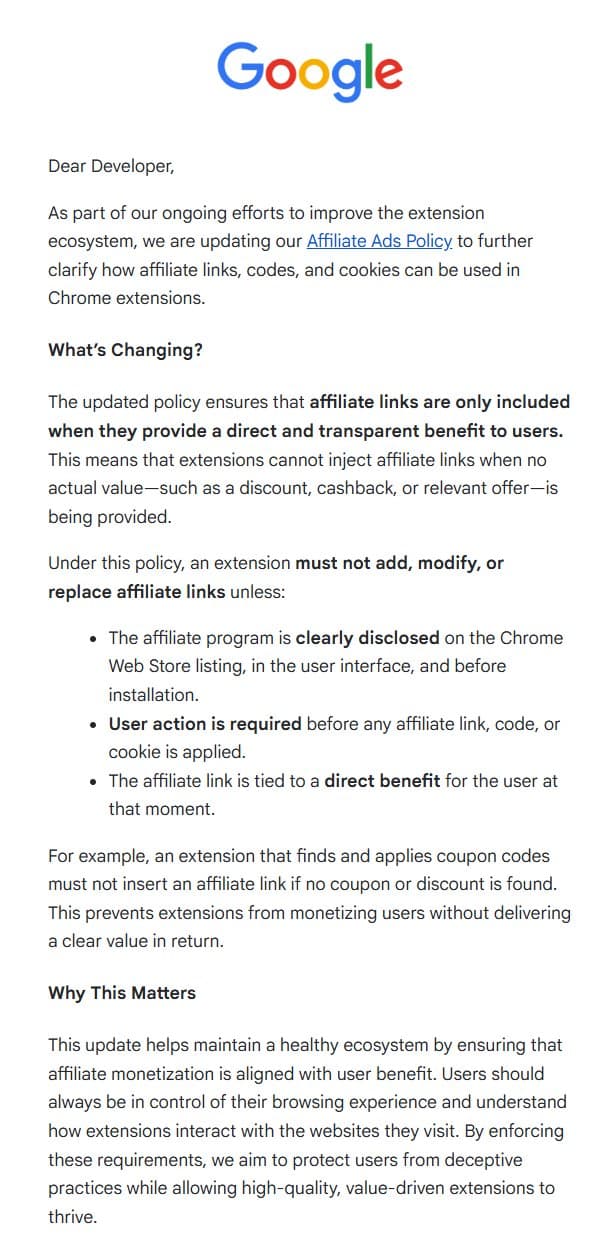
The tech titan is updating its Chrome extension policies to tighten regulations on the use of affiliate links, codes, and cookies.
Under these new guidelines, an extension must not add, modify, or replace affiliate links unless the following conditions are met:
- The affiliate program is explicitly disclosed on the Chrome Web Store listing, within the extension’s user interface, and before installation.
- Users must take deliberate action before any affiliate link, code, or cookie is applied.
- The affiliate link must be directly tied to an immediate benefit for the user.
Google’s updated policy ensures that affiliate links are only included when they offer a clear and direct benefit to users. Extensions can no longer inject affiliate links unless they provide tangible value, such as discounts, cashback, or relevant offers.
For instance, a coupon-finding extension cannot insert an affiliate link if no discount or coupon is available. These changes prevent extensions from monetizing users without providing genuine value in return.
Google announced its decision to tighten policies on affiliate programs within Chrome extensions, highlighting its commitment to improving the overall extension ecosystem.
An affiliate link is a special URL that tracks referrals from one website to another, typically as part of an affiliate marketing program. When a user clicks on an affiliate link and makes a purchase or completes a specific action, the person or company that shared the link earns a commission or reward.
Affiliate links usually contain unique tracking codes or parameters to identify the source of the referral. They are commonly used by bloggers, influencers, and businesses to promote products or services while earning a commission from sales or leads generated through their links.
For example, an online shopping extension might insert an affiliate link when directing users to a retailer’s website, allowing the extension’s creator to earn a commission on purchases made through that link.
In this case, PayPal’s Honey extension is accused of hijacking affiliate codes if users interacted with the extension in any form whatsoever.
It's alleged that Honey uses affiliate codes to subsidize its service of collecting coupon codes (which it was also exposed for not doing as promised), but the extension was caught inserting its affiliate code – and preventing others from working – even if the user didn’t apply a code from Honey.
Even if users simply clicked on a button to close Honey, the extension was caught inserting its affiliate at that time.
And what Google does here, is updating its policy to explicitly state that affiliate links cannot be injected unless they provide genuine value, such as cashback or discounts.
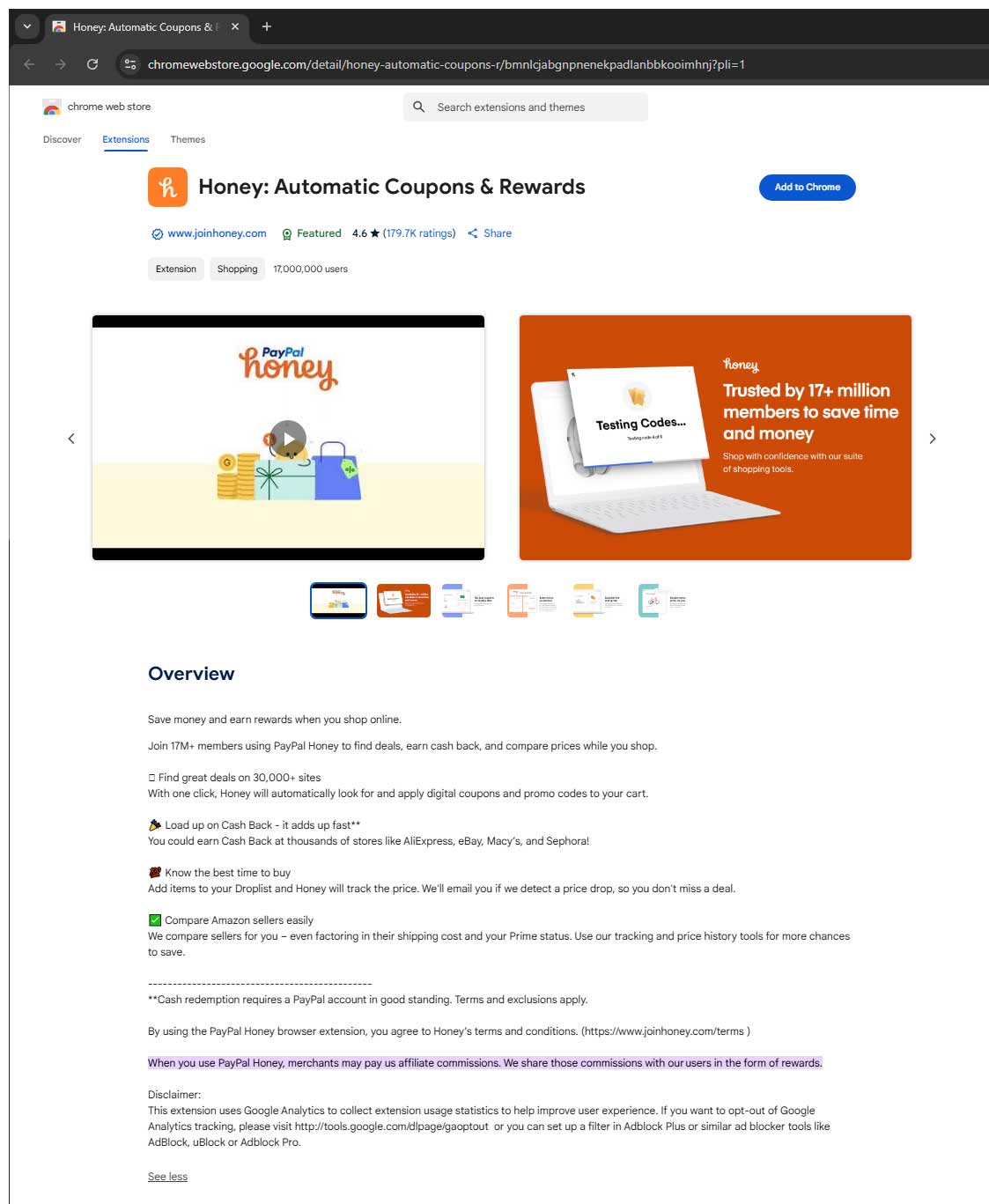
After being exposed for some shady practices, PayPal’s popular Honey extension finally discloses that it does take advantage of merchant affiliate programs.
Honey mostly concealed how its business work, but with a disclosure in an update to its Chrome Web Store listing, Honey now directly says that "merchants may pay us affiliate commissions" when they use the extension, adding that those are shared with users "in the form of rewards."