Apple has long been celebrated as a pioneer in designing, developing, and selling consumer electronics and software.
Yet despite the massive empire it built around iPhones, Macs, iPads, and a thriving ecosystem, Apple’s attempts to break into more social, shareable tools have often met with limited success. One such effort was 'Clips,' a compact video-editing app launched on March 21, 2017, aimed at letting users quickly compose and share playful videos.
In October 2025, Apple quietly drew the curtain on Clips, pulling it from the App Store and ceasing updates.
Apple has updated its support page, explaining as of October 10, 2025, the app is no longer being updated and is no longer available for new users to download. Existing users can continue to use it (on iOS 26 or earlier), and even redownload it through their Apple accounts, but there’s no guarantee it will remain functional indefinitely.
For those who’ve created videos in Clips, Apple advises saving them—either with the effects or in their raw form—to the Photos library or another storage location. That way, your work won’t be lost should Clips become incompatible in future system updates.
Clips’ projects and original video clips can also be exported and further edited in apps like iMovie or third-party editors.

Looking back, Clips was an interesting bridge between simplicity and creative video storytelling.
It was an attempt by Apple to stay in the conversation around casual content creation.
At its heart, Clips was Apple’s gambit to inject itself more organically into social video creation, without building a full social network of its own.
It borrowed smartly from Snapchat, Instagram, Vine, and others, letting users splice together video snippets, photos, text overlays, filters, and animated titles. It also leaned into Apple’s strengths, like integrating facial recognition, and using “Smart Suggestions” (powered by the same algorithms behind Apple Photos) to suggest who users might want to share with based on their contacts.
Over time, Clips grew modestly. It added support for AR effects, Memoji and Animoji overlays, and new styling options. But updates slowed, and by its later years, it mostly received only bug fixes.
But in a landscape now dominated by TikTok, Instagram Reels, and other video platforms with algorithmic reach and vast communities, Clips never achieved enough critical mass to survive.
And as the trends have now shifted towards AI generations and AI-altered content, Clips has become even less relevant.
In recent years, Apple has been increasingly focused on weaving creative and AI-driven capabilities directly into its flagship experiences. From Photos and iMovie, to Final Cut Pro for iPad, and even Messages, the goal appears to be creating an ecosystem where users can produce, edit, and share content without ever needing to leave Apple’s walled garden.
The company’s newer frameworks, like Core ML and Vision Pro’s immersive environments, reveal how Apple envisions creativity as a deeply intuitive, cross-device experience rather than something that lives in a single app.
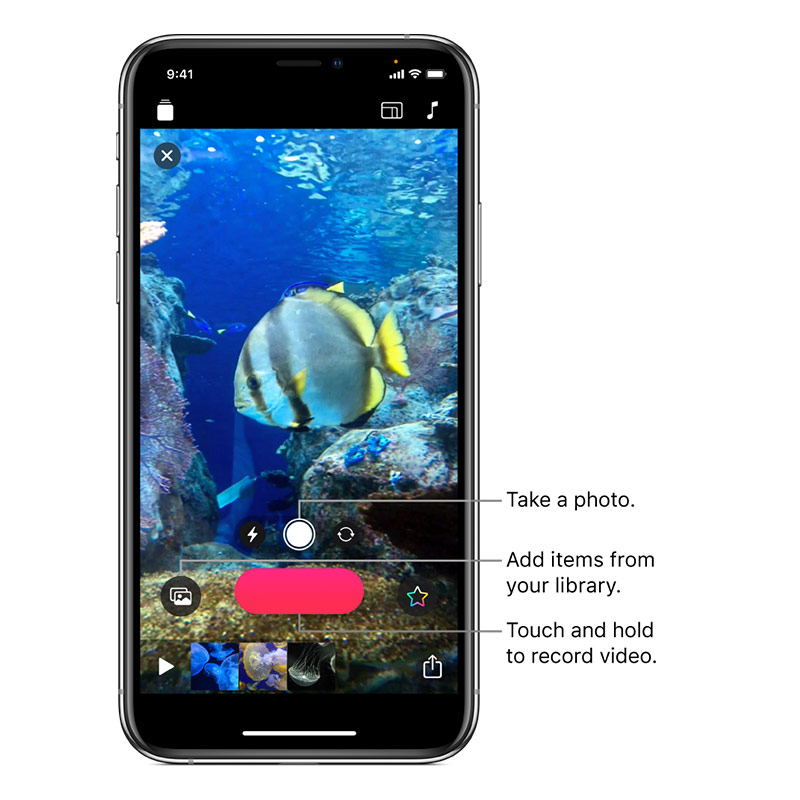
Clips, for all its charm, belonged to a different era, where one when social media revolved around bite-sized videos, playful filters, and quick bursts of creativity. It was fun, approachable, and unmistakably Apple in design, yet it never truly fit within the company’s ecosystem. For a brand that thrives on seamless hardware and software integration, Clips always felt like a delightful outsider: charming, but ultimately peripheral.
As AI begins reshaping how people create and share media, Apple’s priorities have evolved.
Instead of maintaining a standalone app for casual creators, the company appears focused on enhancing the creative tools users already rely on, like Photos, iMovie, and Final Cut Pro. The new direction is clear: empower storytelling through intelligence and integration, not fragmentation.
This shift underscores a broader philosophy.
Apple no longer needs a separate platform to encourage expression; it’s weaving creativity directly into the fabric of iOS, macOS, and visionOS. S
The decision to sunset Clips, then, was not just practical. It was inevitable. Competing with algorithm-driven platforms like TikTok or Instagram would have required Apple to cross a line it has long avoided: harvesting and analyzing massive amounts of social data.
By stepping back, Apple reinforces its privacy-first identity, focusing instead on tools that inspire creativity without feeding the attention economy.






















































































































































































































































































