 The social network giant Facebook wants users to see more ads, and now it means 'right there in front of you'. With Canvas, Facebook wants to give advertisers an immersive way to reach people without making them leave the social network.
The company launches Canvas on 25th of February 2016 for all advertisers. What the feature does is showing a full-screen, rich media page (ad) inside Facebook when users click on a News Feed ad that is connected to it.
The feature is first aimed for mobile users. Since 2011, Facebook is seeing a tripled amount of mobile users if compared to traditional computers. And since ads are now too many and all are competing for the same spot, Facebook sees rich media ads as better marketing because people will actually remember them more often.
The reason for this is because rich-media ads can deliver their information by storytelling.
But such "greatness" of ads come with a big drawback: a larger size in bytes. What this means is rich-media ads are heavier to load than the usual text-based and image ads. For mobile users, slow loading pages (made even slower with ads), aren't at all appealing them. This is the last thing Facebook wants.
As a solution, Facebook builds Canvas as an endpoint of ads inside its own app so the social network can preload them for faster loading.
Canvas is like an evolution of carousel ads which allowed users to swipe through multiple product or brand photos if they were interested in more information. Canvas ad can be described as a "mini website" which is designed around specific products. This includes slideshows, descriptions, videos and a scrollable, interactive interface.
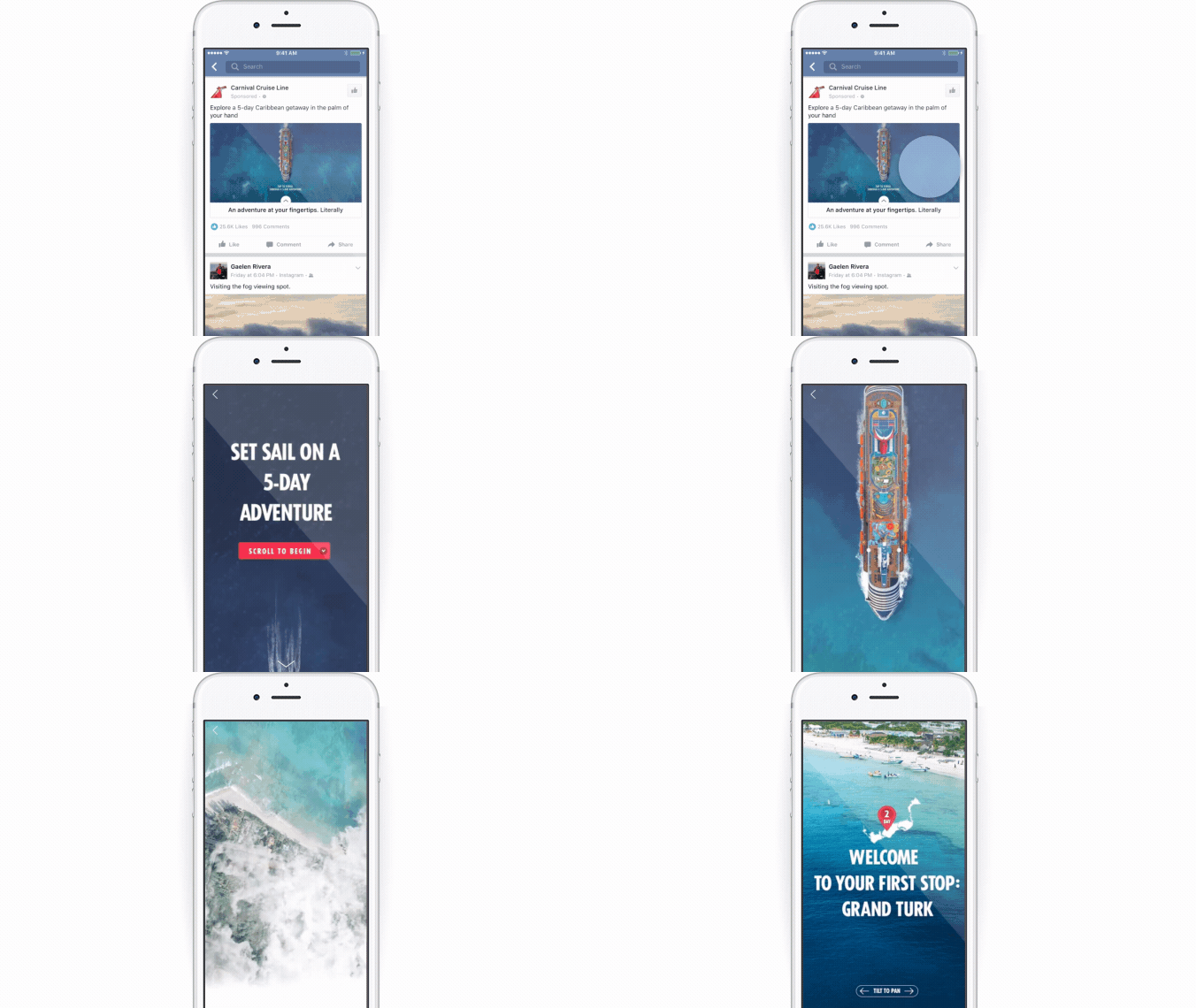
To use and create Canvas, advertisers are given a self-serve tool. The tool allows them to drag images around, and set their attributes. With simple set up, they can have their ads up and running. Beside images, the feature also allows GIFs, videos, and more.
The simpleness and ease of Canvas even made Facebook's advertisement executive Mark D’Arcy joked "The only thing they can't make, really, is excuses."
There are no additional cost for advertisers to build a Canvas ad. They just need to pay for the same News Feed ads as usual. Simply put, Canvas is an addition to the already existing choices. As another added benefit, Canvas can be targeted to different demographics just like normal Facebook ads.
Do We Really Have To See More Ads?
On the web, we're having virtually too much ads. We can see it here, there, now and then, much too often. Advertisers and publishers have struggled to prevent ad blindness whenever they see one, but users are still good in avoiding them once in a while.
Facebook is one of those that are good in making their ads look native - making them blend well with their surroundings. Some of the clues users have to identify such ads are words that came with them. For Facebook, they go with the name "Suggested Post" and "Suggested Pages" to name a few.
So with Canvas , is Facebook trying to put more ads in front of its users?

No, not at all actually. Facebook says that Canvas won't lead to more ads on Facebook. Canvas ads can be distinguished with its little upwards arrow that denotes a full-screen experience when interacted.
Facebook has a good reason for not showing more ads even with Canvas available. The company's early test of Canvas in 2015 have shown users to actually want to stick around and experience the ads. 53 percent of users that open a Canvas view at least half of it, and the average view time is 31 seconds. The top Canvas ads can see more than 70 seconds of view time per user.
With Canvas, Facebook is trying to squeeze more ad dollars by innovating the existing choices. Because Canvas ads should load faster, they shouldn't frustrate users. And by keeping users inside Facebook rather than allowing them to browse elsewhere, the social network can keep them inside its "walled garden" to see even more of its News Feed ads while they connect with friends.






















































































































































































































































































