Web developers and web designers, you are now more replaceable than ever before.
When OpenAI released ChatGPT, it marked the beginning of an AI arms race, pushing tech giants to innovate beyond text-based language models. Google has been no exception. With its Gemini project, the company aims to merge language understanding with actionable, visual AI capabilities.
One of Gemini's most notable features is the Canvas.
Canvas can be described as an interactive workspace within Google's Gemini AI ecosystem, designed to help users collaborate with AI in real time. Whether its about drafting documents, writing code, or creating prototypes, Canvas provides an environment where ideas come to life.
Now, Gemini is introducing one of the most exciting (and for some users, threatening) developments in this space: 'Select and Ask.'
This feature adds a new layer to the rendered Canvas UI, redefining how users interact with web applications created with AI. As the name suggests, Select and Ask allows users to interact with specific UI elements of a web app without touching a single line of code. By selecting any visible element, such as a button, users can prompt Gemini to modify its appearance or behavior.
This includes changing colors, removing elements, or even introducing entirely new features. In essence, Select and Ask allows users to visually interact with on-screen content and provide natural language instructions, making the process more intuitive and dynamic.
New in Gemini Canvas: Select and Ask
You can now visually edit any part of your web app just by clicking an element and describing the change. No code necessary—just click, describe, and see your updates instantly in preview mode. pic.twitter.com/zck1aZST4v— Google Gemini App (@GeminiApp) September 9, 2025
This feature is part of a broader 'Ask about this screen' capability, letting users activate Gemini over any app to get contextual assistance.
Unlike previous tools, which relied on text commands or direct code manipulation, such as Anthropic’s Claude Artifacts, Gemini’s Canvas with Select and Ask allows users to achieve precise results directly from the interface, eliminating the need for coding knowledge.
Select and Ask opens opportunities for solo founders, vibe coders, small business owners, and early-stage teams to experiment with web apps without having to hire developers or learning programming syntax.
The feature represents a major shift in how AI interacts with digital environments. Because users no longer need to describe changes in text or dive into code, and that the AI can see the interface and act on it directly, this lowers the barrier to entry for web development and encourages creativity, experimentation, and rapid iteration.
Additionally, Gemini now includes a button to fork or copy a web app as a new Canvas stream, letting users test changes in parallel without disrupting the original project.
Combined with Google’s wider AI strategy, including AI Studio and GitHub integration, this feature streamlines collaboration and iterative workflows.
As generative AI continues to improve, the tools used to create and modify digital experiences are becoming increasingly powerful.
Yesterday’s "real" development and design processes, which relied on extensive expertise, are giving way to visual AI-driven workflows. Today’s web apps evolve faster than ever, and tomorrow’s "real" work may be defined by AI-assisted creation, like more than ever.
Generative AI is pushing humanity into a world where the boundary between human-driven and AI-driven design is increasingly blurred.
While Gemini's Canvas with Select and Ask is a powerful tool that can streamline many aspects of web development and design, it is unlikely to completely replace human professionals in the foreseeable future.
These AI capabilities excel at automating repetitive tasks, generating code snippets, suggesting design elements, and providing rapid prototypes.
For instance, Select and Ask can help users modify existing UI elements using natural language commands, while Gemini Code Assist can generate entire functions, assist with debugging, and document code efficiently. Similarly, AI-powered design tools can suggest layouts, color palettes, and generate initial mockups, speeding up the ideation process.
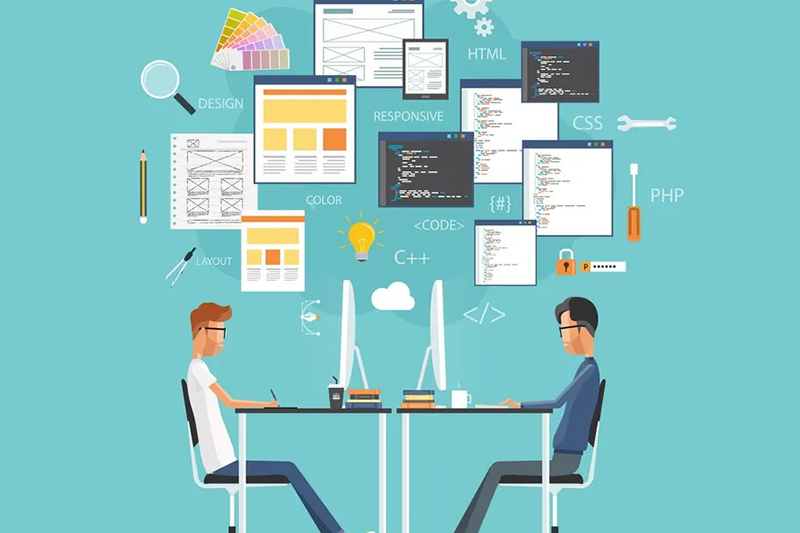
However, several limitations prevent a complete replacement.
Web design and development involve strategic thinking, understanding complex business requirements, making architectural decisions, and adapting to unforeseen challenges. AI still lacks human creativity, intuition, and emotional intelligence, which are essential for innovative design and problem-solving. It may misunderstand project-specific contexts, ethical considerations, or client requirements, whereas humans can clarify ambiguities and ensure alignment with brand and ethical standards.
Highly complex projects, unique customization needs, and intricate integrations often require the adaptive problem-solving skills of experienced professionals.
In essence, AI tools like Gemini’s Canvas and Select and Ask are best viewed as co-pilots or assistants that augment human capabilities.
They empower developers and designers to work more efficiently, focus on strategic and creative tasks, and accelerate the development process, rather than making them obsolete.
The future likely involves a collaborative approach where AI handles routine and predictable aspects, while humans bring critical thinking, creativity, and nuanced understanding to the table, qualities that define exceptional web development and design.






















































































































































































































































































