In the world of AI where large language models (LLMs) are advancing fast, Grok from xAI has just released a feature that should come in handy.
Grok Imagine, the dedicated creative suite developed by xAI that allows users to generate high-quality images and cinematic videos directly from text prompts, has demonstrated a new feature called 'Agent Mode,' now in beta on the Grok web platform.
The accompanying video walks through a product photoshoot example, where the interface displays an open workspace with image panels on one side and a chat-like panel on the other.
A cursor navigates between generated model photos wearing a specific T-shirt design, prompting variations in pose, framing, and format while the system handles the iterations automatically.
Subtitles overlay the footage, emphasizing steps like generating multiple images, selecting assets, and preparing for further output such as video clips.
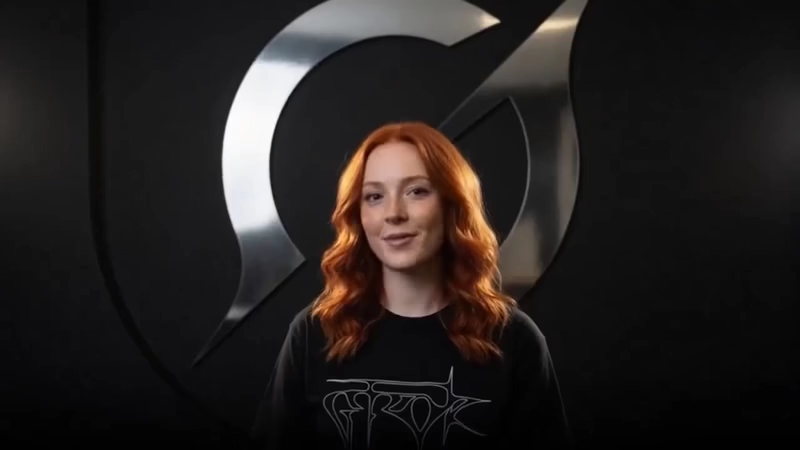
The clip ends on the Grok Imagine logo, underscoring the contained environment where all actions occur without switching applications.
Your entire creative workflow just collapsed into one infinite canvas.
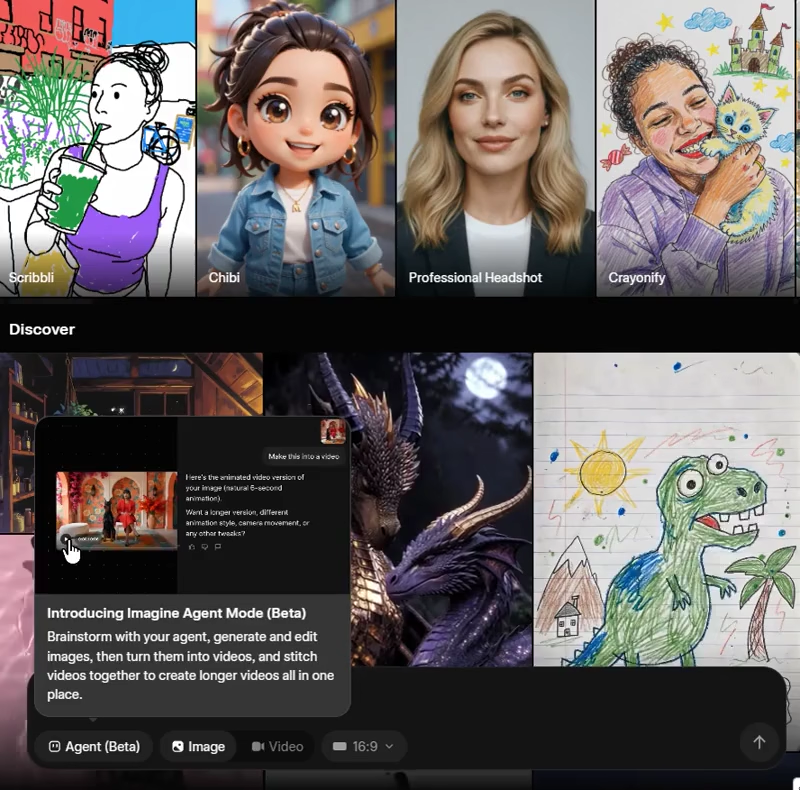
In @imagine Agent Mode, you can brainstorm, write, generate and edit images, then turn them into videos without leaving the page.
Try it at https://t.co/UF5IvltrQc, on desktop. pic.twitter.com/6c1nhuCMrD— Grok Imagine (@imagine) May 1, 2026
The feature positions an AI agent within an infinite canvas layout accessible at grok.com/imagine on desktop.
Users describe a high-level goal, such as creating a photoshoot series or short film sequence, and the agent takes over planning, image generation and editing, conversion to video, and even stitching shorter clips into longer ones.
It maintains context across steps, allowing edits or refinements to build directly on prior outputs rather than starting from isolated prompts.
Early user feedback on X and Reddit notes that the mode consolidates tasks previously spread across separate tools or chat sessions, though it consumes more computational resources per session than single-image or video generations. Some have tested it for narrative-driven content, like cyberpunk stories or branded visuals, reporting that the agent responds to follow-up instructions within the same workspace.
This approach aligns with how creative processes have evolved under AI assistance.
Traditional image and video generation often required users to craft precise prompts, export files, import them elsewhere for editing, and repeat the cycle. Agent Mode attempts to streamline that loop by keeping everything visible and editable in one persistent space.
The underlying technology draws from xAI's Aurora model for image and video handling, extended here with agentic behavior that interprets instructions, generates assets, and assembles them iteratively.
The timing of this release fits a broader pattern across major large language models, which are now pushing toward having "agents" that can orchestrate multi-step workflows rather than simply responding to one-off queries.
Systems from various providers have begun incorporating similar capabilities: autonomous planning, tool use, and persistent memory, into specialized interfaces for coding, research, or creative tasks, reflecting an industry shift from conversational chatbots to more embedded, goal-directed assistants.
Observers have raised practical questions about the mode’s output.
Discussions on platforms like Reddit touch on token consumption, which appears higher due to the chained generations, and on how platforms evaluate originality when AI handles so much of the assembly.
Others wonder about future expansions, such as mobile access or voice input. But for now, the focus stays on the desktop canvas.
The demonstration itself has drawn a mix of other demonstrations, where users began sharing their own generated sequences and straightforward inquiries about workflow mechanics.
As beta testing continues, the feature offers a concrete example of how AI tools are reorganizing the mechanics of digital creation, one canvas at a time.






















































































































































































































































































