Data has to come from somewhere, and on the web, there are plenty where that came from.
Unlike Google and other search engines that aggregate data, social media platforms host users to create data in them. This allows them to control and monetize the data more directly than search engines, which simply link out to other sites.
And this is giving many of them the advantage, and LinkedIn is found doing things it shouldn't.
This is because LinkedIn is found to have been training AI models on its users' data, before updating its terms of service.
Another way of saying this, LinkedIn has been using people's data without asking permission.
And this angers many users and disappoint a lot of netizens.
This is all revealed when LinkedIn created a blog post to admit that it has been training its own AI on many users' data without seeking consent.
Following the blog, LinkedIn updated its terms of service, and created a method to opt out:
On desktop:
- Log in to LinkedIn and click on the profile picture.
- Select Settings & Privacy.
- Go to the Data Privacy section.
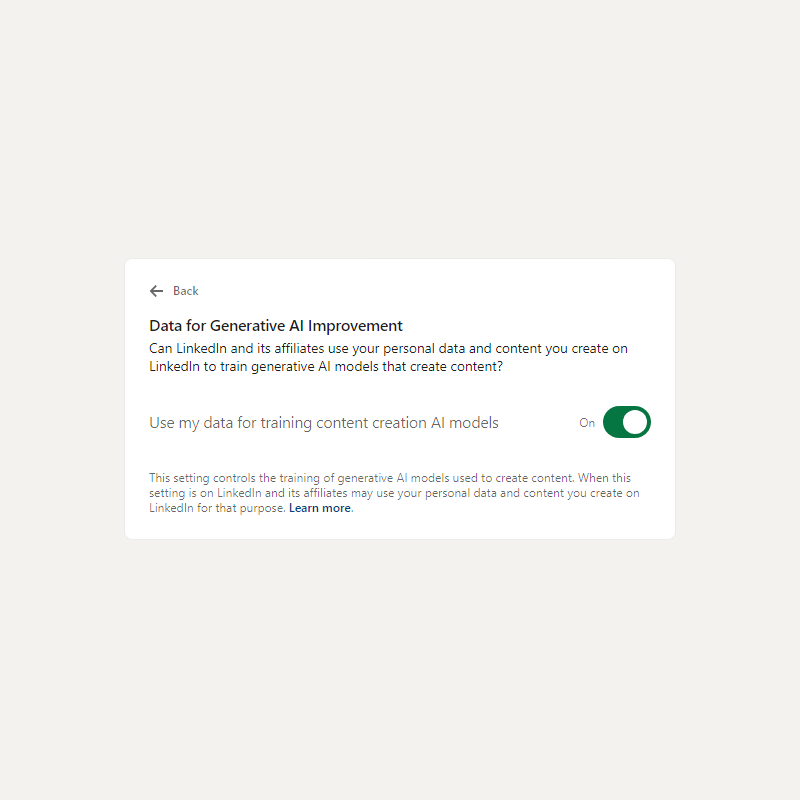
- Scroll down to Data for Generative AI Improvement and toggle the switch to Off.
On mobile:
- Open the LinkedIn app and tap on the profile picture.
- Go to Settings.
- Select Data Privacy.
- Find Data for Generative AI Improvement and toggle the switch to Off.
In a dedicated help page, LinkedIn said that:
"In cases where LinkedIn or its affiliates train or fine-tune generative AI models used to create content, including content that may be distributed or made available on LinkedIn’s platform, members can use this setting to control whether their data (such as profile data or content in posts) may be used to train or fine-tune such models."
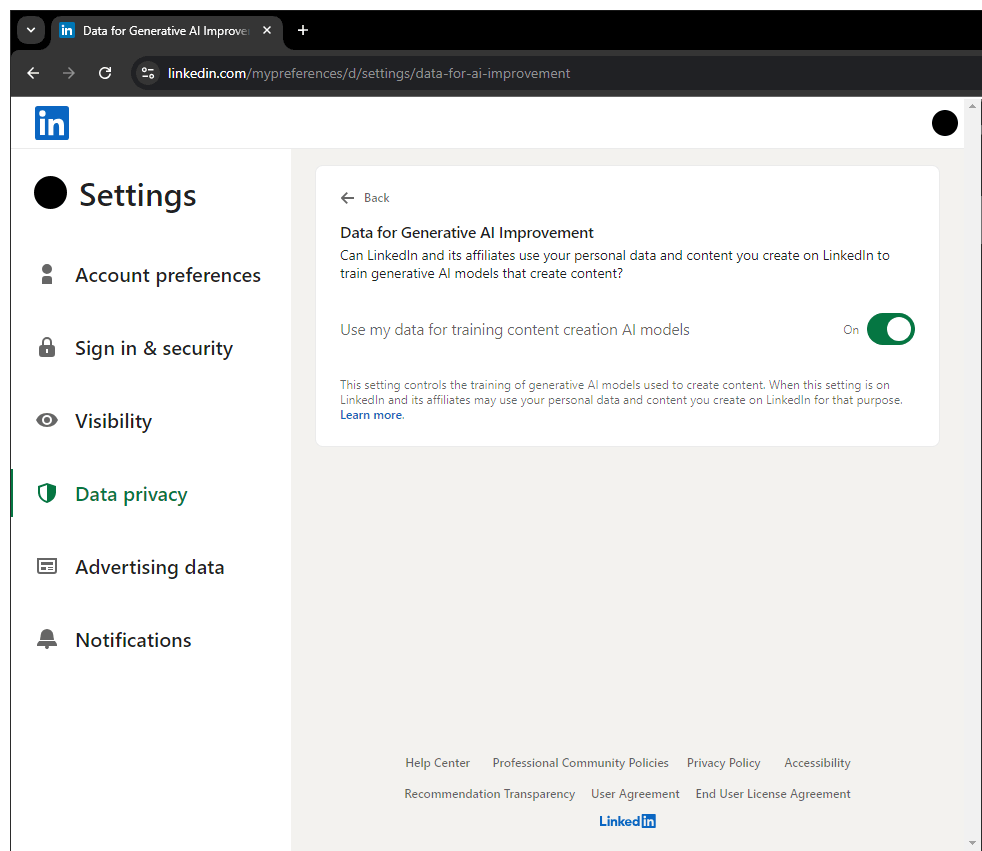
But the damage is done, since the setting is turned on by default.
And for privacy-concerned individuals, there's no way for users to opt out of training that has already occurred, as LinkedIn limits opt-out to only future AI training.
"As with most features on LinkedIn, when you engage with our platform we collect and use (or process) data about your use of the platform, including personal data," said LinkedIn in another dedicated help page.
In a blog detailing updates coming on November 20, LinkedIn general counsel Blake Lawit confirmed that LinkedIn's user agreement and privacy policy will be changed to better explain how users' personal data powers AI on the platform.
It's worth noting that LinkedIn didn't enable training for are not enabling training for generative AI on member data from the European Economic Area, Switzerland, and the United Kingdom, which explains why it didn't provide the opt-out toggle in their settings screen.
It's also worth noting that the toggle isn’t new, but the issue is that LinkedIn initially didn’t refresh its privacy policy to reflect the data use.






















































































































































































































































































