
Meta is about to take its relationship with users one step further, and not everyone is going to like it.
With the large language wars happening at full force, companies rival to be the best, and get as many users onboard as they can. Meta on the other hand, has one thing most others don't: a massive ecosystem that spans across its various social media platforms.
And with that in mind, Meta has the ability to push forward beyond what rivals can.
In this case, it's monetization.
According to Mark Zuckerberg, users' conversation with its AI assistant shall soon shape the content and ads they see across Facebook, Instagram, and Messenger.
Starting December 16, 2025, interactions users have with Meta AI, whether by typing or speaking, will become a new signal that influences their feed and ad experience.
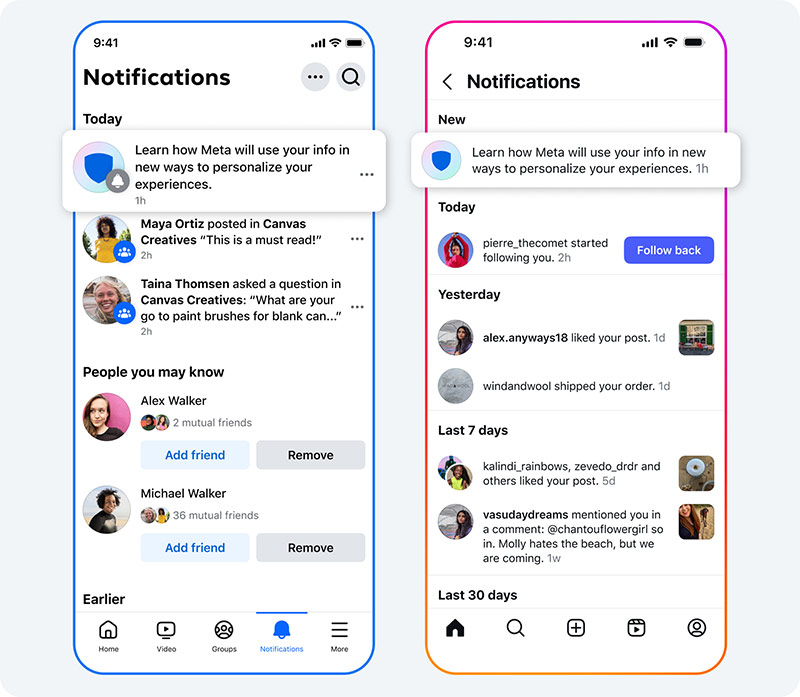
Meta started notifying users on October 7, informing of this change through in-product messages and emails.
The company frames this move as a natural evolution in personalization: just as likes, follows, and page behavior have long shaped feed and ad recommendations, now, AI conversations will join that mix.
Here’s how will work in practice.
Say that users as Meta AI about hiking trails or outdoor gear. Under the new system, those users feed may begin showing Reels about trails, posts from hiking groups, or ads for boots and backpacks.
Meta emphasizes that this update will apply only to people who use Meta AI, and only when their accounts are part of the same Accounts Center across apps.
Meta will not tailor users' experience based on their conversation on the Meta AI on WhatsApp. However, it can if users connect their WhatsApp account to Facebook or Instagram.
While this may mean a bit of privacy violation, since whatever users ask with AI may be more personal than what they tend to like or comment, Meta said that it’s drawing clear lines around sensitive information.
The company said that conversations about religion, political views, health, race or ethnicity, sexual orientation, or union membership will not be used to tailor ads.
In addition, the company won’t activate the microphone unless users have given explicit permission, and are actively using a feature that requires it.
The update will apply globally in most regions, though not immediately in the U.K., European Union, or South Korea, where tighter privacy rules remain in place.
Regardless, Meta is making a smart move.
In business perspective, this is the most obvious way to tie its billion-dollar investments into generative AI with its core online advertising business. Meta has spent months doing major AI talents hiring, and during its second-quarter earnings report, said that the AI initiatives will "result in a 2026 year-over-year expense growth rate that is above the 2025 expense growth."
With the move, the company is clearly positioning its generative assistant not just as a product, but as a data engine.
For Meta, adding conversational signals is a way to deepen relevance and engagement.
But again, the move also raises deeper questions about privacy, transparency, and how much of users' digital lives should feed into algorithms.
It's worth noting that once the feature is rolled out, there will be no option to turn it off.
The only way to avoid this AI chat influence on experience is to refrain from using Meta AI.




















































































































































































































































































