WhatsApp was founded in 2009 by two former Yahoo! engineers who aimed to build a simple, no-frills messaging app focused solely on user communication.
What began as a status-update tool quickly evolved into a cross-platform messaging service that allowed users to send texts, photos, and voice notes without SMS fees. It stood out from competitors through its clean design, low resource usage, absence of ads, and encrypted service, all cultivated through a modest team and organic, word‑of‑mouth growth .
Its appeal lay in universal compatibility, private and encrypted conversations, voice and video calls, and a frictionless user experience—no usernames or passwords needed, just a phone number
By early 2014, WhatsApp had amassed hundreds of millions of users—over 450 million monthly active users—and was growing at a breakneck pace, adding roughly a million new users daily.
Recognizing this momentum, Facebook (now Meta) acquired WhatsApp in February 2014 for approximately $19 billion.
Under the tech company's umbrella, WhatsApp retained its core simplicity and operational independence even as its user base soared past the 2 billion mark by 2020 and neared 3 billion users in 2025.
Then comes monetization.
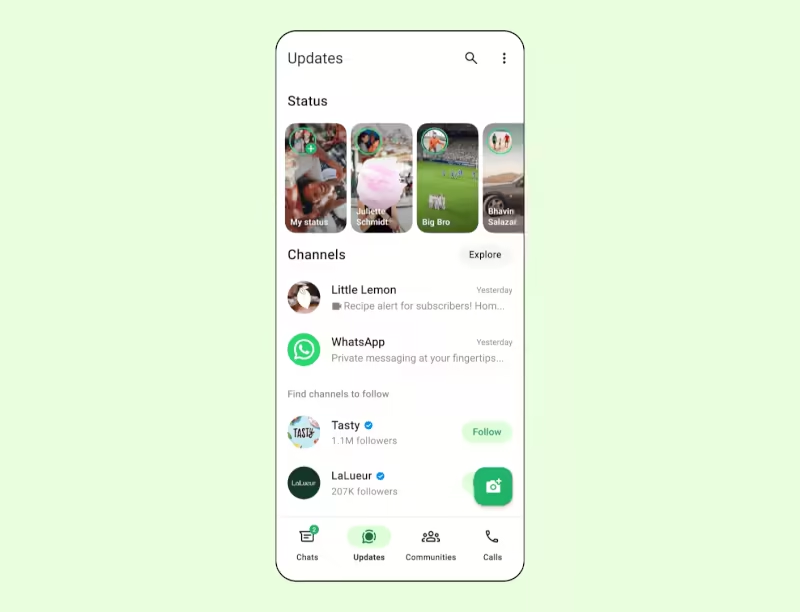
we're making some additions to the Updates tab, home to Status and Channels and a separate space from your personal chats. here's what's coming
Channel Subscriptions get access to exclusive updates from your favorite channels on WhatsApp, all while supporting the creators…— WhatsApp (@WhatsApp) June 16, 2025
Those many users are certainly money-makers for Meta, but the company couldn't just inject ads here and there like it does on Facebook and Instagram.
Due to its end-to-end encryption, Meta nor WhatsApp knows users' intention and the context of their chat, depriving Meta from sufficient data to show them its eerily scary targeted ads.
.
WhatsApp initially avoided monetization. Early revenue came from a modest subscription fee ($1 annually), but that ended around 2016 to focus on growth
Monetization only gained pace with the 2018 launch of WhatsApp Business, enabling companies to communicate with customers via APIs and click-to-WhatsApp ads—generating hundreds of millions in revenue.
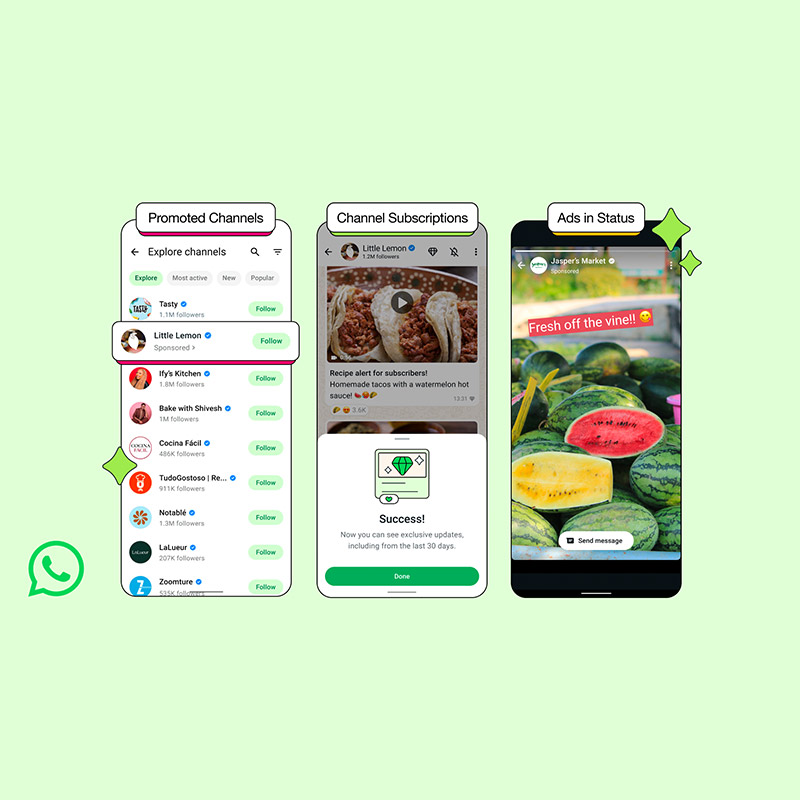
This time, Meta is steps a bit further by updating WhatsApp's Updates tab to introduce three new things:
- Channel subscriptions: Users will be able to support their favorite channel by subscribing to receive exclusive updates for a monthly fee.
- Promoted Channels: WhatsApp will help users discover new channels that might be interesting to them when they’re looking through the directory. For the first time, admins have a way to increase their Channel's visibility.
- Ads in Status: Users will be able to find a new business and easily start a conversation with them about a product or service they’re promoting in Status.
Meta’s new revenue playbook for WhatsApp includes a multifaceted business model: subscriptions, message fees, commissions, and display ads in the Updates/Status tab—an approach designed to diversify its earnings while leveraging its vast user network
Ads will appear only in the Updates section of the app, and not in chats since they're encrypted. Instead, Meta's ad targeting will rely on metadata such as country, city, device language, channel subscriptions, and user interactions with in-app content.
"We will never sell or share your phone number to advertisers. Your personal messages, calls and groups you are in will not be used to determine the ads you may see," said WhatsApp in a blog post.
For users who link their WhatsApp account to Facebook or Instagram via Meta’s Account Center, ads may become more personalized.
With permission, Meta will incorporate data across its platforms to tailor ads more effectively, while still maintaining encryption in private conversations
On the business side, WhatsApp offers lucrative options: channels that can be promoted for a fee, subscription models for exclusive content, and a message-based billing system via the Business API. Businesses are charged per message sent outside standard messaging windows, and Meta intends to take commissions—up to about 10%—from subscriptions on channels

















































































































































































































































































