Google is a big supporter of the open web standards. And here, it utilizes one of them greatly to bring its products to more places.
Google Earth is a computer software that renders the Earth in a 3D representation based on satellite images, aerial photography, and GIS data. This Google product allows people to see cities and landscapes from various angles.
But the Earth's beauty on Google Earth for the web has long been available only to Chrome users.
This time, the company said "thanks to WebAssembly" that it can now bring the product to browsers other than Chrome.
After six months launching the upgraded Google Earth as a public beta, Google is making Google Earth also accessible on Firefox, Edge and Opera browsers.
On its Medium blog post, Google said that:
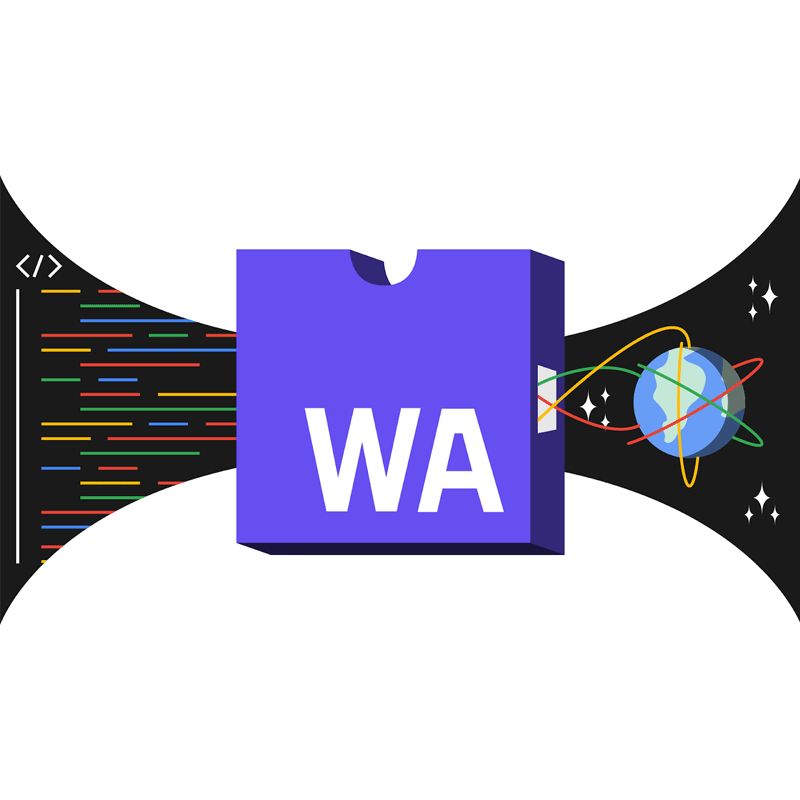
This was made possible by moving Google Earth for Chrome onto WebAssembly (Wasm), the W3C web standard for bringing native code to the web.
When Google launched Google Earth back in June 2001, it was developed so it can be accessible using the Chrome browser. This happened because Google Earth was built using Native Client (NaCI), which was a Chrome-only solution.
"Back then, this was the only way we could make sure that Earth would work well on the web," said Google.
Then it was in 2017, that Google unveiled a massive Google Earth overhaul that added new features, including 3D maps, interactive guided tours, and knowledge cards that can be loaded with lots of fun facts. At this time, the company switched Google Earth from being a desktop application to a web application
But still Google couldn't make Google Earth work on other browsers.

After nearly three years of waiting, the emergence of new web standards, namely WebAssembly, helped Google Earth to finally work on browsers other than Chrome.
"Much has changed since that time and WebAssembly has emerged as the leading open standard, with browser support maturing greatly over the past few years."
As the open standard that defines a portable binary-code format for executable programs, WebAssembly corresponds to textual assembly language, as well as interfaces for facilitating interactions between programs and their host environment. Its main goal is to enable high-performance applications on web pages, with the format is designed to be executed and integrated in other environments as well.
And because WebAssembly executables are precompiled, it is possible for Google to use a variety of programming languages to make Google Earth work on other browsers.
Google Earth is also updated to to run on browsers like Vivaldi and Brave.
While the two browsers don't really support WebAssembly to the extent of Firefox, Edge and Opera, the product can be opened despite taking a longer time to load.
"We still have some work to do. Namely polishing our experience across all these browsers and adding support for Safari. We’re continuing to work on supporting as many browsers as possible," ended Google on its Medium post.
Previously, Google Earth has added 1,000 landscape wallpapers people can download for free.






















































































































































































































































































