In the pale light of a July dawn, a stretch of Germany's Bundesautobahn 2 near Wittenberg became the stage for an extraordinary run.
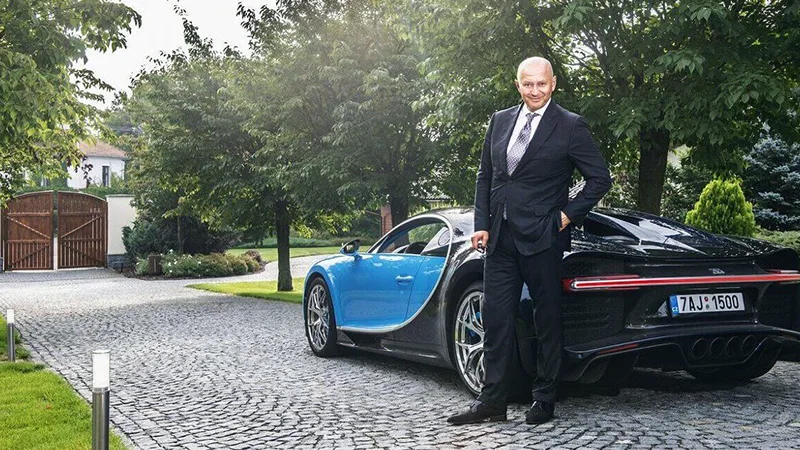
A deep-blue Bugatti Chiron, powered by its quad-turbocharged W16 engine, surged forward with relentless force. Delivering every one of its 1,500 horsepower in one smooth, uninterrupted wave, the hypercar pushed past 400 km/h with remarkable stability. In 7th and final gear, with Sport mode engaged, the car's speedometer climbed to 414 km/h, while onboard GPS data recorded an even higher 417 km/h (about 259 mph).
That run stands as the fastest verified speed ever reached by a fully street-legal production car on an open public road, achieved without road closures or special permissions.
What set this run apart from every other high-speed headline was its purity, and the fact that the internet witnessed it in full.
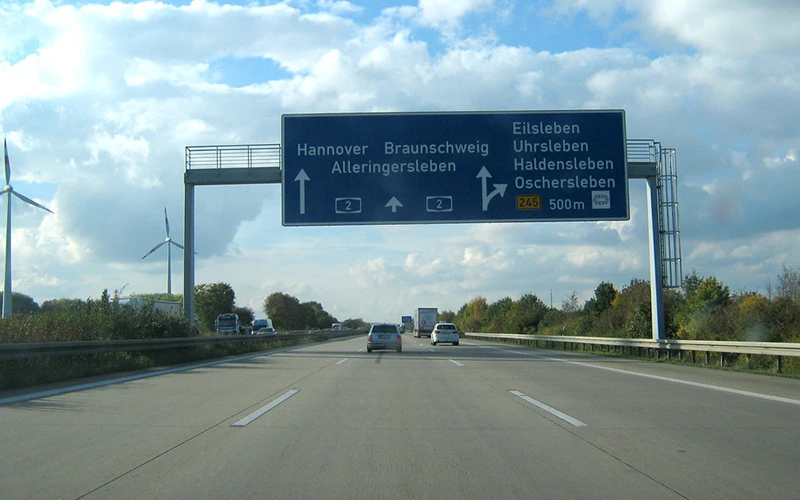
The A2, or the Bundesautobahn 2, sometimes nicknamed the "Warsaw Express," stretches roughly 473 kilometers across northern Germany, linking the industrial Ruhr region with Berlin.
Despite its heavy truck traffic, parts of the route stretch on for kilometers (often 10 to 20 kilometers) or more with minimal curves and elevation changes. Combined those with its derestricted sections, the Bundesautobahn 2 stands as one of Europe’s most important east-west corridors. And, in this case, a tempting place to push a Bugatti Chiron to its limits.
The car's owner, Radim Passer, approached the attempt with careful planning.
As a content creator, he brought along a small video crew and safety spotters to monitor traffic. Because the Autobahn remained open to the public, he needed at least one stretch with minimal vehicles and the clearest possible weather conditions.
He chose the early morning hours.
With everything in place, Passer fired up his Chiron and began slicing through the dawn at 4:50 a.m.
The blue hypercar tore through the relativel empty road, its 8.0-liter engine roaring as it unleashed 1,600 Nm of torque. The run felt less like ordinary driving and more like something out of science fiction, as the Chiron consumed the open road at astonishing speed.
On paper, the Chiron's top speed is electronically limited to 420 km/h. Passer's run reached 417 km/h, or just 3 km/h short of that figure.

It's worth noting that Passer wasn't chasing an official land-speed record.
Not the outright mark held by the 110,000 horsepower Thrust SSC (1,227 km/h set in 1997), and not the production benchmark set by the 1,750 horsepower SSC Tuatara (460 km/h set in 2021 at a vehicle testing facility). He wasn't even aiming to surpass historic Autobahn feats like Rudolf Caracciola's 432.7 km/h Autobahn run in 1938 with a purpose-built 736 horsepower Mercedes-Benz W125 Rekordwagen streamliner.
Instead, he was proving what a modern hypercar could do under real-world (if exceptionally favorable) public-road conditions: running on standard Bugatti-approved Michelin high-speed tires for Chirons, regular pump fuel from a public gas station (not special race fuel), and without any modifications. Nothing but pure, stock engineering. Just factory-spec for the run, and no special race prep.
And in that context, 417 km/h stands as the benchmark for a production car on the Autobahn.
What turned this high-speed run into a global phenomenon was Passer’s decision to share everything.
On January 9, 2022, he uploaded the full onboard GoPro footage to YouTube under the title “Bugatti Chiron on Autobahn – 417 KPH (GPS) On-Board CAM.” The video quickly exploded, and as media outlets picked it up, it sparked heated debates about safety, personal freedom, and the future of unrestricted roads.
German authorities did not view Passer's 417 km/h Autobahn run as an achievement to celebrate. Instead, it was met with clear criticism, particularly from the Federal Ministry for Digital and Transport, which emphasized that public roads, even derestricted sections, are not meant for extreme high-speed driving.
Their stance was simple: the Autobahn is not a racetrack.
Legally, the situation sat in a gray area.
The stretch of the Bundesautobahn 2 where the run took place had no posted speed limit, and under German law, that doesn't automatically make high speeds illegal. However, drivers are still bound by the requirement to maintain a speed appropriate to road, traffic, and weather conditions. Authorities pointed out that traveling at over 400 km/h raises serious questions about whether that standard can truly be met.
Despite the concerns, no charges were filed.
Investigators found no clear evidence that Passer had directly endangered other road users during the run, which made legal action difficult. Still, both officials and police described the act as irresponsible, warning that just because something is technically legal does not make it safe, or acceptable.
The incident quickly grew beyond a single high-speed run, fueling broader debate across Germany and beyond.
It reignited discussions about whether unrestricted Autobahn sections remain viable in an era where modern hypercars like the Bugatti Chiron are capable of exceeding 400 km/h.
In the end, while Passer demonstrated what was possible, authorities were more focused on what should, or shouldn't be done on public roads.
During this moment, Passer followed up with longer "Top Speed TEST" video:
And also "Epilog" videos, addressing the attention and reflecting on the experience:
Pesser's YouTube channel is filled with similar hypercar runs and behind-the-scenes glimpses. This makes it clear this wasn't a one-off thrill, but deliberate, polished content creation. His approach stands out.
A successful real-estate entrepreneur with a deep appreciation for engineering and performance, Passer emphasizes preparation, respect for the machine, and awareness of the road. He films in high quality, overlays GPS data for transparency, and shares full, uncut context rather than short, sensational clips.
That authenticity helped the footage resonate far beyond car enthusiasts.
While his feat reignited a broader conversation, like whether unrestricted Autobahn sections represent a cherished piece of automotive culture, or an outdated risk in an era of ever-faster cars, in the end, Passer’s 417 km/h run remains a benchmark. Not because it shattered every record, but because it captured something rare.
No closed track. No staged conditions. No dramatization.
Just a machine, a moment, and a stretch of road. And an open invitation for the world to experience it.
It’s also worth noting that Passer is no stranger to this kind of pursuit. In 2015, he recorded 402.5 km/h in his Bugatti Veyron on the same stretch, showing a consistent fascination with pushing limits responsibly.
Further reading: The Legend, The Death Of Giorgi Tevzadze, And His Violet OOM-500 Beast That Defined Early YouTube Madness

















































































































































































































































































