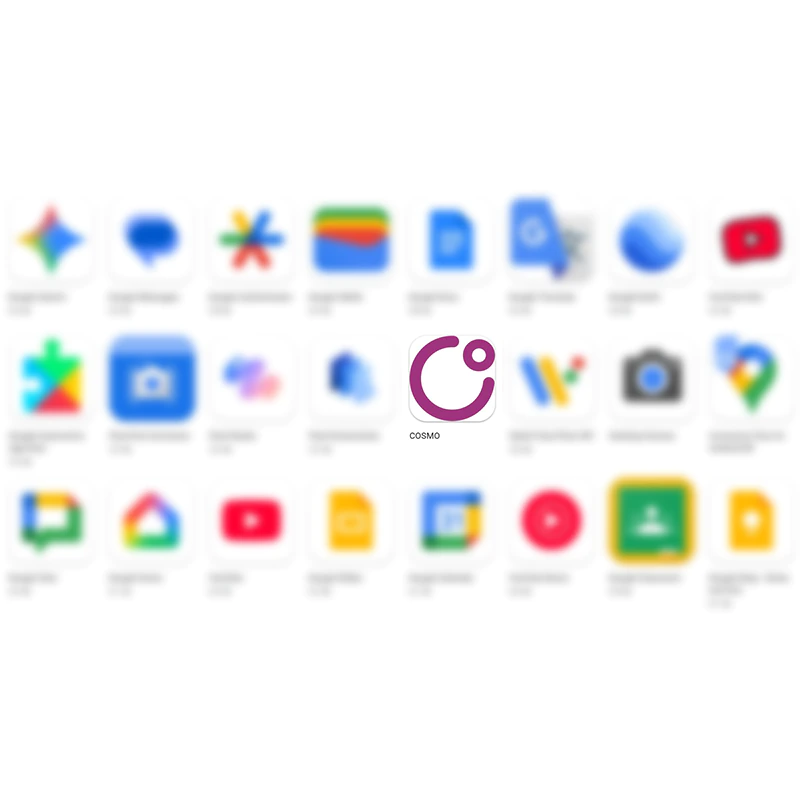
Google is known for launching and experimenting with a wide range of apps, many of which quietly appear and disappear.
Recently, one such app briefly surfaced on the Play Store before being taken down almost immediately. The app, called 'COSMO,' was described as an on-device AI tool capable of organizing daily activities and answering complex questions, but its sudden removal left many wondering what it actually was.
What is known is that COSMO was an experimental project, listed under the package name com.google.research.air.cosmo.
Interestingly, despite its research-oriented nature, it was published through Google’s main developer account rather than a separate research channel.
Another detail that caught attention was its unusually large size: around 1.13 GB, which is far bigger than a typical assistant app.
This size likely reflects its inclusion of on-device AI components, rather than relying entirely on cloud processing.
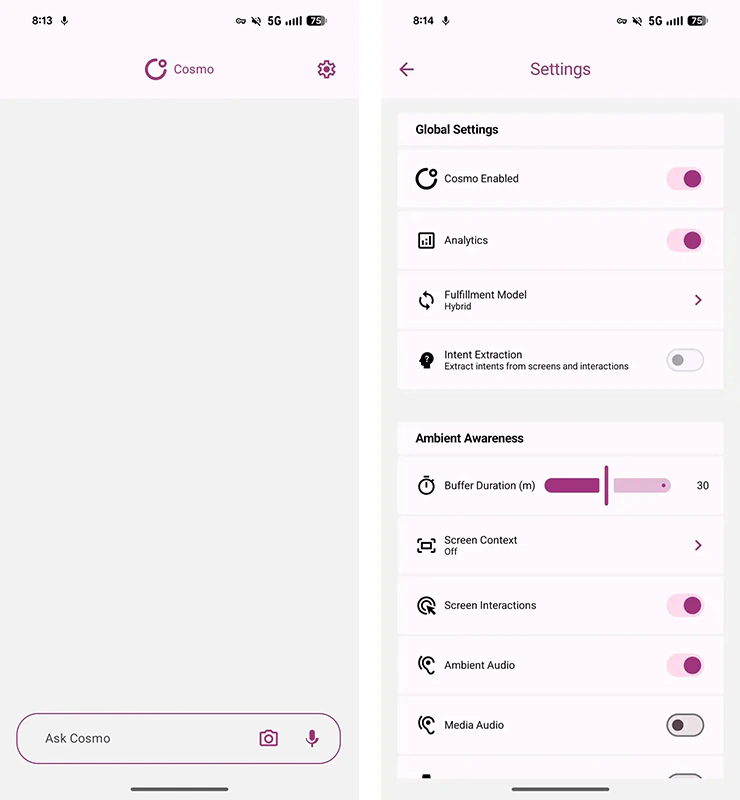
Based on its brief availability and subsequent reports, COSMO does not appear to be a finished product.
Instead, it seems to be an internal prototype that points toward Google's next evolution of AI assistants. It likely builds on both Google Assistant and Google Gemini, combining their capabilities into a more autonomous and capable system. Its sudden disappearance suggests the release was either accidental or that the app simply wasn't ready for public use.
One of the most notable differences between COSMO and earlier assistants is its proactive nature.
Traditional assistants wait for user commands, but COSMO appears designed to anticipate needs and act ahead of time.
Instead of just responding, it could suggest tasks based on your schedule, prepare information before you ask, or even carry out multi-step actions automatically. This reflects a broader industry shift toward "agentic AI," where systems are expected not only to respond, but to take initiative.
Another defining feature is its deep integration with the Android system.
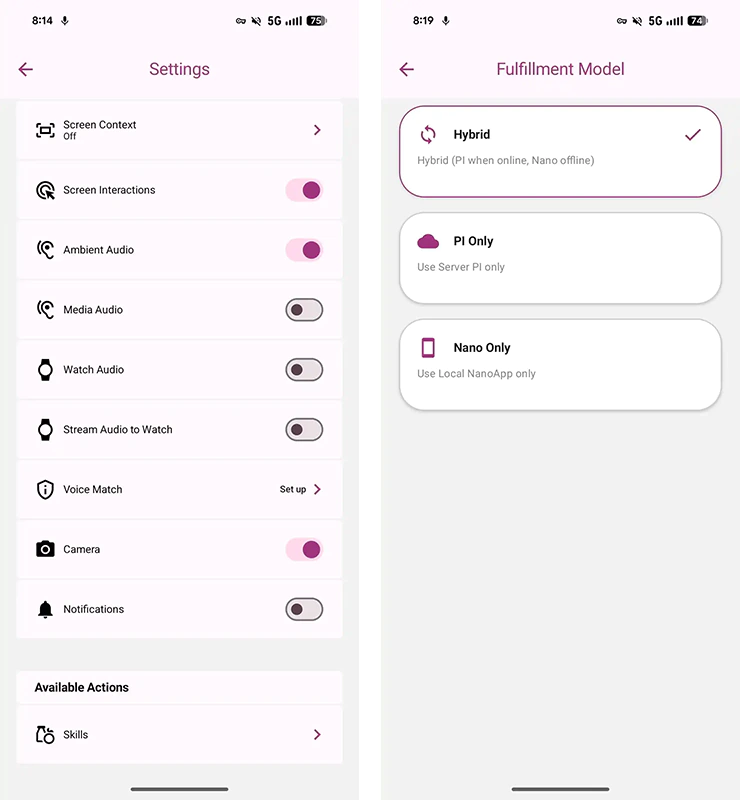
COSMO is not just a chatbot interface; it is designed to function at a system level. This would allow it to interact directly with apps, files, messages, and device settings. In practice, that means it could handle complex workflows like planning trips, organizing schedules, or managing communications across apps without requiring constant user input.
In effect, it moves closer to becoming an "AI layer" for the entire device rather than a standalone application.
The app’s large size also makes more sense in this context.
COSMO is believed to use a hybrid AI architecture, combining on-device processing with cloud-based intelligence. It reportedly includes a local Gemini Nano model for offline functionality, while more advanced tasks can be handled through server-side AI when connected to the internet. Users who briefly accessed the app found options to switch between different modes: hybrid, server-only, or fully local.
This approach reflects Google's broader strategy of balancing speed, privacy, and computational power.
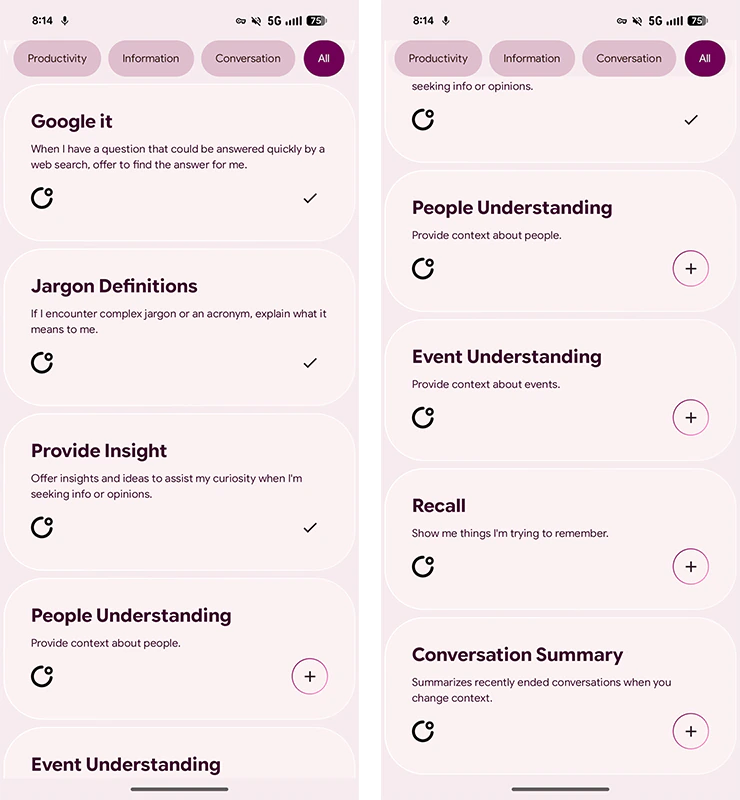
In terms of functionality, COSMO appeared to include a wide range of "skills" aimed at proactive assistance. These reportedly included suggesting lists, drafting documents and summaries, proposing calendar events based on conversations, automating browser actions, setting timers, conducting deeper research with generated reports, finding photos, performing quick searches, explaining jargon, and even recalling past interactions.
Altogether, these features suggest a system designed not just to assist, but to actively manage and streamline everyday tasks.
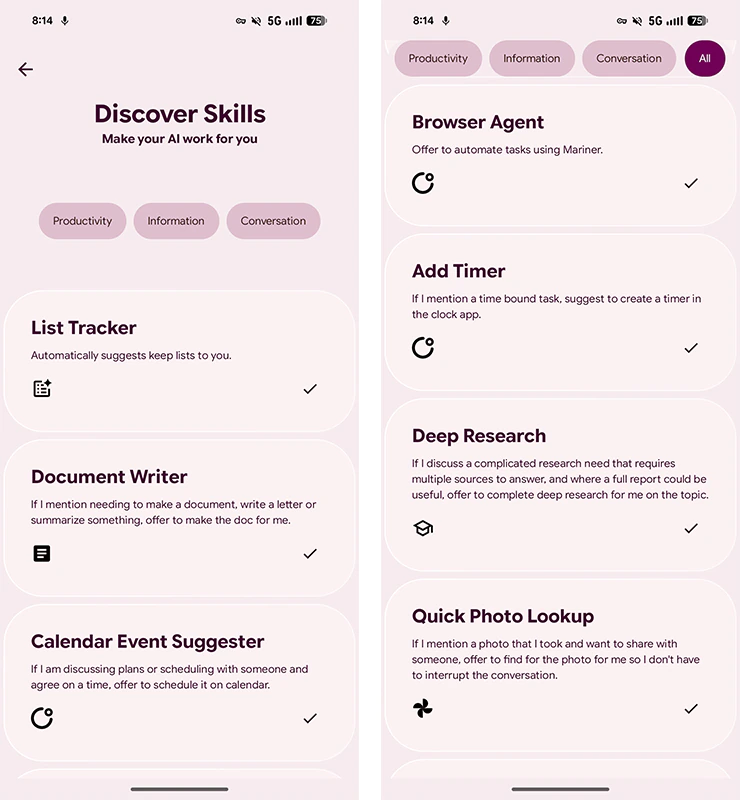
The interface itself was described as minimal and conversation-focused, similar in style to Gemini, with a strong emphasis on voice interaction.
However, unlike typical chat-based AI tools, COSMO seemed built to execute actions directly, blending conversation with real-world task execution. This shift in design highlights a move away from passive chat interfaces toward more functional, action-oriented AI systems.
At the same time, the app's rough presentation, such as poorly formatted screenshots and an overall unfinished feel, suggests it was never meant for public release.
Its connection to Google Research further supports the idea that it was a testing ground for advanced on-device AI capabilities, possibly exploring deeper integration with Android’s system services and accessibility features.
Public reaction across online communities has been mixed.
Many people see COSMO as a potential successor to Google Assistant and an important step toward more powerful AI systems that can take action on behalf of users. However, there are also concerns, particularly around privacy and control.
An assistant with deep system access would require extensive permissions, raising questions about how much autonomy users are comfortable giving to AI.




















































































































































































































































































