The Moon is Earth's one and only natural satellite, and it's 384.400 km away in the vastness of space.
In a place where nobody can be heard screaming, Amazon and Cisco have partnered with Lockheed Martin to create Callisto, which is a human-machine interface technology to be integrated into NASA's Orion spacecraft that is planned to be launched to the Moon as part of the Artemis I uncrewed mission around the Moon and back to Earth.
On the mission, Amazon brings Alexa to provide AI-powered voice-integrated digital assistant, whereas Cisco brings its videoconferencing platform for communication.
The two technologies should be integrated into the Orion spacecraft to test and demonstrate commercial technology for deep space voice, video and whiteboarding communications.
Named after a mythological Greek goddess and one of Artemis’ hunting attendants, Callisto that takes the form of a box, is aimed to improve human-machine interface technology by first demonstrating whether or not the tools can benefit future astronauts flying to distant destinations like the Moon and Mars.
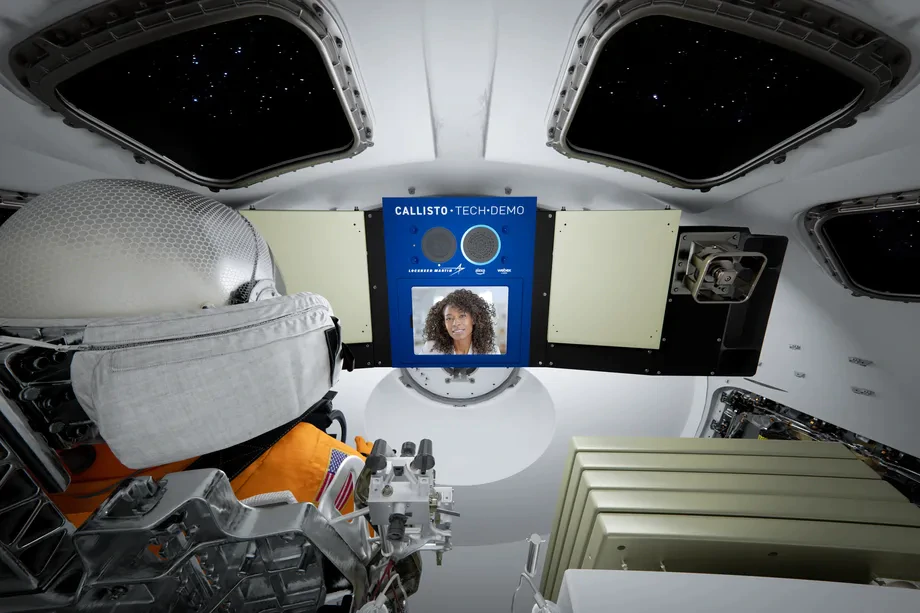
Lockheed Martin, which designed and built the Orion spacecraft for NASA, is leading the development and integration of the payload.
"We want to show that this type of technology can help astronauts with some of those unique human interface technologies, making their jobs simpler, safer, more efficient," said Rob Chambers, Lockheed Martin’s Director of Commercial Civil Space Strategy.
Being part of the mission, Amazon's Alexa should be able to work without an internet connection.
Traditionally, Alexa requires internet connection to function properly. Alexa should connect to the cloud before it can do whatever it must do. But since travelling in deep space would take too long for Alexa on Orion to use the cloud back on Earth, Callisto uses NASA’s Deep Space Network and a local database aboard the spacecraft to communicate with Alexa and respond.
This also applies to Cisco Webex, which should run on a tablet using NASA's Deep Space Network.
Here, the teams have been working with NASA to build Callisto to provide a "virtual crew experience," allowing operators to interact with Callisto from the Mission Control Center.
Using their voice, which can be then played back through the speakers at Orion to activate Alexa, people on Earth can ask things like change the lighting inside Orion, for example.
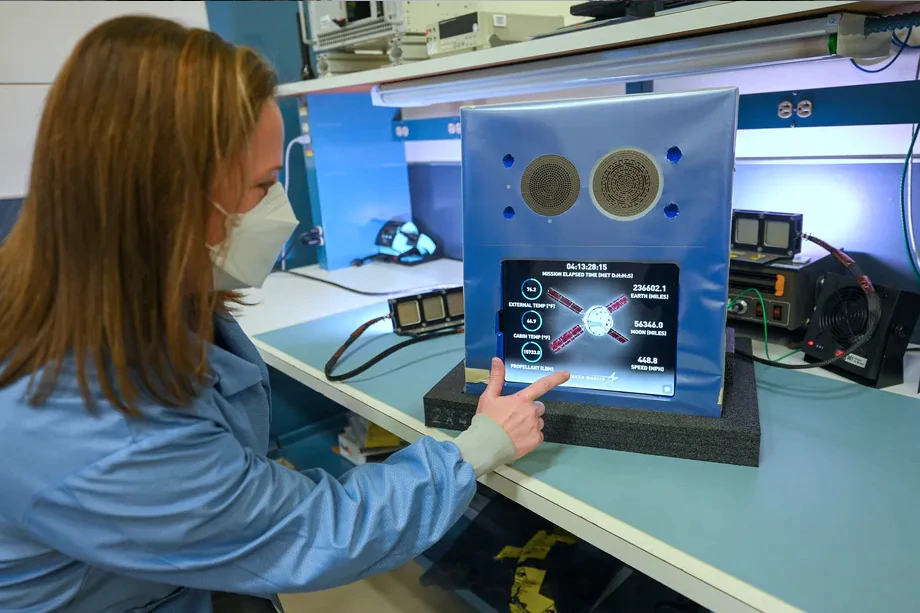
The "virtual crew members" can also ask for certain types of information, such as the speed Orion is moving through space or how long until the capsule performs its next thruster burn. Alexa is designed to pull real-time data from Orion in order to answer those questions through its speaker.
Lockheed Martin has installed a separate LED lighting system inside the capsule behind the panel display, which Alexa should be able to control.
As for the Webex video platform, it is meant to stream the activities back to the people on Earth, through a 720p feed.
Lockheed Martin has also mounted a few microphones and cameras throughout Orion’s cockpit, as well as installing a virtual reality camera, to record the demonstration and make sure that everything is working as intended.
"There will be a lot of back loss compensation technology because your network connectivity is going to be not as reliable as what you have," said Jeetu Patel, Executive Vice President and General Manager of Security and Collaboration at Cisco. "And so we have to make sure that that’s factored in."
"The Star Trek computer was part of our original inspiration for Alexa, so it's exciting and humbling to see our vision for ambient intelligence come to life onboard Orion. We're proud to be working with Lockheed Martin to push the limits of voice technology and AI, and we hope Alexa's role in the mission helps inspire future scientists, astronauts and engineers who will define this next era of space exploration," explained Aaron Rubenson, Vice President of Amazon Alexa in a statement.
"We... envision a future in which astronauts could turn to an onboard artificial intelligence for information and for assistance and ultimately for companionship," continued Rubenson.
"You could easily imagine astronauts turning to this onboard AI to talk about the status of a subsystem or maybe controlling the lights in the cabin or asking for a particular camera view."
With Callisto, people should be able to use the technology to virtually "ride-along" with the Artemis I mission, as if they are astronauts interacting with the speaker and the screen on board Orion.
Lockheed Martin said that people other than those in the Mission Control Center can follow the mission on Alexa-enabled devices by saying "Alexa, take me to the Moon," and the video collaboration capabilities is planned to offer opportunities for STEM education and remote classroom teaching events.
Ultimately, Lockheed Martin, Amazon, and Cisco want to see if such an interface would be beneficial for future deep space travelers.
"I can imagine a future where astronauts can access information on flight status and telemetry -- such as spacecraft orientation, water supply levels or battery voltage status, through simple voice commands," said Howard Hu, deputy Orion program manager at NASA’s Johnson Space Center.
Artemis I is a planned test mission in a series of flights organized by NASA and its Artemis program.
The initiative that is to send the first woman and the first person of color to the surface of the Moon, requires a long list of carefully planned strategies. And Artemis I here is a test to mark the first attempt, as well as to inaugurate NASA’s next-generation rocket, the Space Launch System, or SLS, a huge rocket that Boeing has been developing.
It's this SLS that is designed to launch people and cargo into deep space, through the capsule-like living space called Orion.
For Artemis I, SLS is planned to launch an Orion capsule from Kennedy Space Center, to orbit around the Moon on a weeks-long flight.
Since this is a critical test launch, the Artemis is not having any humans inside the Orion, aside for censor-equipped dummies.






















































































































































































































































































