In the quiet hours just after 2 a.m., a strange silence fell over parts of New Zealand—Wi-Fi connections dropped, radios fell silent, and a digital blackout crept across the airwaves.
No, it wasn’t the work of hackers or a solar storm. It was something far more unexpected.
A ship.
To be exact, the culprit was the HMAS Canberra, one of the largest and most powerful vessels in the Royal Australian Navy.
As it made its way en route to Wellington, this flagship of the Canberra-class landing helicopter docks unintentionally disrupted internet and radio services across wide stretches of New Zealand—from Taranaki to Marlborough, spanning both the North and South Islands.
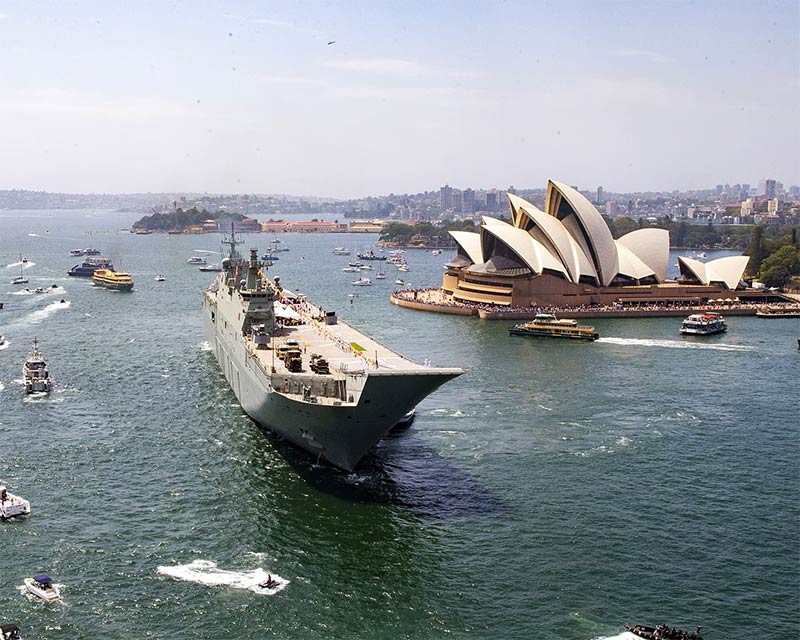
What happened was that the warship’s powerful navigation radar system—humming steadily as it sliced through the waters—was simply doing its job. Just a little too well.
The naval-grade radar aboard the 230-meter-long, 27,500-tonne metal giant inadvertently began to clash with frequency bands used by everyday civilian technology—Wi-Fi, Bluetooth, and even local FM radio. In its silent sweep, it overwhelmed the delicate signals that keep the modern world connected.
The result? A temporary communications blackout. Not caused by malice, but by sheer military power brushing up against the invisible fabric of civilian life.
The issue stemmed from overlapping use of the 5GHz radio spectrum, a shared space between civilian tech and military hardware. According to Dan O’Grady from New Zealand’s Ministry of Business, the interference occurred since the ship's naval equipment was operating within a shared radio spectrum band commonly used for Wi-Fi and Bluetooth.
Since military-grade radar doesn’t negotiate, when it moves through civilian airspace, its signals often overpower the more delicate pulses of local networks.
In this case, the clash led to real-world outages no one expected.
This kind of incident is rare, but not impossible.
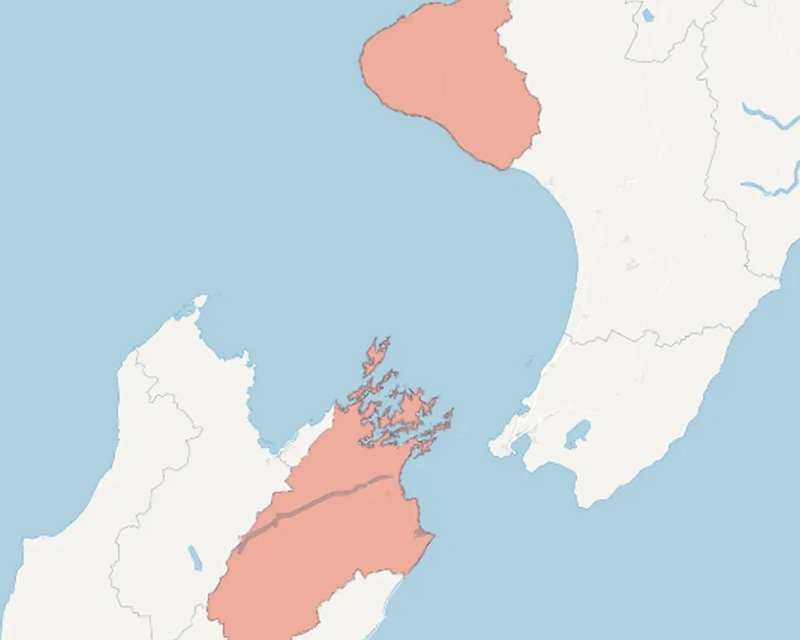
Stations like BrianFM suddenly went off-air, and had to switch to their backup systems just to remain on air.
"We like to be, you know, pretty reliable and robust, and it certainly took us out and numerous others," said BrianFM’s founder, Andrew Jeffries.
Another affected, was Primo. The New Zealand wireless internet and mobile telecommunications company had to scramble to its backup systems to keep its customers online.
"it’s not every day a warship takes your gear offline," said Matthew Harrison, the managing director of Primo.
"This wasn’t just a blip," he wrote in a post on LinkedIn. "It was full-scale, military-grade radar triggering built-in safety protocols designed to protect airspace."
"It rolled across our network in sync with the ship’s movement. We’ve never seen anything like it here before!"
He then went and then joked: "Hey Royal Australian Navy … where can we send the bill?"
It wasn’t malicious and wasn’t even intentional.
Once the interference was traced to the ship, Australia's Defense Force quickly coordinated with New Zealand’s authorities, and the radar frequency was adjusted.
Shortly after this, Australia confirmed that the issue was resolved without incident—but not without raising eyebrows.
It was a striking reminder: in the wireless world, even a ship far out at sea can cause ripple effects across borders.
It also highlights the invisible battleground of the modern radio spectrum—a limited, shared space where military tech, civilian services, and private companies must coexist. And as the world continues layering more devices and systems onto the web of frequencies people rely on, those boundaries will only get more sensitive.
It underscores the importance of coordination and communication between military operations and civilian infrastructure to prevent such occurrences in the future.






















































































































































































































































































