The digital smoke had barely cleared from the servers of the Jalisco New Generation Cartel when the real-world fires began.
On February 22, 2026, the myth of Nemesio Oseguera Cervantes, or better known as El Mencho, reportedly met its end in a hail of gunfire in the mountains near Tapalpa. For years, he had operated less like a man and more like a rumor with a pulse, a phantom whose presence was felt everywhere but seen almost nowhere.
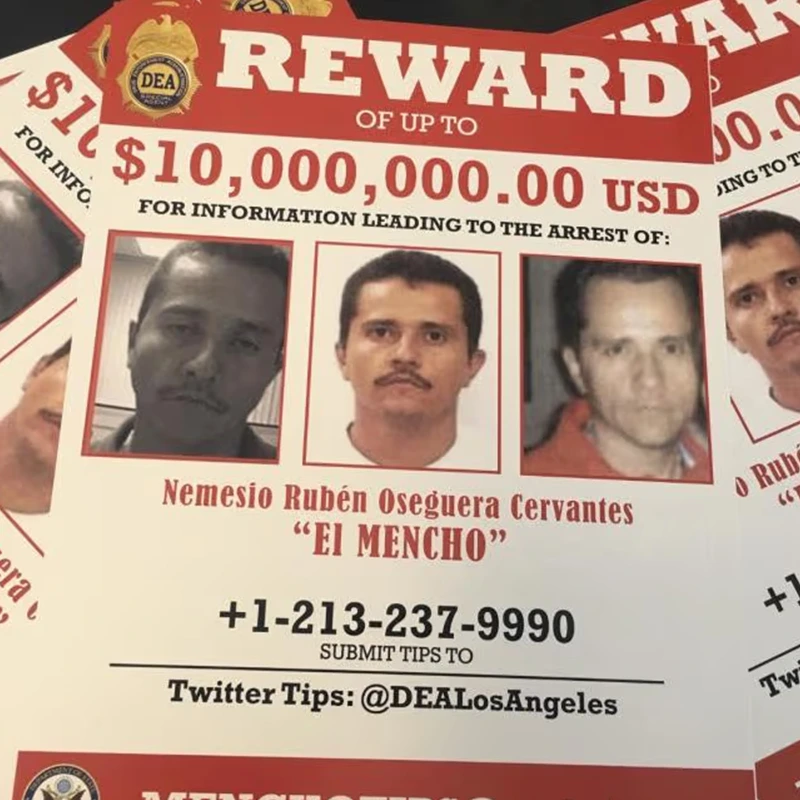
Even the U.S. Department of State reduced him to a sparse, bureaucratic description: a name, a birthplace, a reward figure. His aliases, including "El Señor de los Gallos" or the Lord of the Roosters, which sounded almost folkloric.
Unlike his predecessor Joaquín "El Chapo" Guzmán, who once stepped into the spotlight for cinematic interviews, El Mencho rejected visibility. There were no interviews, no carefully staged photo ops.
In an era when even low-level influencers document their daily routines and curate their best, the head of one of the world's most powerful cartels remained visually absent, like a ghost in an age of oversharing.
El Mencho’s rise from the avocado groves of Michoacán to the summit of a multi-billion-dollar criminal empire was deliberate, engineered through relentless adaptation.
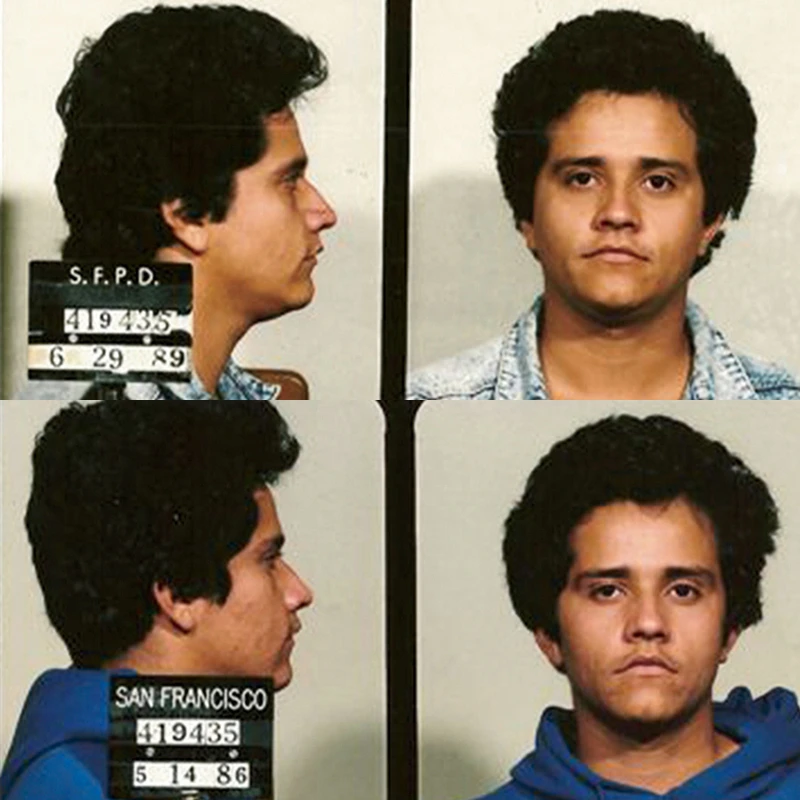
Before he became Mexico's most wanted man, he drifted between worlds: a petty criminal and street dealer selling heroin, a brief stint as a local police officer, years crossing the U.S. border, multiple arrests, and at least three deportations.
Each setback and failute refined him.
The first time he put an interest in becoming a cartel, was when he was convinced to join the Milenio Cartel, the group that would ultimately catapult him to power.
Milenio was once its own organization, but by the turn of the century they were essentially a subsidiary of Sinaloa, under the leadership of Nacho Coronel, a person none other than the Sinaloa co-founder and the uncle of El Chapo's wife. When the leader of the cartel died and that the bosses were taken cared of, El Mencho who had risen through the cartel's ranks to become a top Milenio lieutenant, was eyeing for the throne.
But the cartel's leadership had other ideas.
After his colleague was chosen instead of him, El Mencho retaliated by creating his own group, to then fight back against both Milenio and Sinoloa.
At the time, the fighting raged in the streets of Guadalajara, destroying the city's long-standing truce. In an instant, Jalisco's murder rate more than doubled.
El Mencho and his men killed those who were loyal to Milenio. Others who were spared were given a choice: flee or join this new group.
And this was the beginning of CNJG.
With criminals he made friends with during his time in prison, El Mencho helped build the CJNG into something different from the cartels that came before. Under his leadership, the organization expanded into a sprawling empire of synthetic drugs, advanced weaponry, and digital propaganda.
Jalisco became Mexico's epicenter for methamphetamine.
Unlike heroin or marijuana, meth didn't require vast plantations or favorable weather. It only needed secrecy, chemistry knowledge, and access to supply chains. Labs could be hidden in warehouses, ranches, or industrial facilities, far from prying eyes.
Guadalajara offered a strategic advantage: its pharmaceutical industry churned out young chemists with technical expertise, while its industrial infrastructure made acquiring equipment and chemicals less conspicuous. Nearby Pacific ports allowed the cartel to import massive quantities of precursor chemicals from India and China. And most importantly, the place allowed it to export finished meth with similar efficiency. Unlike cocaine, which required purchasing from Colombian producers, meth allowed the CJNG to control production from start to finish. The result: most of the profits flowed directly into their pockets.
El Mencho also invested heavily in maritime trafficking, reportedly commissioning submarines to transport narcotics from South America. Former U.S. anti-drug officials claim he even hired Russian naval engineers to optimize their stealth and range.
He focused on overseas markets, places like Australia, where a kilogram of cocaine could fetch multiples of its U.S. street value, turning trans-Pacific shipments into windfall profits.
He employed audacious smuggling tactics too.
According to former DEA agents, CJNG operatives posed as magazine crews, flying in "talent" from Colombia and Venezuela under the guise of fashion shoots. While authorities were distracted by models and cameras, drugs moved unnoticed.
But CJNG was more than a trafficking network. It was a vertically integrated criminal franchise, blending corporate discipline with paramilitary theatrics.
Under El Mencho, the cartel unveiled its infamous "Monster" trucks, which are improvised armored vehicles barreling down rural highways like apocalyptic parade floats. Drones were weaponized to drop explosives, transforming cheap consumer technology into instruments of terror.
In all, El Mencho grew his empire through a diversified criminal enterprise beyond just drug smuggling, with interests in human trafficking, large-scale extortion, fuel theft, and financial scams.
Yet El Mencho’s deadliest weapon was digital.
On platforms like TikTok and Telegram, the CJNG recruited as much as it intimidated. Internally, the cartel refers to itself as "La Empresa," of The Company, and treats its online presence like a corporate brand. Smaller gangs could "buy" the CJNG name and logos, often operating Facebook or Instagram pages under the guise of community news or protection.
To evade moderation, members developed a coded emoji language: the rooster emoji to represent El Mencho, "4 Letras" for CJNG, and subtle signals to advertise jobs or issue warnings. Insiders called it "Alleyways to Algorithms": recruitment and propaganda hidden in plain sight, delivered directly to vulnerable youth on the same platforms they used for memes and dance trends.
Even minor slights online were fatal.
Members monitored livestreams, comment sections, and social posts with obsessive attention. In one grim case, a 17-year-old YouTuber who mocked El Mencho in a viral clip was later murdered. The message was clear: the screen offered no protection.
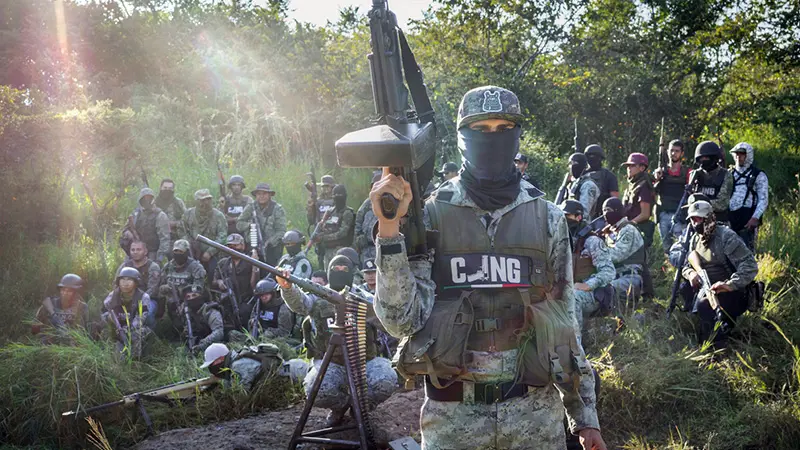
Mencho consolidated control through fear and corruption.
Captured CJNG members testified that disobedience was punished theatrically; some victims were forced to beg for forgiveness before execution. "This is a guy who'll execute your whole family based on a rumor," a source said. "He had zero regard for human life."
He was austere and calculating: no alcohol, no mistresses, almost no trust.
A former DEA agent recalls intercepted phone calls where Mencho barked orders at hardened killers. "I don’t remember hearing him calm," the agent said. "But he wasn't a hothead. The yelling was precise, controlled. He knew exactly what he was doing."
And lastly, corruption completed the system.
At one point, over half of Jalisco's municipal police were reportedly on CJNG payroll, some earning five times their official salary.
Those who couldn't be bought were terrorized into obedience. Fear and loyalty were indistinguishable.
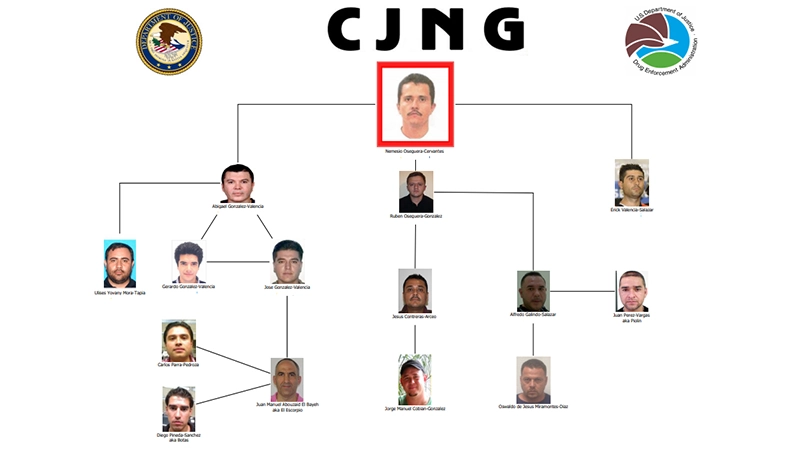
Yet even a ghost leaves traces.
The CJNG relied on encrypted devices and cryptophones, stripped GPS, and secure networks. But metadata patterns emerge. Signals pulse. Associates leave breadcrumbs. Investigators tracked a trusted associate connected to Mencho’s romantic partner.
And at one point, investigators found bursts of encrypted traffic from an ecotourism cabin in a pueblo mágico, which made it rather suspicious.
When they were certain, the authorities moved in.
That Saturday evening, El Mencho was relaxing with his lover in a luxury cabin tucked into the pine-covered hills of Tapalpa, a popular resort town in western Jalisco. The villa, a two-story retreat of stone walls and a red-tiled roof, featured a timbered outdoor porch, a sleek modern kitchen anchored by an oversized island, and a massive refrigerator that underscored the place's opulence.
Once authorities pinpointed his location, a unit of Mexican security forces stormed the property. Gunfire erupted almost immediately. For five hours, his bodyguards tried, and failed, to coordinate a defense as the firefight dragged on.
In the end, El Mencho broke for the forest. But unlike his dramatic escape in 2015, when his men shot down a EC-725 "Super Cougar" military helicopter with a Russian-made rocket propelled grenade (RPG) and cleared a path to freedom, there would be no clean getaway this time.
El Mencho was fatally wounded and died while being airlifted to Mexico City.
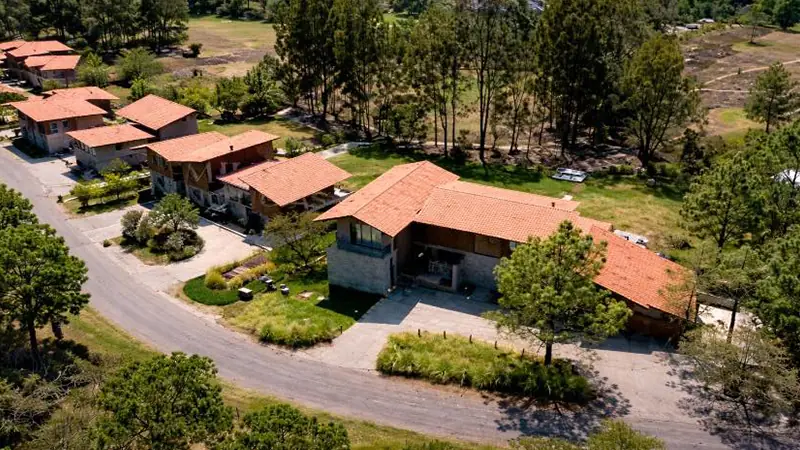
The digital aftermath was instantaneous.
Before official confirmation, narcoblogs and leaked WhatsApp messages spread "digital narco-chaos" across Jalisco. Within hours, "Code Red" panic erupted on WhatsApp and X.
Cartel members burned over 250 vehicles, blocked roads in 22 states, and launched an online campaign exaggerating the attacks, within just days after El Mencho's death. Viral videos of smoke over Puerto Vallarta and panicked passengers at Guadalajara's airport created a spectacle of state incapacity.
Even bizarre rumors circulated, like the viral claim that a U.S. Kick streamer had provided the $15 million intelligence tip, highlighting how the internet now blurs the line between geopolitics and digital "troll" culture.
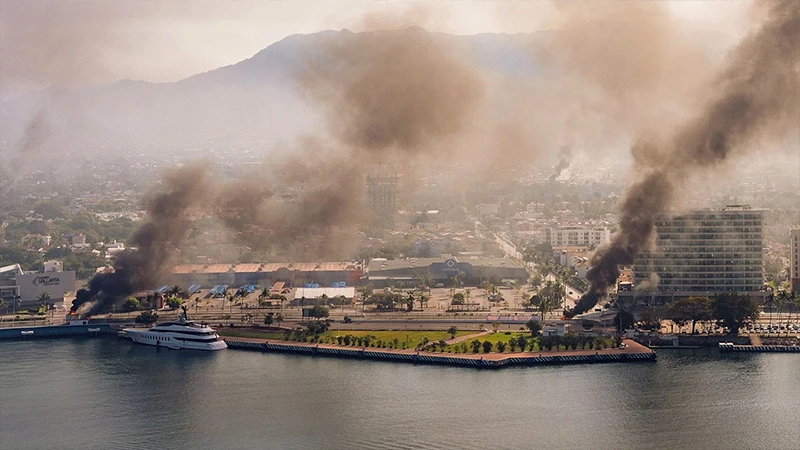
Mexico now faces a terrifying crossroads.
El Mencho was more than a leader. He was the glue that held a sprawling, decentralized network together. With his death, both the digital and physical worlds brace for a fragmentation that could surpass even his reign in violence.
The CJNG has lost its founding father, and lieutenants are already vying for the throne.
One kingpin’s end, in the age of high-tech narco-terrorism, is rarely the last act.
The man is gone, but the digital blueprint he perfected remains, ready to be picked up by whoever survives the coming storm.
According to calculations, CJNG held roughly $50 billion in assets, with El Mencho himself worth between $500 million to $1 billion.