People may have different opinions regarding wars. But most people should know that wars can cost lives, political tensions, and lots of blood and tears that can last for generations.
To those people, war is never a good thing.
While wars tend to start when different thoughts clash into the oblivion, there are people from third-parties who have enough power and resources to change the course of war, if they want to.
This is what Elon Musk caught himself into.
According to Walter Isaacson’s biography of the eccentric billionaire titled "Elon Musk," it's said that he secretly ordered his engineers not to turn on his company’s Starlink satellite communications network in Sevastopol, near the Crimean coast in 2022, to disrupt a Ukrainian sneak attack on the Russian naval fleet.

The biography book from Isaacson, the author of acclaimed biographies of Steve Jobs and Albert Einstein, gives readers fresh insights into the mind of Elon Musk, including his opinions regarding the Ukraine war with Russia.
After Russia disrupted Ukraine’s communications systems before its full-scale invasion in February 2022, Musk agreed to provide Ukraine with Starlink satellite terminals, made possible through his SpaceX company.
The internet connection from Starlink helped civilians remain connected with their loved ones. In Ukraine, even as cellular phone and internet networks had been destroyed, the Starlink terminals allowed Ukraine to connect.
But once Ukraine began to use Starlink terminals for offensive attacks against Russia, Musk started to rethink his decision.
"How am I in this war?" Musk asked Isaacson. "Starlink was not meant to be involved in wars. It was so people can watch Netflix and chill and get online for school and do good peaceful things, not drone strikes."
Musk was soon on the phone with President Joe Biden’s national security adviser, Jake Sullivan, the chairman of the joint chiefs, General Mark Milley, as well as Russian ambassador to the U.S..
And following the calls, Musk allegedly deactivated the internet over Crimea.
It is said that the SpaceX CEO "secretly" told SpaceX engineers to turn off Starlink coverage within 100 kilometers of the Crimean coast to prevent a Ukrainian attack on the area.
"As a result, when the Ukrainian drone subs got near the Russian fleet in Sevastopol, they lost connectivity and washed ashore harmlessly," continued the extract.
The Starlink regions in question were not activated. SpaceX did not deactivate anything.
— Elon Musk (@elonmusk) September 7, 2023
Musk's decision is said to be based on an acute fear that Russia would respond to a Ukrainian attack on Crimea with nuclear weapons. This fear was further induced after Musk's conversations with senior Russian officials, according to Isaacson.
Because of his decision, Ukraine officials allegedly responded by begging him turn on the satellites.
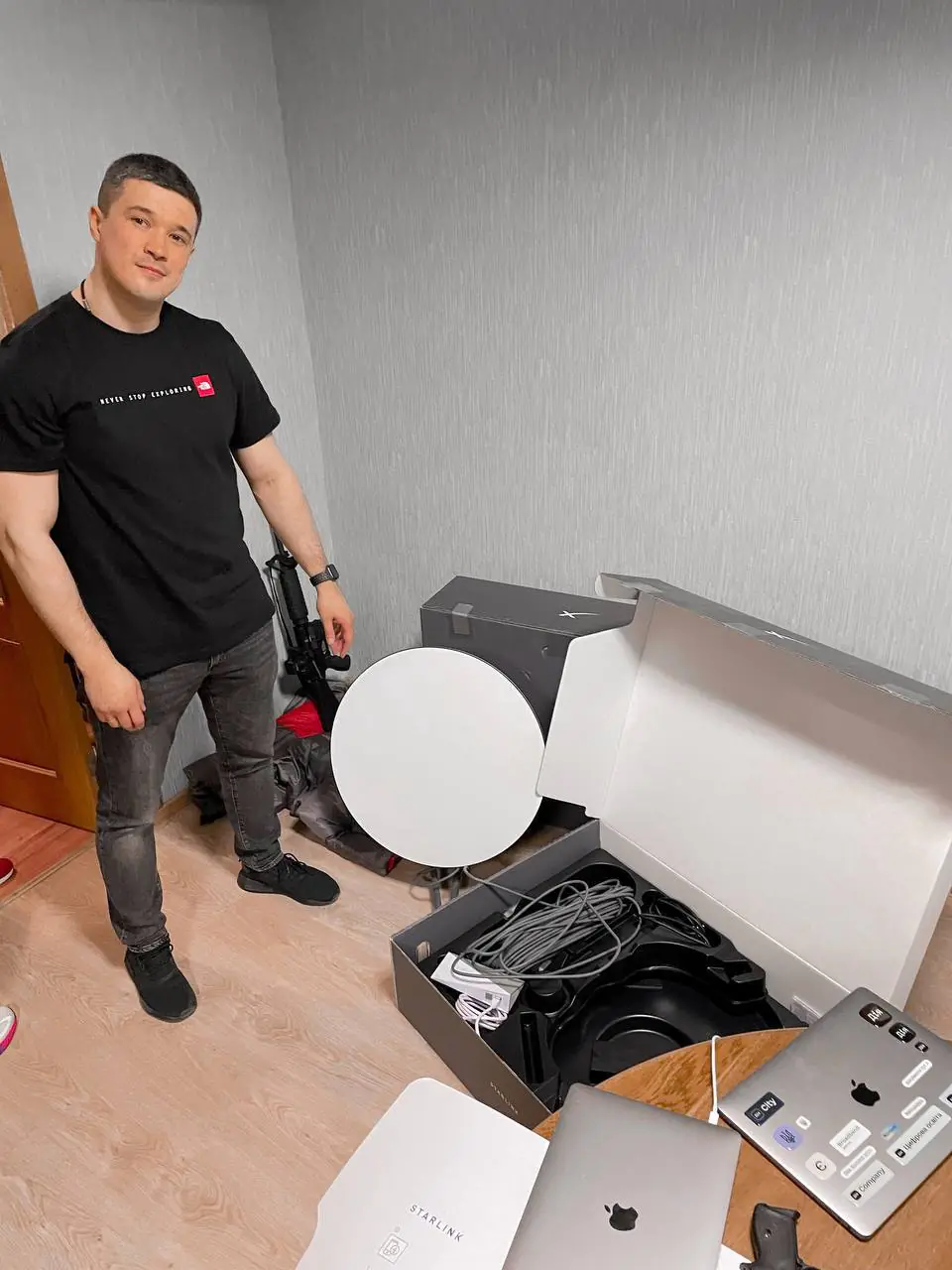
Mykhailo Fedorov, a deputy prime minister of Ukraine, allegedly pleaded to Musk, asking him to allow connectivity to help the operations of the military's submarine drones.
Fedorov allegedly wooed Musk by telling him about the submarines' capabilities, according to Isaacson.
"I just want you—the person who is changing the world through technology—to know this," Fedorov allegedly told Musk.
Musk said that he was impressed with the submarine drones, but allegedly told the Ukraine official that he wouldn’t turn satellite coverage on for Crimea because Ukraine "is now going too far and inviting strategic defeat," according to Isaacson.
Read: Ukraine Minister Asks U.S. Tech Companies For Help, And Ask Them To Also Pressure Russia
While Musk’s concerns over a "mini-Pearl Harbor" as he put it, didn't happen, but the allegation that said he deactivated Starlink connections over Crimea is putting Musk into a unique, but difficult situation.
As the war interests between Russia and Ukraine slowly unfolds, Musk allegedly became a power broker, and this is something the U.S. cannot ignore.
In response to this allegation, Musk took the matter to X, the platform he renamed from Twitter, to express his loyalty to the U.S., as a U.S. citizen.
He emphasized his readiness to defend it.
I am a citizen of the United States and have only that passport. No matter what happens, I will fight for and die in America.
The United States Congress has not declared war on Russia. If anyone is treasonous, it is those who call me such.
Please tell them that very clearly.— Elon Musk (@elonmusk) September 11, 2023
There was an emergency request from government authorities to activate Starlink all the way to Sevastopol.
The obvious intent being to sink most of the Russian fleet at anchor.
If I had agreed to their request, then SpaceX would be explicitly complicit in a major act of war and…— Elon Musk (@elonmusk) September 7, 2023
"I am a citizen of the United States and have only that passport. No matter what happens, I will fight for and die for America," said Musk.
Musk also said that the Starlink service provided by his company SpaceX was never active over Crimea.
What the Ukraine officials did, was begging him to turn it on for the first time as an "emergency request."
"There was an emergency request from government authorities to activate Starlink all the way to Sevastopol," Musk posted on X.
"The obvious intent being to sink most of the Russian fleet at anchor. If I had agreed to their request, then SpaceX would be explicitly complicit in a major act of war and conflict escalation."
Musk is putting himself in an unchartered territory.
First of, SpaceX had spent tens of millions of its own money to fund the equipment to Ukraine. SpaceX also received funds from the U.S. government among others, to further help the intiative.
Musk, who sits at the helm is extremely resourceful and influential. However, he is also unpredictable at times, and this makes him dangerous.
One example, was when SpaceX made it clear to the U.S. Department of Defense that it couldn't continue to bear the cost. Then, in a classic Elon Musk Twitter moment, he declared, "the hell with it...we'll just keep funding Ukraine govt for free."
This abrupt change caused quite a stir, even within SpaceX.
Gwynne Shotwell, Musk's president at SpaceX, expressed her frustration at his reversal. According to Isaacson, she lamented that the Pentagon had a $145 million check ready for SpaceX, only for Musk to change course under the influence of Twitter, the Pentagon leaks, and a bunch of haters.
Despite these twists and turns, SpaceX eventually worked out a deal with the U.S. and European governments at the start of 2023. They agreed to fund another 100,000 new satellite terminals for Ukraine.
This agreement underscores the critical role that Starlink continues to play in the ongoing conflict.
To clarify on the Starlink issue: the Ukrainians THOUGHT coverage was enabled all the way to Crimea, but it was not. They asked Musk to enable it for their drone sub attack on the Russian fleet. Musk did not enable it, because he thought, probably correctly, that would cause a…
— Walter Isaacson (@WalterIsaacson) September 9, 2023
As for Walter Isaacson, the famous author later admitted that the controversial detail in an online extract of the book, which was first published in a post by The Washington Post, which suggested that Musk thwarted a Ukrainian drone attack on a Russian naval base in September 2022, is factually incorrect.
Isaacson also tweeted a clarification, saying that it was the Ukrainians who thought that Starlink internet coverage was enabled all the way to Crimea, when it was not.
Musk's decision was not to activate it despite Ukraine's plea, because he thought, doing so would cause a major war.
Isaacson said that based on conversations with Musk, he "mistakenly" believed that the policy preventing Starlink from being used for an attack on Crimea had been decided on the night of the attempted Ukrainian attack.
The terms of service prohibits Starlink from being used for offensive military action as it is a "civilian system."
Isaacson also said that Musk said that "the policy had been implemented earlier, but the Ukrainians did not know it, and that night he simply reaffirmed the policy."
In response to Isaacson’s correction, Musk tweeted: "Much appreciated, Walter."
Read: SpaceX Restrains Ukraine From Using Its Starlink Internet For Controlling Drones At War
Much appreciated, Walter.
The onus is meaningfully different if I refused to act upon a request from Ukraine vs. made a deliberate change to Starlink to thwart Ukraine.
At no point did I or anyone at SpaceX promise coverage over Crimea.
Moreover, our terms of service clearly… https://t.co/jmNtScM5LY— Elon Musk (@elonmusk) September 9, 2023






















































































































































































































































































