Nuclear weapons are the most powerful weapons humans have created.
When detonated, the epicenter of a nuclear blast can briefly burn hotter and shine brighter than the Sun, unleashing a devastating inferno. The explosion that follows can produce massive shockwaves, intense heat, and deadly radiation—capable of leveling entire cities, annihilating infrastructure worth billions, and taking countless lives in an instant.
So far, nuclear weapons have been used in war only twice—both by the U.S. against Japan during World War II. The first was "Little Boy", a uranium gun-type bomb dropped on Hiroshima on August 6, 1945. The second, "Fat Man", a plutonium implosion-type bomb, was dropped on Nagasaki just three days later, on August 9.
Since then, nuclear detonations have only occurred as part of military testing or demonstrations—not in active combat.
Still, despite the fact that only two have ever been used with deadly intent, Israel now fears it could be the target of the third, believing that Iran might one day unleash such destruction upon it.
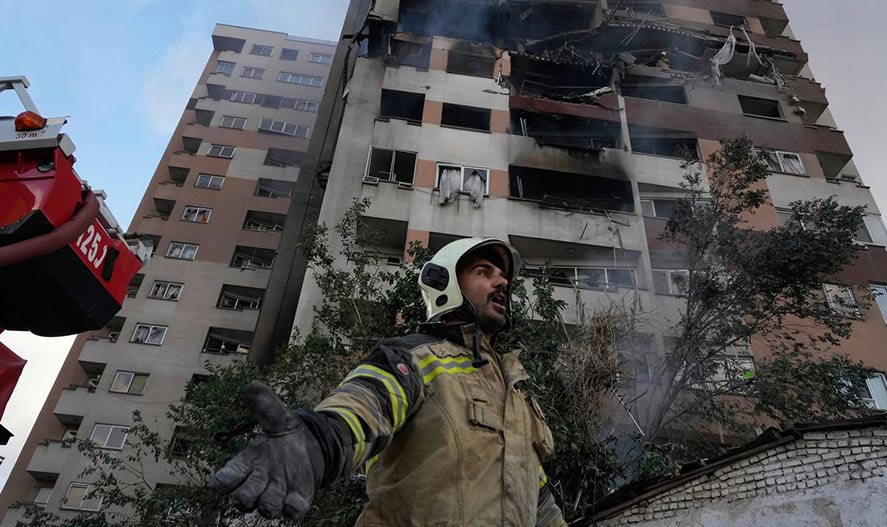
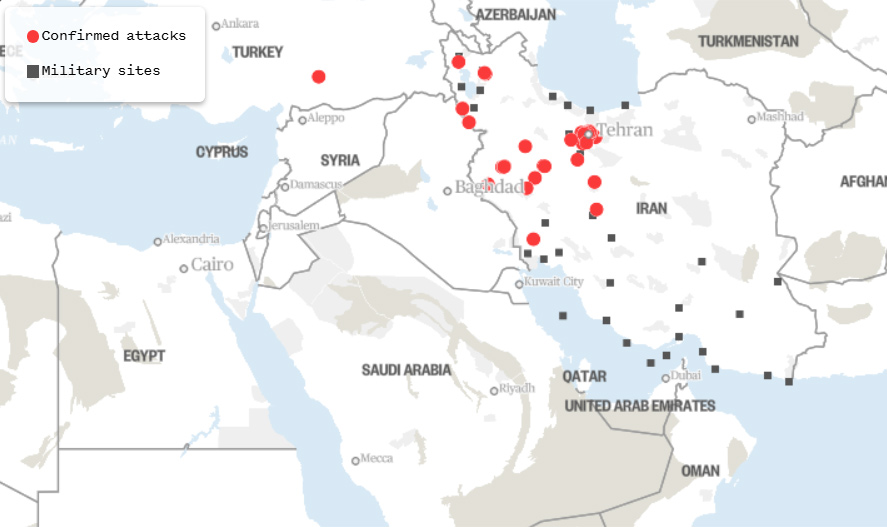
It all began on June 13, 2025, when Israel launched Operation Rising Lion—a massive aerial and covert assault targeting more than 100 sites across Iran. These included critical nuclear facilities and high-value military command centers.
The catalyst for the operation was intelligence suggesting that Iran was nearing a "point of no return" in its nuclear weapons development. With the backing—or at least the awareness—of the U.S., Prime Minister Benjamin Netanyahu deemed a decisive strike essential for safeguarding Israel’s national security.
The airstrikes hit key locations such as Natanz, Fordow, and Isfahan, as well as residences of senior Iranian leadership. Reports indicate the deaths of several high-ranking officials and nuclear scientists.
Not only that, because explosions were reported in Tehran at about 03:30 local time on Friday.
Iranian state TV said residential areas in the Iran's capital were hit, with blasts also heard north-east of the city.
امشب، میخواهم با شما، مردم محترم ایران، صحبت کنم.
ما در میانه یکی از بزرگترین عملیاتهای نظامی در تاریخ، هستیم - عملیات طلوع شیران.
رژیم اسلامی که تقریباً ۵۰ سال شما را سرکوب کرده، تهدید به نابودی کشور ما- اسرائیل میکند.
هدف عملیات اسرائیل جلوگیری از تهدید هستهای و موشکی… pic.twitter.com/sS5cXgJExi— Benjamin Netanyahu - בנימין נתניהו (@netanyahu) June 13, 2025
Netanyahu described the strikes as "a targeted military operation to roll back the Iranian threat to Israel's very survival."
He emphasized that the operation would "continue for as many days as it takes to remove the spread."
" [...] over 100 targets, including senior figures of the Iranian General Staff and leaders of the nuclear program," Israel stated.
Netanyahu warned that Iran has recently taken steps to "weaponize" its nuclear capabilities and stated that "if not stopped, Iran could produce a nuclear weapon in a very short time."
Supporting this claim, an Israeli military official said Iran possessed enough nuclear material to build nuclear bombs "within days," even as Iran has consistently denied having a nuclear weapons program.
Previously, the IAEA reported that Iran had "many failures" in providing the global nuclear watchdog with full answers about its undeclared nuclear material and activities, which constitutes non-compliance. This raised serious concerns over Iran's growing stockpile of enriched uranium—material that can be used not only for reactor fuel, but also for manufacturing nuclear weapons.
The watchdog grew increasingly alarmed after reports that Iran had managed to enrich uranium to 60% purity—near weapons-grade—enough to potentially produce at least nine nuclear bombs.
Iran, however, continues to maintain that its nuclear program is strictly for peaceful purposes.
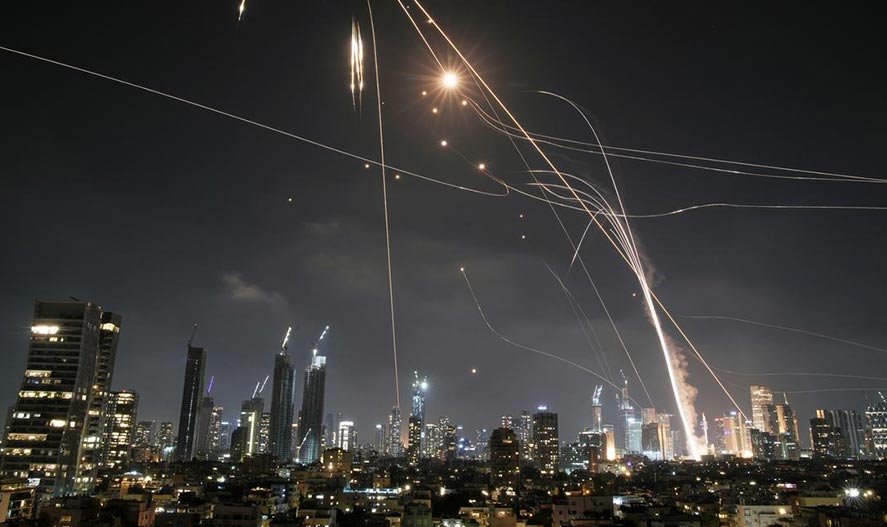
In retaliation to Israel's attacks, Iran responded swiftly, launching a coordinated barrage of drones and more than 100 ballistic missiles in multiple waves.
In the Name of God, the Compassionate, the Merciful
To the great Iranian nation! Zionist regime has committed a crime in our dear country today at dawn with its satanic, bloodstained hands. It has revealed its malicious nature even more than before by targeting residential areas.— Khamenei.ir (@khamenei_ir) June 13, 2025
That [Zionist] regime should anticipate a severe punishment .By God’s grace, the powerful arm of the Islamic Republic’s Armed Forces won’t let them go unpunished.
— Khamenei.ir (@khamenei_ir) June 13, 2025
In the enemy’s attacks, several commanders and scientists have been martyred. God willing, their successors and colleagues will carry on with their duties without delay.
— Khamenei.ir (@khamenei_ir) June 13, 2025
With this crime, the Zionist regime has prepared for itself a bitter, painful fate, which it will definitely see.
— Khamenei.ir (@khamenei_ir) June 13, 2025
While Israel’s Iron Dome defense system (with the help of the U.S.) successfully intercepted most of the incoming threats, several missiles broke through, striking areas in and around Tel Aviv, with notable damage and fatalities reported in Rishon LeZion and Ramat Gan.
Israeli residents were woken by air raid sirens around the same time and received emergency phone alerts.
The alerts prompted emergency mobilization, and led to active U.S. support in missile defense operations. American military personnel across the region were placed on high alert and took shelter as tensions escalated rapidly.
Iran’s Supreme Leader Ayatollah Ali Khamenei responded strongly, warning that Israel "should anticipate a severe punishment."
Iran’s Foreign Minister Abbas Araghchi described the Israeli attack as a "declaration of war," with the foreign ministry declared its armed forces would not "hesitate to defend Iran's sovereignty with full strength and in the manner they deem appropriate."
The ministry condemned Israel’s operation as "acts of aggression," holding the United States — "the primary patron of this regime" — accountable as well.
The strikes took place against the backdrop of stalled U.S. negotiations over Iran’s nuclear program, which had been underway since April. The following round of talks was planned for Sunday. U.S. President Donald Trump had aimed to secure a diplomatic agreement to prevent Tehran from acquiring nuclear weapons, although Iran has consistently asserted that its nuclear activities are purely peaceful.
In the lead-up to the attacks, Trump reportedly engaged in a "tense" phone conversation with Netanyahu, who has long favored a military response over diplomacy concerning Iran’s nuclear ambitions.
And responding to the strikes, Trump—while clarifying that the U.S. was not involved in carrying out the attacks—posted on social media that he had given Iran "chance after chance" to reach a deal, but "they just couldn't get it done."
He added, "Certain Iranian officials 'spoke bravely, but they didn't know what was about to happen.' They are all DEAD now."
Recognizing the severity of the situation, Trump went on: "There has already been great death and destruction, but there is still time to make this slaughter, with the next already planned attacks being even more brutal, come to an end."
He ended with a pressing warning: "Iran must make a deal, before there is nothing left, and save what was once known as the Iranian Empire. No more death, no more destruction, JUST DO IT, BEFORE IT IS TOO LATE."
With tensions escalating, American citizens have been advised against traveling to Iran, and U.S. visas for Iranians seeking entry have been suspended.
Headlines like “Israel Is Under Attack” prime audiences for emotional responses, reinforcing pro-Israel sentiments, and that pro-Israel users feel that Israel has the right to self-defense. On the other hand, pro-Iran voices see bias in quieting Iranian perspectives.
But as soon as the news broke to the digital sphere, online platforms are quickly flooded with content that aligns with users’ existing worldviews.
Algorithms funnel people into echo chambers, where they encounter only confirmation of their beliefs. This fuels group polarization, making extreme views more entrenched. Both pro-Israel and pro-Iran groups accuse traditional media of misrepresentation.
Social bots amplify inflammatory content, distorting the discourse.
Not only that, high-profile individuals and influencers intensify polarization.
RAW FOOTAGE: Iran launched multiple ballistic missiles toward Israel in the past hours.
The IDF cannot, and will not, allow Iran to attack our civilians. pic.twitter.com/IrDK05uErm— Israel Defense Forces (@IDF) June 13, 2025
As with earlier conflicts, false or manipulated content runs rampant: old or unrelated videos are recirculated as "proof," rumors of "supersonic missiles," and alarmist warnings ("WW3 coming!") push panic—even before verification.
For example, the Gaza that happens between Israel and the Palestinian Hamas saw Western mainstream media criticized for bias, while social media told alternative, often more visceral stories. In Russia‑Ukraine, right-leaning networks shared unreliable sources disproportionately.
Just like previous conflicts, the strike on Iran ignites the internet’s old patterns: echo chambers, biased framing, disinformation, and tribal alignment.
The internet's reaction to this strike echoes past crises.






















































































































































































































































































