Google has lots of products under its flag. From its ubiquitous search engine, to Gmail, to YouTube, and many many more.
With users accounting to the billions, the company said that it has managed to reduce the number of hacks targeting its users by half.
It all started back in 2021, when Google started automatically enabling 2-Step Verification for end users, including requiring 2 million YouTube users to enable it. And this time, it has successfully done so for 150 million users.
Google said that more accounts will be enrolled in 2FA only if they have the "proper backup mechanisms" in place for the transition.
With that effort, Google noted in a release that the action has caused "the number of accounts hijacked by password theft decrease by 50%."
"Turn on 2SV (or we will!)," Google said.
According to Google Chrome safety director Guemmy Kim in a blog post:
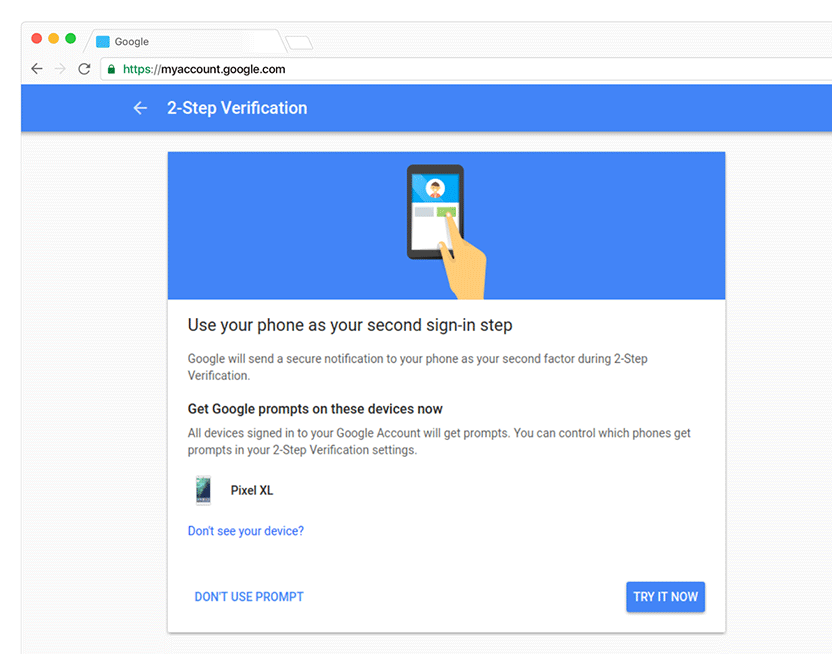
Google's two-factor authentication (2FA) involves users tapping ‘yes’ on a signed-in phone after entering their email and password, or plugging-in (or tapping via NFC) a physical security key into the device.
Google managed to reduce the number of compromised attacks by half, simply because Google's two-factor authentication (2FA) removes the single biggest threat that makes users easy to hack: passwords that are challenging to remember.
Most importantly, Google made passwords obtained by hackers in phishing campaigns or via data breaches useless.
2FA simply adds an extra step to the login process.
The company announced that result, “compared to those not enrolled” in 2SV, as part of Safer Internet Day.
In another blog post, Google said that it is providing free online lessons to help teach people how to stay safe wherever they are on the internet.
It's worth mentioning that while Google said that it managed to decrease the number of hacked accounts by 50%, it didn't disclose the exact number of the compromised accounts.






















































































































































































































































































