Indonesia, the world's largest archipelagic nation, is a home to over 270 million people and hundreds of ethnic groups.
Greatly defined by its extraordinary cultural diversity, abundant natural resources, and strategic position between the Indian and Pacific Oceans, Indonesia has emerged as a major regional power, driven by expanding infrastructure, a growing middle class, digital innovation, and strong domestic consumption.
As a member of Association of Southeast Asian Nations and the Group of Twenty, the country plays an increasingly influential role in global trade, diplomacy, and sustainable development. Despite challenges related to geography, inequality, and environmental conservation, Indonesia continues to position itself as a dynamic nation with significant economic potential and cultural influence on the world stage.
But in this wealthy nation, wealth gap exists, and corruption thrives.
Then comes the 'Chromebookgate' scandal which involves everything between Google, one of Indonesia's biggest startups, politics, favoritism, and internet connectivity.
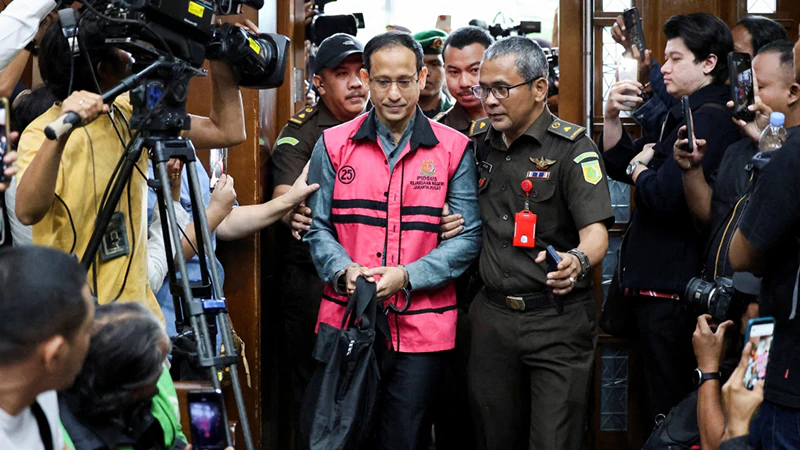
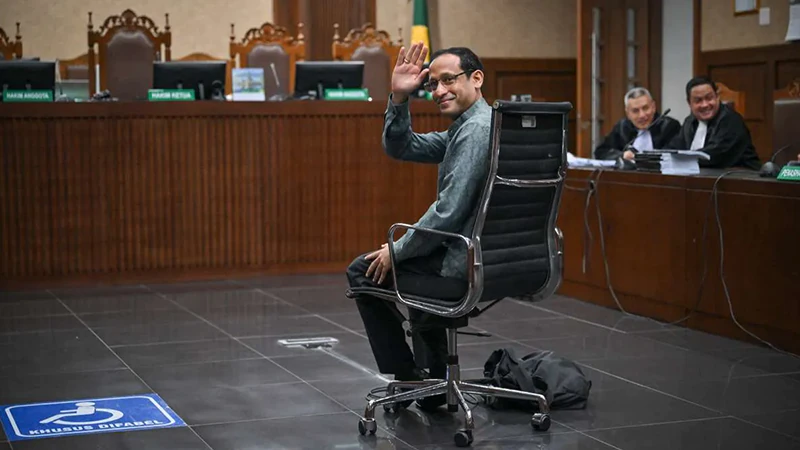
It all began as a high-profile corruption trial involving former Indonesian Education Minister Nadiem Anwar Makarim reached a critical juncture when state prosecutors demanded an 18-year prison sentence along with a fine of one billion rupiah or an additional 190 days in detention if unpaid and restitution payments totaling 5.68 trillion rupiah or nine more years behind bars if not fulfilled.
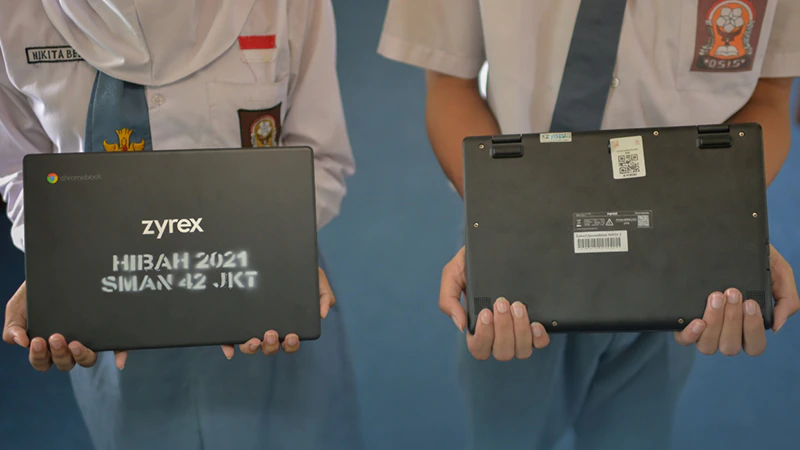
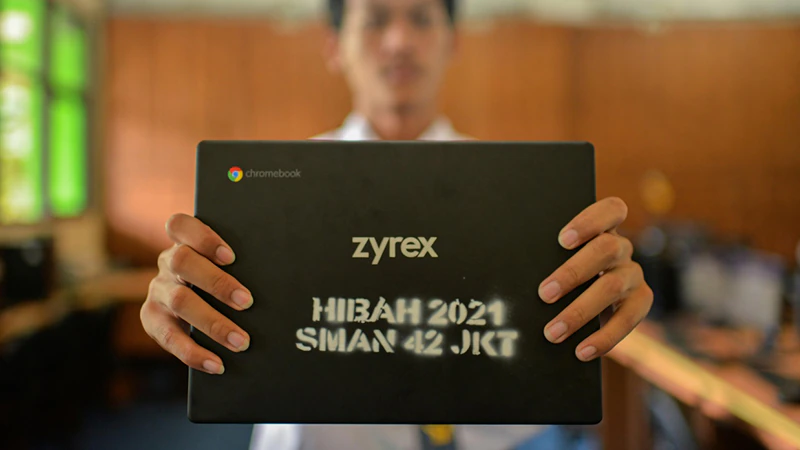
This demand which effectively could result in up to 27 years of imprisonment stems from allegations tied to the procurement of Zyrex Chromebook M4322 Chromebook laptops and associated Chrome Device Management software for the Ministry of Education Culture Research and Technology between 2020 and 2022 as part of a broader digitalization program launched during the COVID-19 pandemic.
Prosecutors from the Attorney General's Office claim that the initiative which had an overall value exceeding 9.9 trillion rupiah caused state losses of 2.18 trillion rupiah through overpricing unnecessary software licenses and specifications allegedly tailored to favor Google's Chrome operating system ecosystem over alternatives such as Microsoft Windows.
They further allege that the devices proved ineffective in many remote areas due to heavy reliance on stable internet connectivity which remains limited across parts of Indonesia and that the process involved favoritism potentially linked to prior investments by Google in companies associated with Nadiem before his entry into government service.
Based on official company financial history and the formal indictments presented by state prosecutors in the corruption trial, Google's total investment in Gojek (later GoTo) between 2017 and 2021 reached $786.99 million.
And this Chrombookgate scandal first came under formal investigation by the Attorney General's Office on May 20, 2025, following reports of irregularities in the tender process for information and communication technology equipment intended to support remote learning and the Minimal Competence Assessment in schools.
Initial probes examined around 40 witnesses including special staff from the ministry and led to raids on private apartments and even the headquarters of GoTo the parent company of Gojek.
By mid-July 2025 four individuals were named as suspects including ministry officials Sri Wahyuningsih and Mulyatsyah as well as special staff members Ibrahim Arief and Jurist Tan with some facing immediate detention.
Nadiem himself was questioned, initialy as a witness, in late June 2025 and had his overseas travel restricted before being formally named a suspect and arrested on September 4, 2025, after which he spent time in Salemba Detention Center before later transitioning to house arrest on health grounds.
The trial opened in the Jakarta Corruption Court in January 2026 with co-defendants such as Ibrahim Arief receiving sentences of up to four and a half years in related proceedings earlier this year.
Throughout the hearings prosecutors have outlined what they describe as an orchestrated scheme involving the review and analysis of technology needs that steered procurement toward Chromebooks despite earlier internal assessments in 2019 by the ministry's communications and information technology center warning of their limitations in regions with poor connectivity.
Key allegations by prosecutors:
- Favoritism and rigged specifications: Nadiem and associates allegedly tailored tender specs to favor Google's Chrome OS ecosystem, sidelining alternatives like Windows. This allegedly made Google the "sole controller" of Indonesia's education tech. They claim he ignored or overrode internal advice that Chromebooks were unsuitable due to heavy internet dependency. Indonesia has poor connectivity in many remote/rural areas.
- Overpricing and unnecessary purchases: Laptops were allegedly bought at inflated prices, plus unneeded software licenses (Chrome Device Management). This caused direct state losses of Rp 2.18 trillion.
- Personal enrichment: Prosecutors accuse Nadiem of gaining Rp 809 billion (~$46 million) personally, plus holding Rp 4.87 trillion in unexplained wealth. They allege a quid pro quo: Google got the contract as payback for prior investments in Nadiem-linked companies (before he entered government). He allegedly used associates (including former Gojek-linked figures) to maintain indirect control.
- Abuse of authority: Meetings with Google executives in 2020, issuance of related regulations (e.g., Permendikbud No. 5/2021), and bypassing proper procurement rules. Co-defendants include ministry officials like Sri Wahyuningsih and Mulyatsyah (some already sentenced to 4–4.5 years).
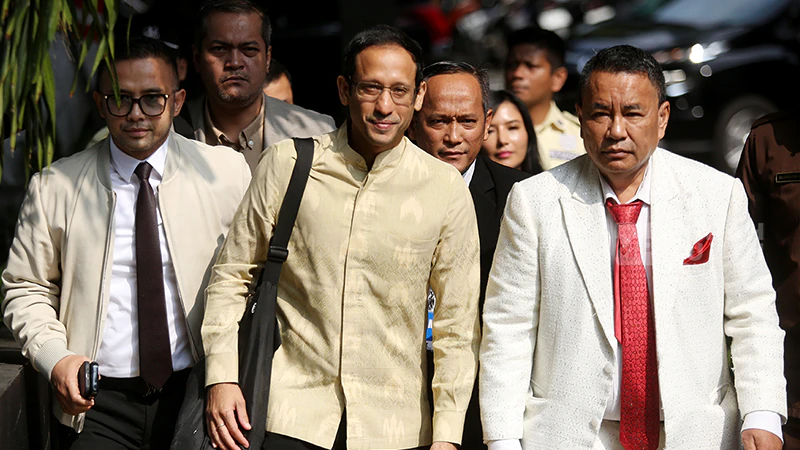
Five vendors were involved in supplying the devices including local manufacturers Advan Digital Axioo and Zyrex along with Evercoss and PT Supertone and the program ultimately distributed over 1.1 million laptops modems and projectors to more than 77,000 schools according to ministry records from the period.
Prosecutors contend that the specifications were manipulated to lock in the Chrome operating system and Chrome Device Management licenses which they argue provided minimal additional value while inflating costs by hundreds of billions of rupiah.
They also point to alleged personal enrichment on Nadiem's part amounting to around 809 billion rupiah plus holdings of unexplained wealth estimated at 4.87 trillion rupiah claiming these flows traced back through entities linked to his pre-government business network.
In their closing arguments on May 13 prosecutors emphasized four main unlawful acts including deviations from proper procurement planning violations of principles in government purchasing rules and neglect of educational quality priorities in favor of personal interests.
Some co-defendants had already been convicted on related charges highlighting what the prosecution calls a collective conspiracy within the ministry.
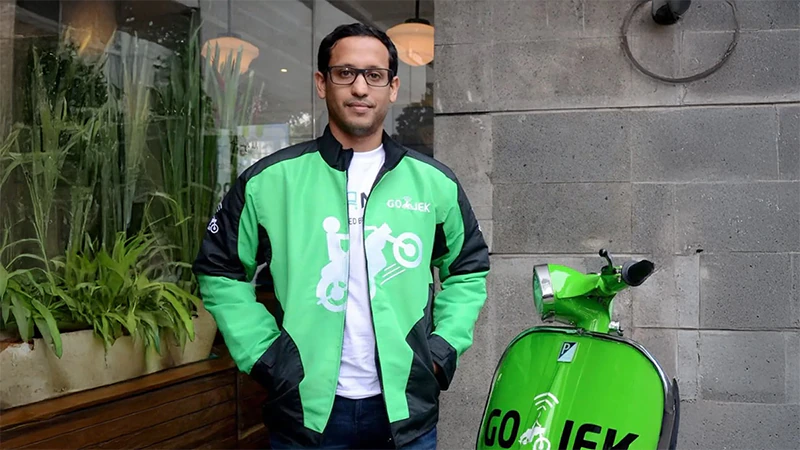
Nadiem Anwar Makarim who was born on July 4 1984 in Singapore to Indonesian parents with a background that includes an activist lawyer father and connections to prominent families grew up between Singapore and Jakarta attending elite schools before pursuing higher education abroad.
He earned a bachelor's degree in international relations from Brown University in 2006 and later an MBA from Harvard Business School.
After a stint as a management consultant at McKinsey and Company in Jakarta he ventured into entrepreneurship co-founding Zalora Indonesia and serving briefly as a Chief Innovation Officer at a payments firm before making a name for himself when he launched Gojek in 2010.
What began as a simple call-center service for motorcycle taxis and deliveries rapidly expanded into a super app encompassing ride-hailing food delivery logistics and digital payments becoming Southeast Asia's first decacorn with a valuation surpassing 10 billion dollars and attracting major investments including from Google.
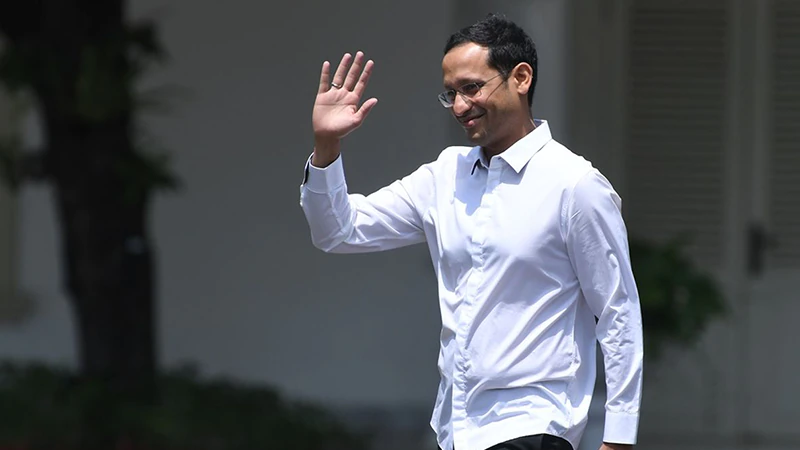
In October 2019 Nadiem resigned as Gojek's chief executive to join President Joko Widodo's cabinet as minister of education and culture later overseeing the merged ministry of education culture research and technology until October 2024.
During his tenure he championed reforms such as the "Guru Penggerak" teacher training program and a major push for digital tools in education arguing that technology could bridge gaps in access especially amid the pandemic's disruptions to in-person schooling.
He has consistently maintained that the Chromebook initiative was a legitimate response to urgent needs for remote learning tools and that prices were competitive with Chrome operating system costs being free compared to licensed alternatives.
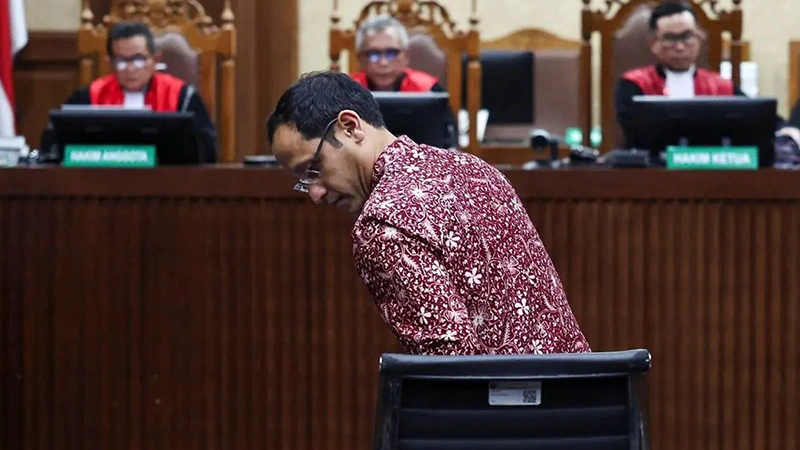
And in this Chromebookgate scandal, Nadiem has denied all charges asserting that he never personally signed any procurement documents and that decisions on implementation rested with director-general level officials in line with standard ministerial delegation of authority.
His legal team which includes prominent attorney Hotman Paris Hutapea has highlighted the absence of direct evidence showing any illicit financial flows to him personally noting that his declared wealth actually decreased by 51% during his time in office after he divested his Gojek shares upon entering government to avoid conflicts of interest.
Defense witnesses including former Google executives have testified that there was no connection between the company's earlier investments in GoTo and the education ministry's procurement choices underscoring that Google's involvement was limited to standard commercial supply without any quid pro quo.
Additional expert testimony has challenged the state loss calculations arguing that audit methodologies were flawed and that Chromebooks were procured at market-competitive rates with 85% of the devices still active and in use as of 2025.
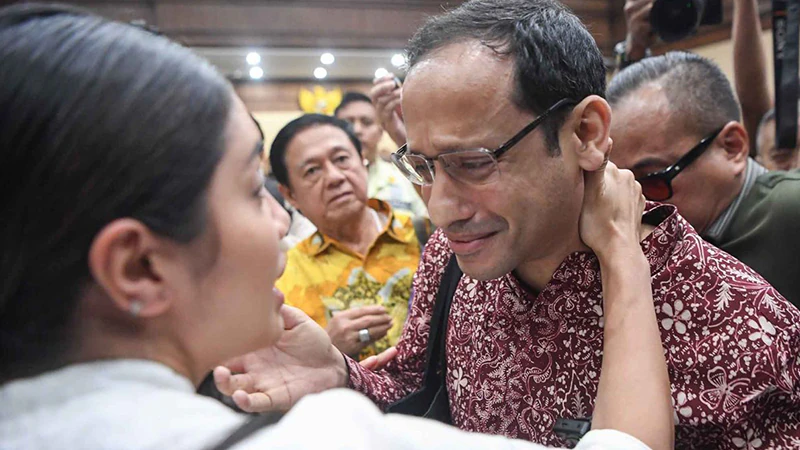
Nadiem's supporters point out that the program aligned with a national digital education agenda and that any specifications were driven by policy goals rather than favoritism while some legal analysts have suggested the matter might better fit administrative rather than criminal proceedings. On the day of the prosecutors' demand Nadiem appeared emotional in court embracing his wife Franka Franklin and later described the hearing as profoundly disappointing while expressing hope that the facts presented would lead to his full acquittal.
"He's my boss," a Gojek driver said. "Back in the day, he showed up and opened up tons of income opportunities for millions of people. I'm one of those who felt it directly."
That sentence is simple, but it hits hard.
Because for a lot of Gojek drivers, Nadiem isn't just some entrepreneur. Instead, he is a figure who reshaped many people's lives. Some shared how they can pay rent every month thanks to Gojek orders, and even afford a house. Some can send their children to school, even college, from years of driving. Others claimed that they can cover their parents' medical bills.
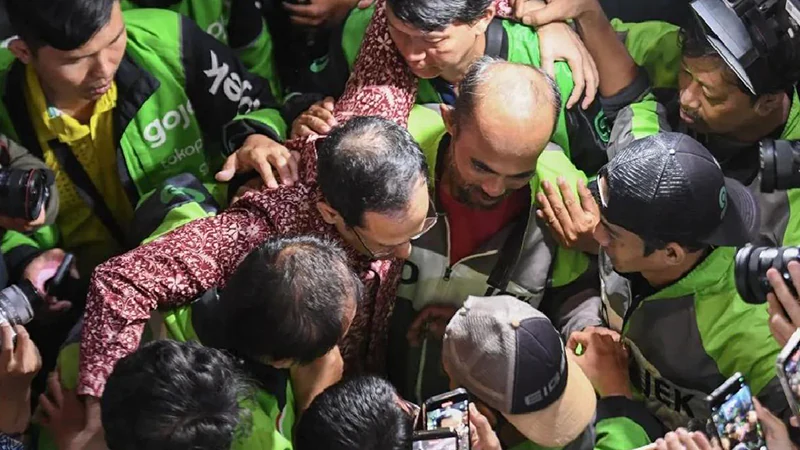
Some used to do random odd jobs with no stability, then came Gojek, and many of drivers suddenly received a much more reliable daily income.
Even during the COVID-19 pandemic when tons of people lost formal jobs, some still held on because of driving and delivering food.
Now, Nadiem gets hit hard. Many of those people are confused. Some of the drivers are even willing to step in and take his position if he really has to go to prison.
When prosecutors demand 18-year sentence plus restitution, Nadiem expresses shock, noting it's harsher than some murder/terrorism penalties and that his assets are far under Rp 500 billion.
"What hurts even more, and I still don't understand, is that I have dedicated myself for 9-10 years serving this country, yet they still demand restitution money. So it's not enough for me to just go to prison? They used Rp 4 trillion + Rp 809 billion (total Rp 5 trillion). My wealth at the end of my term as minister wasn't even Rp 500 billion," Nadiem said.
"They took the peak value from my Gojek IPO/share in 2015, fictitious wealth that is not real, and used it as replacement money. They know I don't have that money. So why was it thrown at me? What's even more surprising: there is no connection to real wealth. The money I made created millions of jobs through Gojek. All the proof is there. Yet they still use it as a weapon of law to frighten me, to pressure me. I don't understand what the real reason is."
The case has sparked widespread debate across Indonesia with reactions ranging from concern over potential politicization of anti-corruption efforts to fears that it could discourage talented private-sector leaders from public service.
Critics including some political analysts and international observers have raised questions about selective prosecution and its implications for investor confidence in the country's tech ecosystem particularly given Google's explicit denial of any wrongdoing and the lack of charges against the company or its representatives.
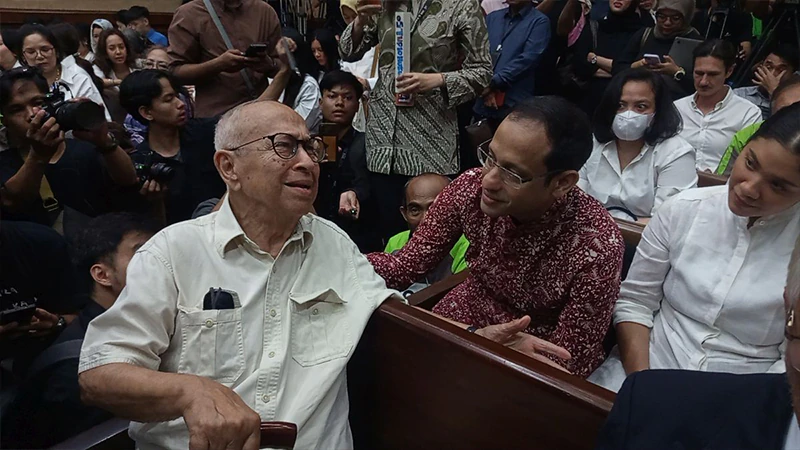
Supporters of the investigation on the other hand emphasize the need for accountability in large-scale government procurements especially those involving billions in public funds during a national crisis.
The defense is scheduled to present its full arguments around early June 2026 with a verdict anticipated later that month. As the proceedings unfold they continue to draw attention not only for their impact on one of Indonesia's most prominent entrepreneurs but also for broader questions about governance innovation and the balance between oversight and progress in one of the world's largest democracies.
The outcome will likely influence future policy on public-private partnerships in education and technology while testing the resilience of Indonesia's judicial processes amid intense public scrutiny.






















































































































































































































































































