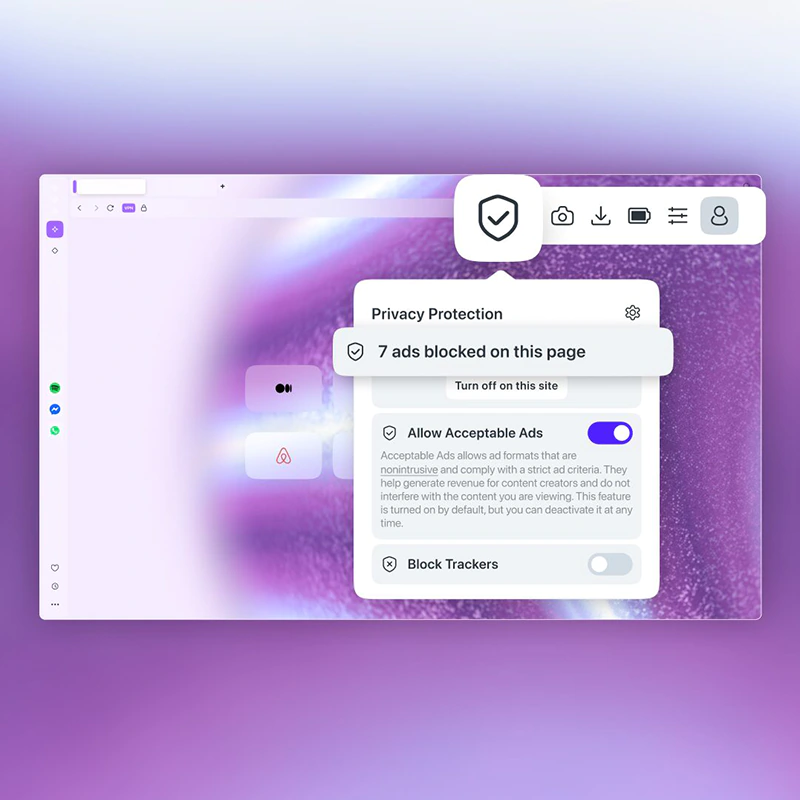
Opera has offered a built-in ad blocker for a decade.
This makes it one of the earliest major browsers to include the feature natively without any need for separate extensions. But an update released in mid-May 2026 for Opera One brings the ad blocker to a whole different level.
This is because it has been completely rebuilt engine that improves speed and efficiency while adding compatibility with uBlock lists and filters.
This change aligns the native tool more closely with industry-standard blocking capabilities that users previously sought from dedicated extensions.
The upgrade focuses on better performance during everyday browsing, especially for video streaming on platforms like YouTube or Twitch.
Start browsing without getting interrupted!
Opera’s Ad Blocker is upgraded:
• Rebuilt engine
• uBlock compatibility
• Fully Native
• No extensions needed
With this upgrade, Opera gets even better for Video Streaming. pic.twitter.com/65cNGkC649— Opera (@opera) May 14, 2026
Ads and trackers are handled more effectively at the browser level, which can lead to faster page loads and fewer interruptions when sharing or watching content.
Because the blocker is native, activation remains straightforward: users toggle it on through the privacy shield icon or settings, with options to whitelist specific sites if desired. No installation or configuration is required.
Compared to the dominant browsers from Google, Microsoft Edge, and Apple Safari, Opera occupies the position of an underdog in market share.
Yet it has maintained a distinct identity through features like this built-in ad blocker, alongside other tools such as a free VPN and sidebar integrations that prioritize user control and convenience.
So why do you need to use an Ad Blocker? We’ll tell you:
• Better video streaming experience
• Faster page loading
• Fewer annoyances
• Better privacy
Start your day with Opera, turn on Ad Blocker, and browse without annoying distractions.— Opera (@opera) May 14, 2026
The rebuilt ad blocker also supports long-term compatibility by operating within modern web standards, including aspects of Manifest V3, while preserving the simplicity that has defined Opera's approach.
For users tired of managing extensions or dealing with slowdowns from heavy ad-laden pages, the update offers a practical, low-effort improvement.
Testing the feature on the latest version of Opera One shows noticeable differences in load times and cleanliness on ad-heavy sites.
Overall, this refinement keeps the browser's longstanding ad-blocking strength relevant in a landscape where privacy and performance demands continue to grow.






















































































































































































































































































