Nazi refers to the National Socialist German Workers' Party. It was a far-right political party in Germany led by Adolf Hitler.
The party gained prominence in the early 20th century, and played a crucial role in the events leading up to, and during the World War II. Nazis are infamous for their extreme and racist beliefs, as well as their involvement in the Holocaust, during which millions of people, primarily Jews, were systematically persecuted and murdered.
In the modern days of the society, anything that involved Nazi is still tied to its dark chapter in history.
This is why many people were outraged, and expressed their anger and their disappointment, when the Canadian Parliament honored a veteran who fought for Nazi Germany.
People were outraged on how the Canadian Parliament literally honored one of Hitler's Nazi soldiers, and made everyone there salute a war veteran who once was their common enemy.
It all began when Poland's Education Minister Przemysław Czarnek revealed that he has initiated action to secure the extradition of Yaroslav Hunka, a 98-year-old Ukrainian Canadian, who served in the Nazi SS Galizien Divison during World War II.
"In view of the scandalous events in the Canadian Parliament, which involved honoring, in the presence of President Zelenskyy, a member of the criminal Nazi SS Galizien formation, I have taken steps towards the possible extradition of this man to Poland," Czarnek said in a social media post.
Wobec skandalicznych wydarzeń w kanadyjskim parlamencie polegających na uhonorowaniu w obecności także prezydenta Zełenskiego członka zbrodniczej, hitlerowskiej formacji SS Galizien, podjąłem kroki w kierunku ewentualnej ekstradycji tego człowieka do Polski.… https://t.co/92qK1voktN pic.twitter.com/5J4lljH5JX
— Przemysław Czarnek (@CzarnekP) September 26, 2023
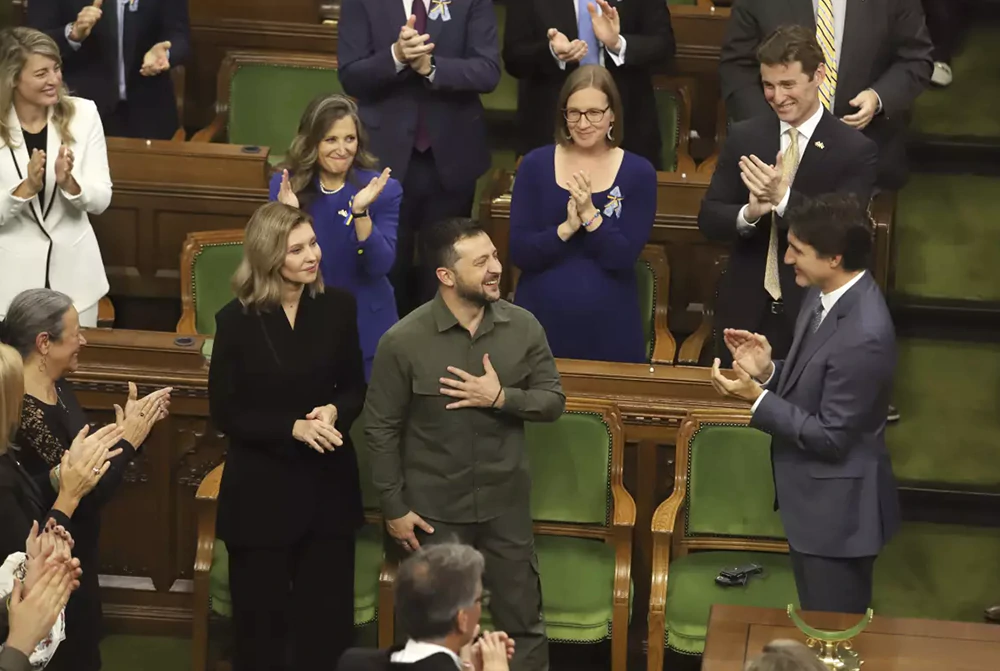
Hunka, despite his wartime affiliations with Hitler's army, was invited to the parliamentary gallery by Speaker Anthony Rota, during the time when Zelenskyy's addressed to the Canadian Parliament.
If that wasn't enough, during the rare event, the Nazi veteran also received a standing ovation from the Canadian Parliamentarians.
During the ovation, the man stood up, and even cried "Heil" with his fist, suggesting a salute of the Nazis.
This instantly triggered a massive controversy.
People were showing their anger on social media, and blatantly mocked the Parliament's decision to not remember the way history was written and remembered because of the Nazis.
Poland education minister Czarnek expressed outrage over such honoring.
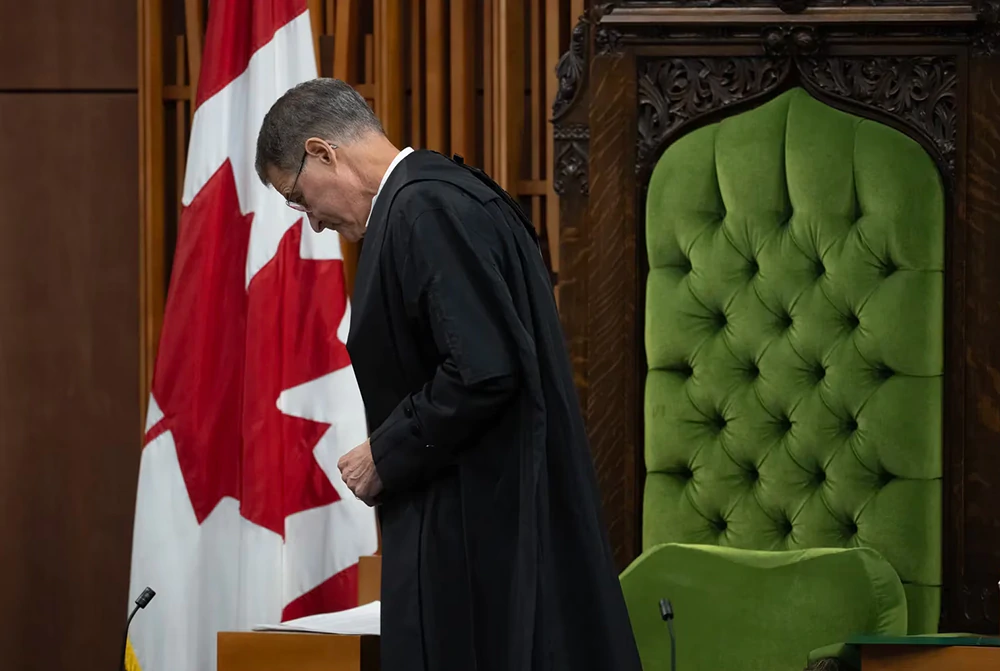
In the end, this resulted in the resignation of Rota, who reportedly invited the Nazi veteran, introduced Hunka as a "Ukrainian hero" and a "Canadian hero".
"I am deeply sorry I offended many with my gesture and remarks," Rota said. "This initiative was entirely my own. I want to really tell you that the intention was not to embarrass this House."
"It’s with a heavy heart that I rise to inform members of my resignation as speaker of the House of Commons,” Rota said in a statement.
Rota has taken full responsibility for the incident.
"I accept full responsibility for my actions," he said, adding, "My resignation is effective at the end of the sitting day tomorrow, Wednesday, September 27, to allow preparations for the election of a new speaker. Until that time, the deputy speakers will chair the House proceedings."
Opposition parties had insisted that an apology was insufficient.
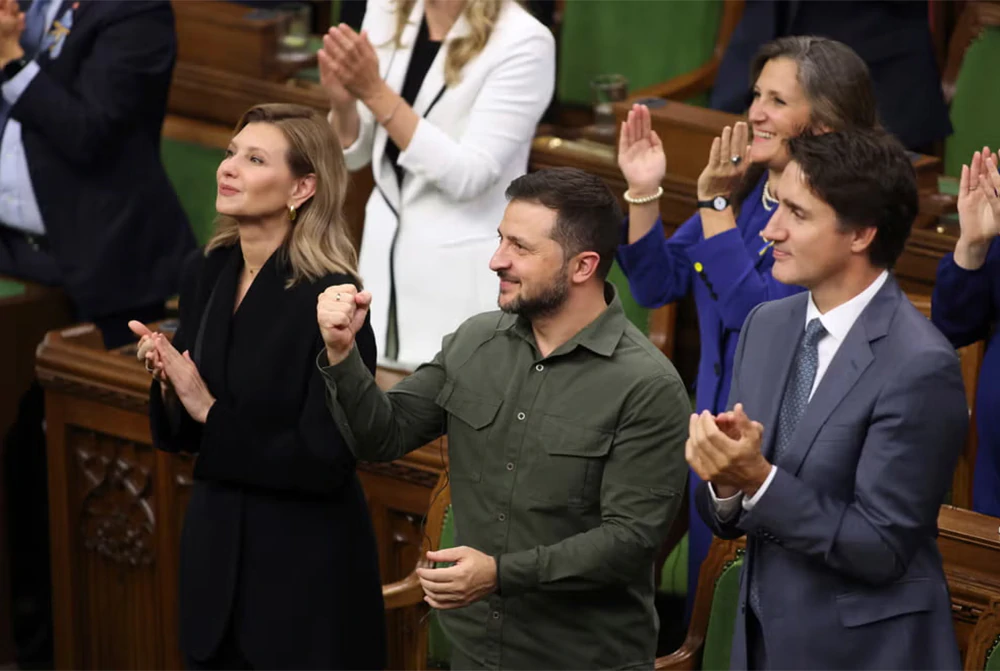
Canadian Prime Minister Justin Trudeau has apologized for the incident, saying that the "terrible mistake" harmed the memory of all those who suffered during the Holocaust.
"On behalf of all those who were present in this chamber, I would like to offer my most sincere apologies for what happened on Friday," Trudeau said in French in the House of Commons.
"Paying tribute to this individual, without knowing who he was, was a terrible mistake and a violation of the memory of those who cruelly suffered at the hands of the Nazi regime."
Canada's Minister of Justice and Attorney General, Arif Virani, stated that he cannot comment on Poland's extradition move as no formal request has been received. However, extradition is possible through bilateral agreements.
"That doesn't prevent extradition. It just makes it a matter of more paperwork between the two governments," he said, adding, "We do not have crimes of association other than organised crime type-offences which are very, very specialized," he said.
Both Canada and Ukraine both had significant roles in World War II, although in different capacities.
Canada during the World War II, was part of the British Commonwealth. At that time, Canadian forces served in various theaters of the war, including Europe, North Africa, and the Pacific. The most notable contribution was in Europe, where Canadian troops participated in key battles, such as the Battle of Normandy in 1944.
The Canadian military's commitment and sacrifice were substantial, and Canada emerged from the war as a respected member of the international community.
As of Ukraine, its role in World War II was more complex due to its geopolitical situation.
At the outset of the war, Western Ukraine was under Polish control, while the eastern part was part of the Soviet Union. When Germany invaded the Soviet Union in 1941, Eastern Ukraine became a battleground. Many Ukrainians were initially hopeful that the Nazis would liberate them from Soviet rule. However, these hopes were dashed as Nazi Germany's occupation proved brutal, resulting in widespread suffering.
Ukraine also had significant partisan resistance movements against both Nazi and Soviet forces. The Ukrainian Insurgent Army (fought for Ukrainian independence but faced challenges and shifting alliances in the midst of the war's chaos.
After the war, Ukraine's borders were redrawn, and it became one of the founding republics of the Soviet Union.
And among others, Poland was amongst those that suffered the most.
On September 1, 1939, Nazi Germany, led by Adolf Hitler, launched a full-scale invasion of Poland, an incident that marked the beginning of World War II. Shortly after, the Soviet Union, under Joseph Stalin, invaded Poland from the east, and as a result, Poland was quickly overwhelmed and occupied by both Nazi and Soviet forces.
The Polish people endured immense suffering during the occupation.
During Russia's invasion to Ukraine, Russia has insisted that its sole purpose was to rid Kyiv’s political leadership of "neo-Nazis."
The claim was said to be ludicrous right from the beginning, not the least because Ukraine is led by Volodymyr Zelenskyy, the country’s first Jewish president. Russia itself also has a far more robust right-wing movement than does Ukraine.
But still, reports said that Russian propaganda outlets, under the control of President Vladimir Putin, have seized on whatever evidence they could find to suggest that their original excuse for invading Ukraine remains valid.
And it's ironic that Zelenskyy unexpectedly gave the Kremlin a small public relations win when, during his visit to Canada, he accidentally celebrated a Ukrainian national who fought for the Nazis in World War II.
It's later reported that Yaroslav Hunka, 98, the man who received two standing ovations in the House, served in the 14th Waffen Grenadier Division of the SS Nazi military unit during World War II.
It was Nazi German's military formation, which was made up predominantly of military volunteers with a Ukrainian ethnic background from the area of Galicia, later also with some Slovaks.
It was formed in 1943, it was deployed in Slovakia, Yugoslavia, and Austria, among others.
The formation surrendered to the Western Allies in 10 May 1945.






















































































































































































































































































