It's safe to say that Wikipedia can summarize all of known human knowledge, and the encyclopedia has live up to that fact.
Wikipedia managed to achieve that through its editing model, in which practically anyone can contribute to adding information to its vastness of knowledge. Because Wikipedia outsources its information, this allows it to become the world's most up-to-date encyclopedia, with more than 17,000 new articles every single month.
Its vast amount of information is meant to inform anyone about anything, for free.
And apparently, judges are included, and that Wikipedia is affecting their judgements professionally.
According to a study by Neil Thompson from MIT’s Computer Science and AI Laboratory (CSAIL), it's discovered that judges were more likely to cite legal cases that have a Wikipedia article.

Here, the study suggests that Wikipedia is increasingly cited in legal scholarship and court judgments.
This leads to the fact, that Wikipedia may be able to shape legal precedents, in which litigants could game Wikipedia to influence legal decisions.
In turn, this may also lead to legal judgements that are prone to manipulation.
The openness of Wikipedia allows the encyclopedia to quickly expand with new entries and articles that can be updated as frequent as possible.
"The worst outcome would be for a judge’s reliance on Wikipedia to lead them to decide a case differently than they would have if they had read either an expert secondary source or the cited precedent itself," explained Thompson to technology news website TNW.
"Even without any difference in outcome, however, judges’ reliance on Wikipedia to determine the applicable law undermines the litigant’s expectation that the court’s reasoning is the product of expertise alone."
"A well-resourced litigant could encourage his legal team to anonymously integrate their own analysis of a relevant precedent into a Wikipedia article at an early stage of litigation, in the hope of later attracting the attention of the judge or his clerk."

To conduct the study and prove the hypotheses, the researchers from MIT created 154 new Wikipedia entries on Supreme Court cases. Most of the articles were specifically written by law students under faculty supervision.
Each author had access to relevant legal materials, but their names, expertise, and potential biases were not provided.
After that, half the articles were randomly selected for upload to Wikipedia, where judges, clerks, and lawyers could access them. The other half were kept offline on purpose, in order to provide a counterfactual basis for what happens to cases without an entry on the site.
Due to Wikipedia's status as one of the most-sought after source for information, the uploaded entries were quickly picked up by search engines and were ranked high on their results pages.
"Our Wikipedia articles were the first search result on Google, Bing, or DuckDuckGo in almost every case when searched by decision title or just the citation," the study authors wrote.
After that, the team tracked how often the articles were cited in judicial decisions.
They further measured whether the arguments in court judgments echoed the Wikipedia pages.
The study found that a Wikipedia article increases a case’s citations by more than 20%.
This increase is far bigger for citations by lower courts, which suggests the site is used more by judges or clerks with heavier workloads.
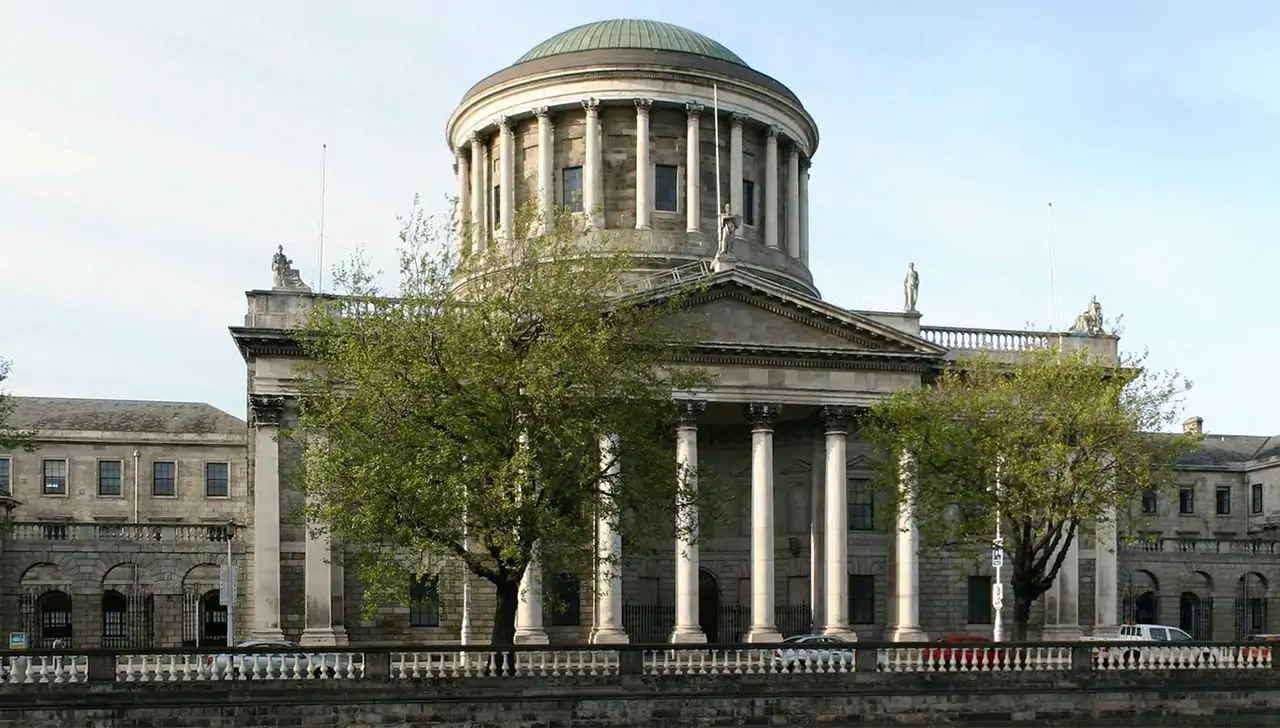
Judges rely on Wikipedia due to the vast amount of knowledge it provides, and the speed its articles are being updated corresponding to newer changes.
According to the research, judges that are too busy to conduct their own research, use Wikipedia to keep up with the developments in case law.
The thing is, the way Wikipedia works, in which anyone can edit the entries, Wikipedia articles are prone to vandalism and biases.
Because of this, the finding has sparked concerns that judicial decisions are being shaped by unreliable information.
While Wikipedia provides an enormous breadth of free information, Wikipedia is not the most accurate source of information, and does have lots of entries that are kind of biased.
It's worth noting though, that the study MIT conducted only focused on Wikipedia’s influence on judges in Ireland.
However, the country shares key similarities with other common law systems, such as U.S. and UK.
Notably, lower courts are bound by the decisions made in higher courts, while judges cite previous cases to determine the applicable legal principle.
But unlike in the U.S., decisions made in Irish courts are rarely covered in Wikipedia, which makes it easier to analyze the impact of new entries.






















































































































































































































































































