Whatever happens behind closed doors, is meant to remain behind those doors. Because anything behind those doors, isn't meant for public viewing.
The same goes to photos taken by guards at Abu Ghraib prison in Iraq.
Following the leak of her photos with her prisoners, a U.S. Army reservist became internet famous.
Her role in the scandal deliberately tarnished the U.S. military’s image, both at home and abroad.
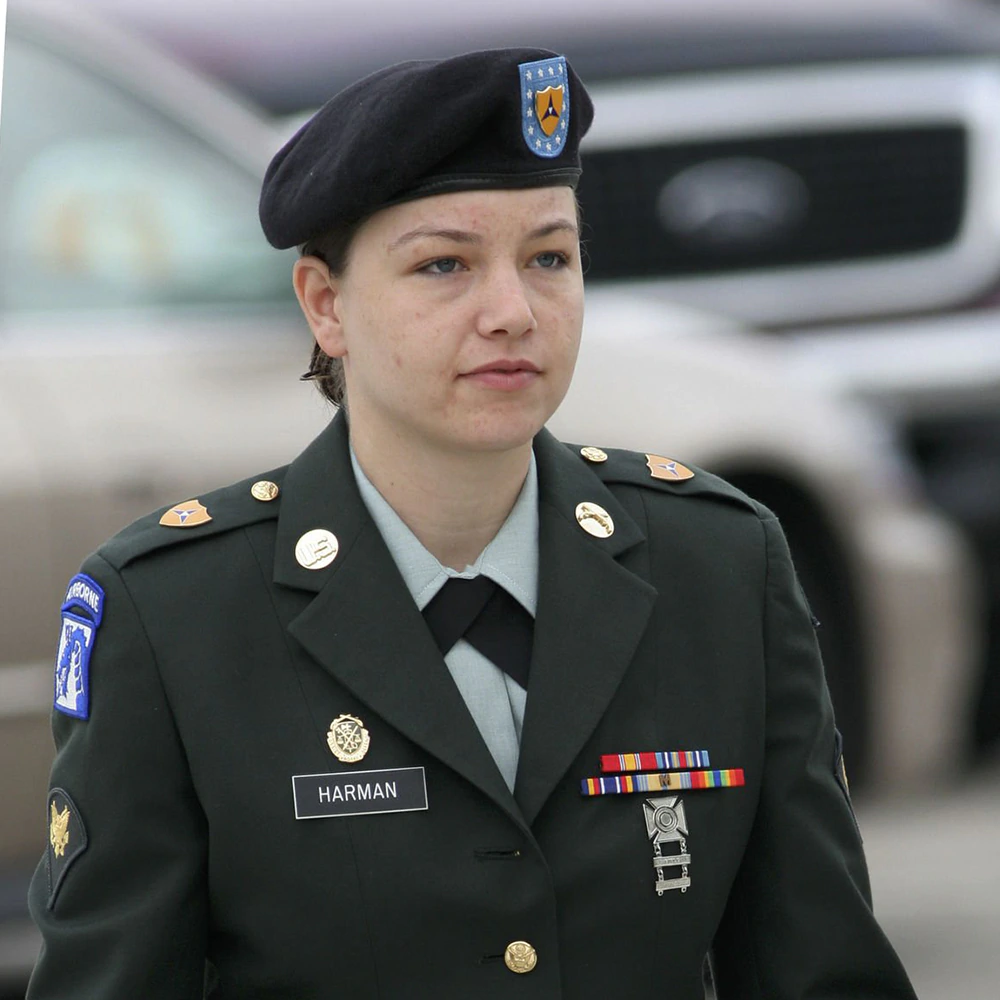
This is because specialist Sabrina Harman was not a "specialist" she signed up for.
During war, anything can happen.
Fueled by hatred and the motivation to destroy the enemy, chances are, both sides would do anything to obliterate their enemies, by doing even the most inhumane things.
But sometimes, they do this for fun, if not for their own entertainment purposes.
At the time, Harman was a young 27-year-old woman from Lorton, Virginia, and was the second low-level soldier from the Maryland-based 372nd Military Police Company.
Like many other young reservists, Harman joined the Army to help pay for her college.
She joined the military after the September 11, 2001 attacks.
But what she did in Abu Ghraib prison during her post in 2003-2004 in Iraq, was far from being human.
In the notorious prison in Baghdad during the U.S.' occupation of Iraq, she was involved in abusing the prisoners there, both physically and psychologically.
What she did was a dereliction of her duty as a Specialist, by maltreating the detainees.
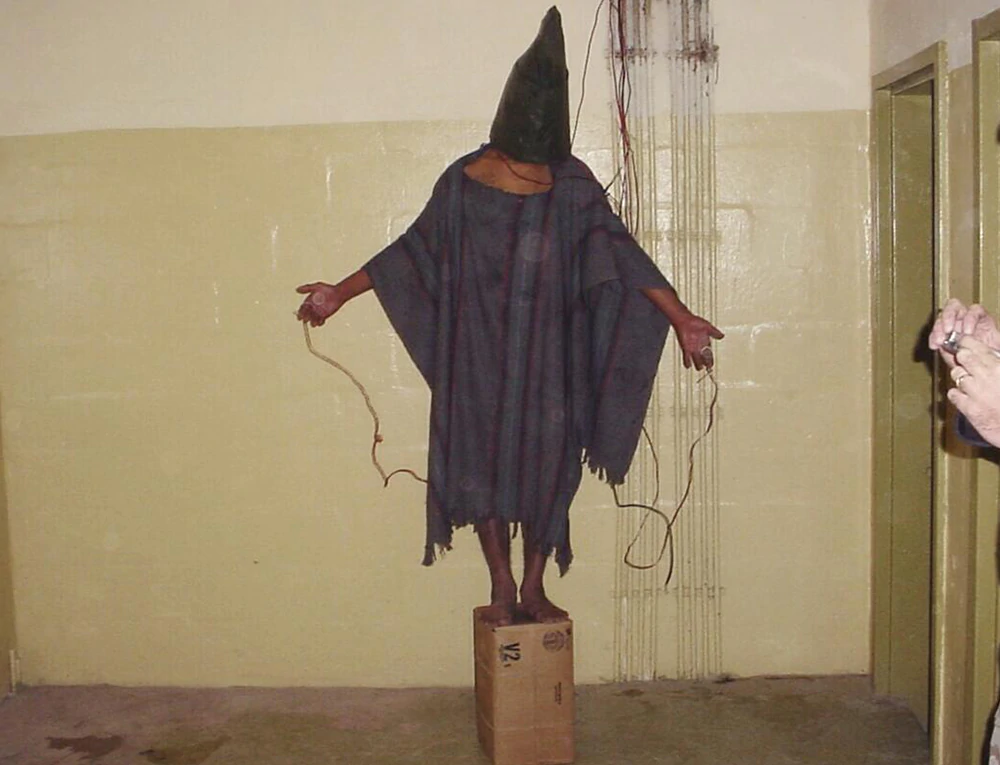
Among the things she did, she took part in a photographed incident in which a hooded Iraqi, Abdou Hussain Saad Faleh, was threatened with electrocution while standing on a box with electrical wires in his hands.
She also posed happily behind dead detainees, and also giving thumbs up in a number of photos.
She smiled in front of the unfortunate, with her seemingly innocent face, while detainees suffered.
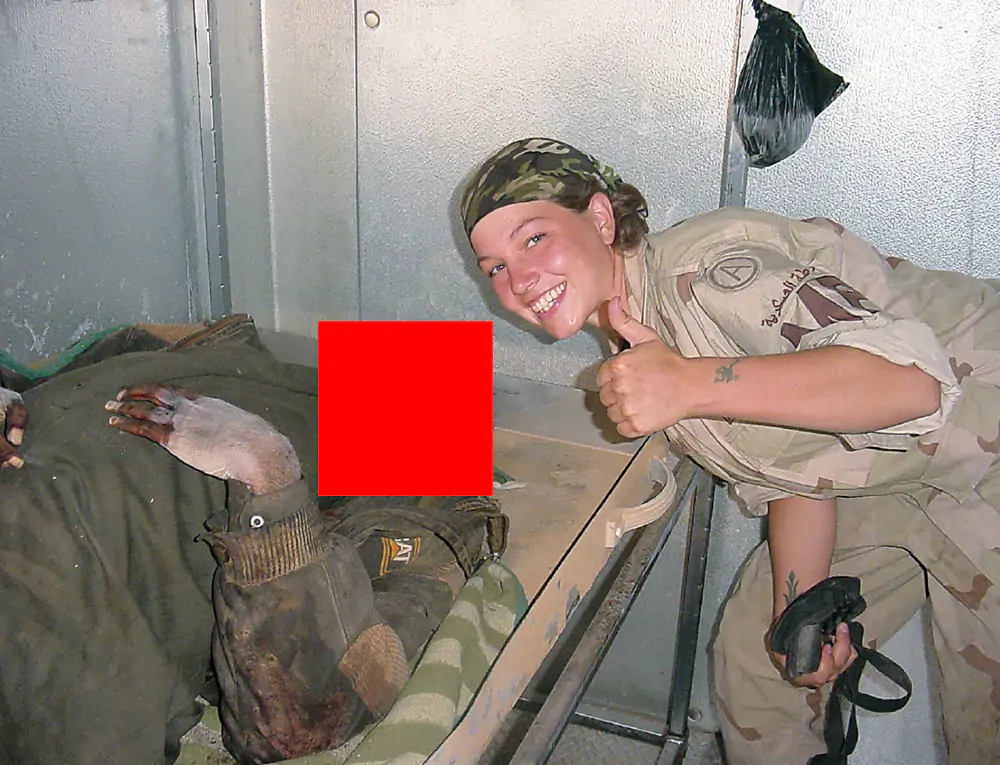
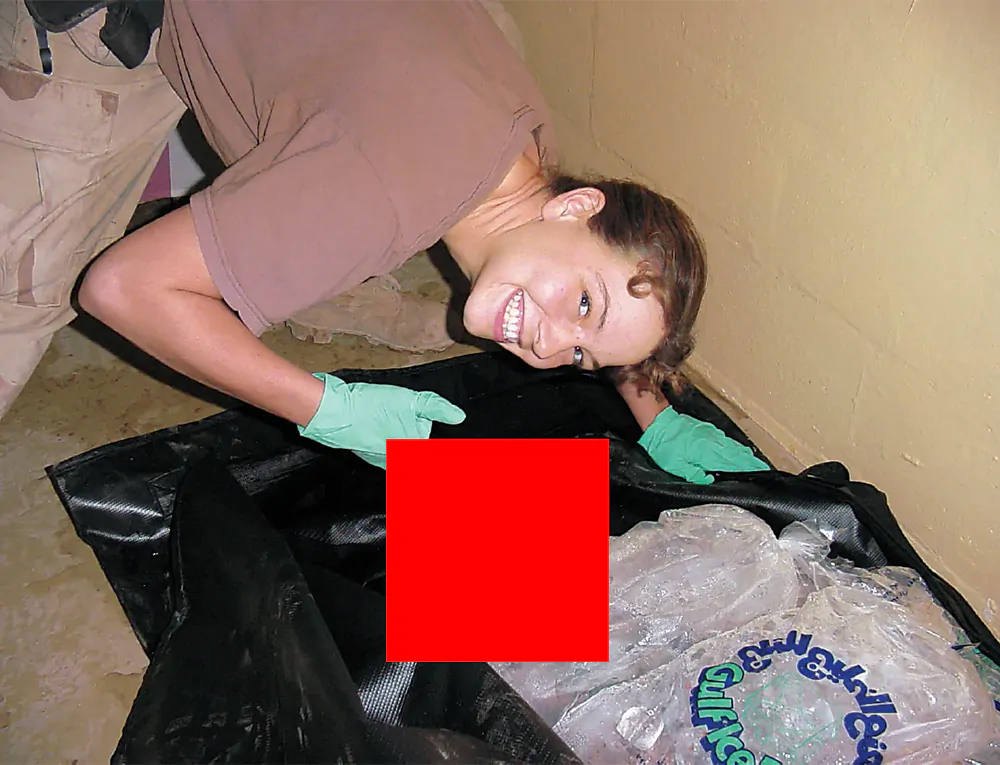
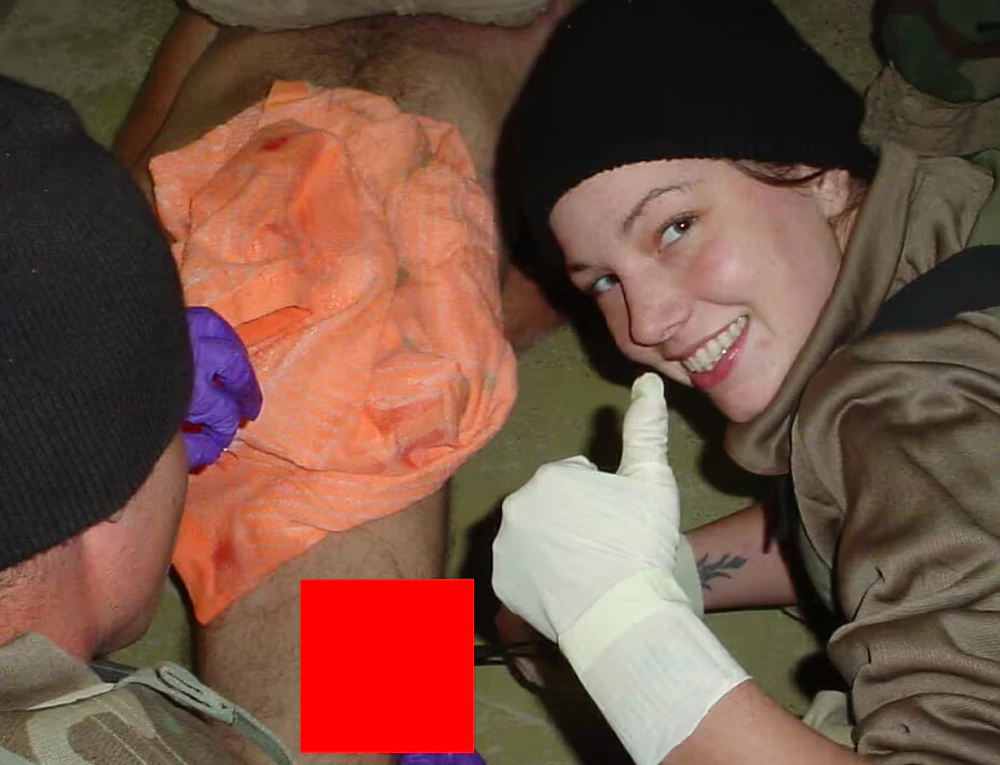
Besides the photo of Abdou Hussain Saad Faleh, another of her most-viral photo, would be the photo where she posed with fellow Charles Graner behind a group of naked detainees stacked in a pyramid.
In the photos, Harman seems to love her job very much.
It's worth noting that at the time, in the prison, there were no rules.
And what that means, by her account, and because there was little training, her mission was to break down prisoners for interrogation.
Her job was to "make it hell so they would talk."
It's worth noting, despite Harman was not alone, Harman made it to headlines, partly because she's a young woman.
Wearing full camouflage—helmet, flak jacket, cargo pants—and carrying a riot baton, a female is least expected in such a cruel, unforgiving place.
As a woman, she was not expected to wrestle male prisoners into stress positions or otherwise overpower them. But instead, her presence was used to amplify the sense of powerlessness onto the men.
In the Arab World, the society is mostly dominated by men, and with that in mind, the U.S. guards knew no better way to degrade them, than strip them, tie them, and torture them, and have a young woman laugh at them during the whole ordeal.
Harman, a former assistant manager at a Papa John’s Pizza, was there as an instrument of humiliation.
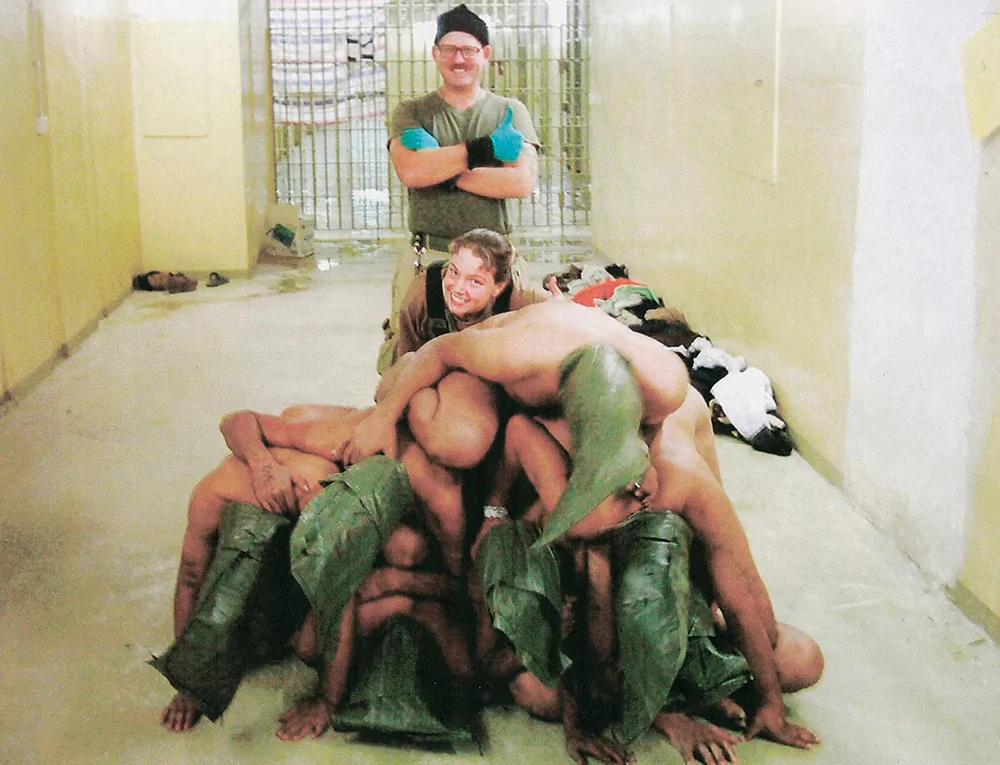
The photos from the Abu Ghraib prison scandal leaked to the internet and became public through a series of events involving whistleblowing, internal investigations, and media exposure.
The initial exposure came from within the military itself.
Specialist Joseph Darby, an Army Reservist, discovered the photos on a CD that Sabrina Harman had left in their shared living quarters. Disturbed by what he saw, Darby reported the abuse to his superiors in January 2004 by submitting the CD with the photos to the Army Criminal Investigation Command (CID).
Following Darby’s report, the CID began an investigation into the allegations of abuse at Abu Ghraib. This led to a broader internal inquiry by the military, known as the Taguba Report, which documented numerous instances of prisoner mistreatment and implicated several military personnel.
The scandal reached the public eye when the media obtained the photographs and details of the investigation.
It was only following this, that the photos were shared to the internet.
And this pattern follows all that came before it.
The nature of the photos made them viral, and also garnered widespread condemnation and intense media coverage.
The graphic nature of the images and the involvement of U.S. military personnel in the abuses generated a global backlash and significant political repercussions.
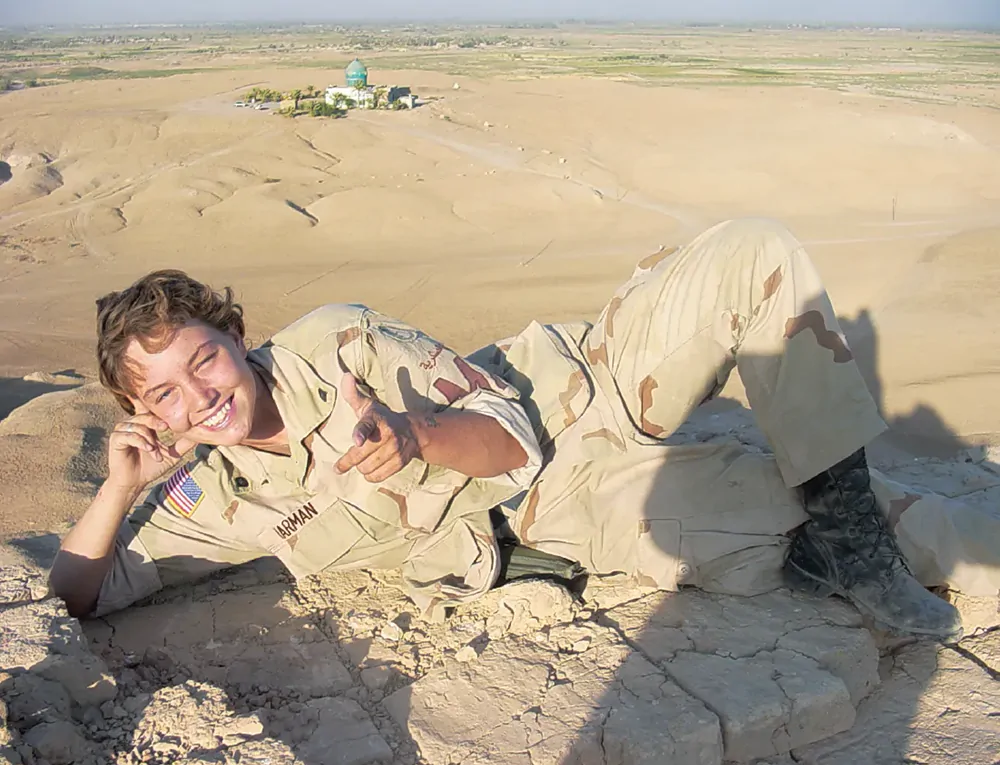
It's worth noting that to many of the guards, Harman was far from being cruel or savage.
She was known in the unit as someone who actually hated violence.
Her team leader even said that she "would not hurt a fly," and that "if there’s a fly on the floor and you go to step on it, she will stop you."
Because Harman was present in many of the tortures, Harman who disliked violence, liked to sneak cigarettes and doses of paracetamol or ibuprofen, and gave them to prisoners who had a hard time.
Those who worked with her, said that Harman "would have made a better humanitarian than a soldier," and that she was just "too nice to be a soldier."
Because she took photos often, she documented many of the cruelties the guards did to the prisoners.
Her idea was to become a police officer, and a forensic photographer.
Photos had always fascinated her, ever since she was small.
But when she grew up, she became fascinated with death.
While Harman might avoid violence, she was drawn to its aftermath.

When others wanted to look away, Harman would look more closely.
"She would not let you step on an ant,” a Sergeant said. "But if it dies she’d want to know how it died."
This is apparent on her photos, where she posed smiling beside corpses, leaning close to their decaying bodies and faces, and give a thumbs-up whatever the context was.
And she knew how to pose when a camera was pointed at her.
However, as a soldier with no apparent experience, she fears death.
While she seems happy inside the closed doors of the prison, she was afraid walking outside.
Outside the prison, she would shower once or twice a month, and used baby wipes.
"If I could’ve peed inside, I probably would have," she said.
"You had to go to the showers and the bathroom with your flak vest on."
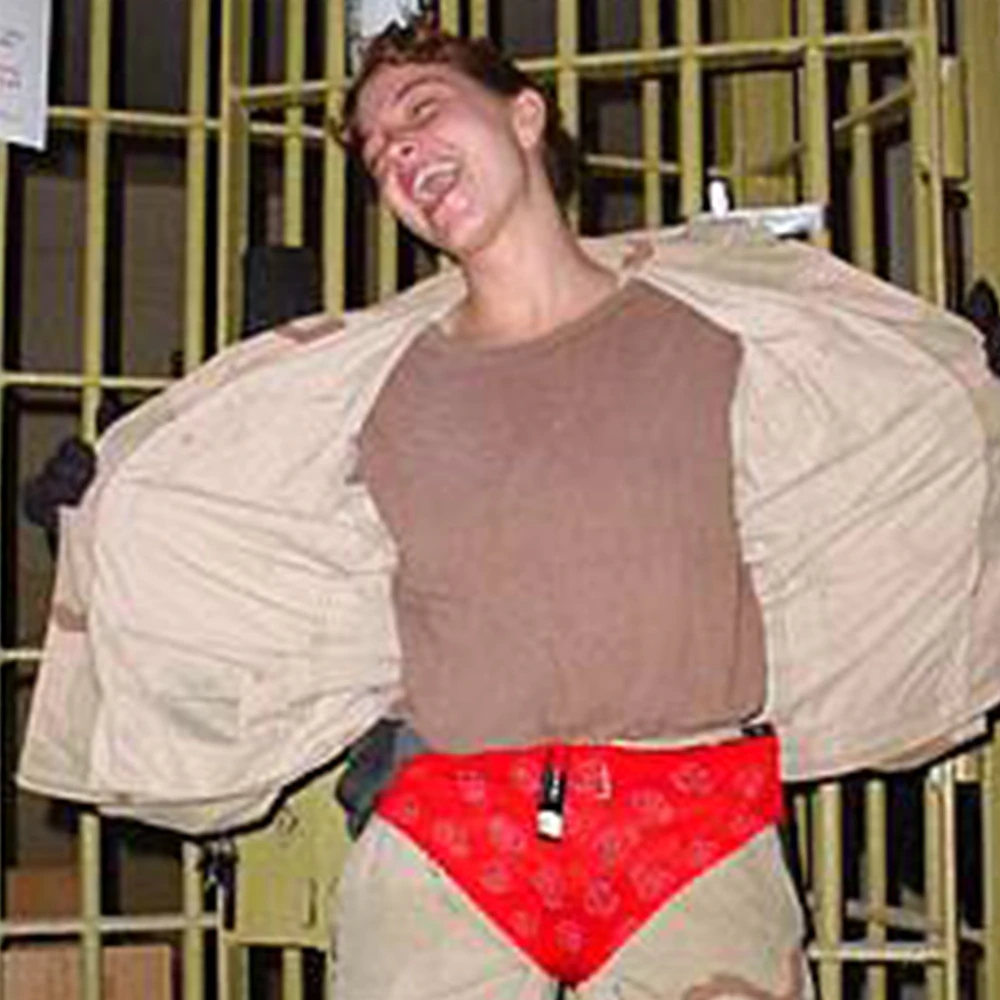
Harman, convicted as a war criminal, was court-martialed.
She is convicted on six of seven counts for mistreating detainees at the Baghdad-area lockup in late 2003.
During the sentencing, Harman tearfully apologized for mistreating Iraqi prisoners at Abu Ghraib.
"As a soldier and military police officer, I failed my duties and failed my mission to protect and defend," she said. "I not only let down the people in Iraq, but I let down every single soldier that serves today."
"My actions potentially caused an increased hatred and insurgency towards the United States, putting soldiers and civilians at greater risk," she continued.
"I take full responsibility for my actions. […] The decisions I made were mine and mine alone."
She faced a maximum of five years, though prosecutors asked the jury to give her three years.
In the end, she was sentenced on May 17, 2005, to only six months in prison. But with the credit for time served, her actual sentence is just more than four months.
She served her sentence at Naval Consolidated Brig, Miramar in San Diego, California.
Besides that, her rank is also reduced to a private, lost all all her pay and benefits, and given a bad conduct discharge after she finished the sentence
Besides Harman, some others were were also found guilty, and must serve their own prison sentences.
The Abu Ghraib prison, a prison complex in Abu Ghraib, Iraq, sitting on an about 110 hectares of land, located 32 kilometers west of Baghdad.
When it was opened in the 1950s, it served as a maximum-security prison, capable of holding around 50,000 men and women. From the 1970s, the prison was used by Saddam Hussein to hold political prisoners and later the U.S. to hold Iraqi prisoners, detaining them in poor conditions.
Behind its closed doors, the prison developed a reputation for being a place for torture and extrajudicial killing.
During the early stages of the Iraq War, members of the U.S. Army and the Central Intelligence Agency (CIA) were found committing a series of human rights violations and war crimes against detainees in the Abu Ghraib prison in Iraq, including physical abuse, sexual humiliation, physical and psychological torture, and rape, as well as the killing of Manadel al-Jamadi and the desecration of his body.
But the abuse only came to light, after the publication of the inhumane things Sabrina Harman and others leaked to the public.
The incidents caused shock and outrage, receiving widespread condemnation within the U.S. and internationally.
Around 1,000 people have died there, with the most people killed happened in 10 December 1999, when 101 people were dead in one day in Abu Ghraib.
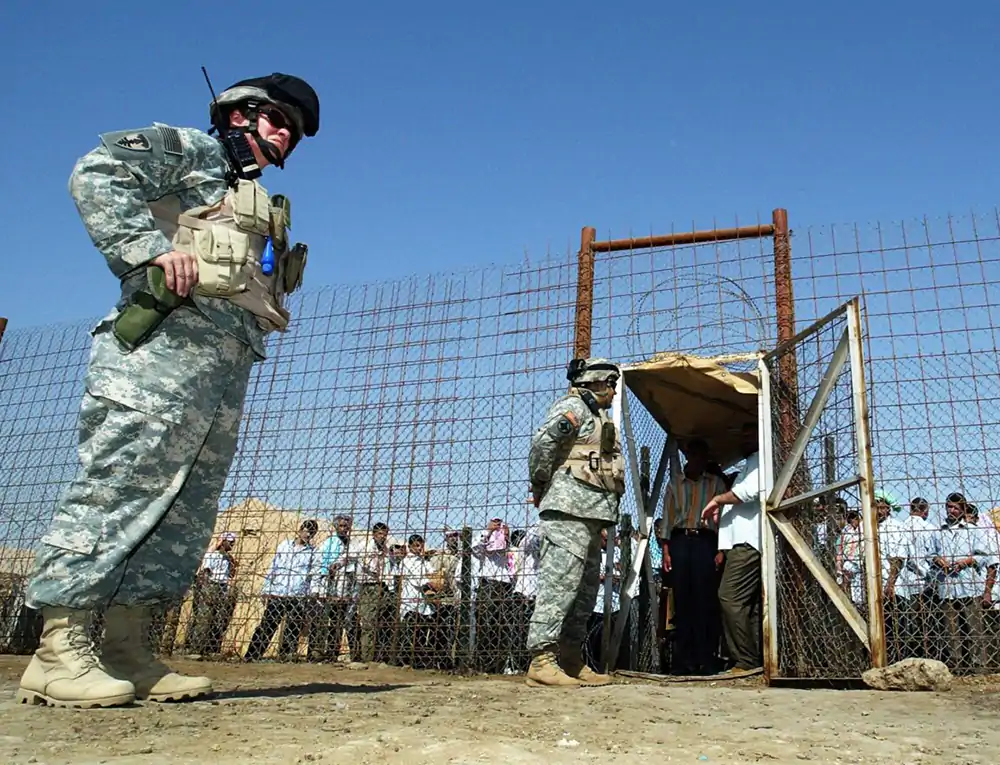
Around the time Harman was sent to Iraq, the U.S. military was using the Abu Ghraib prison as a detention facility, housing around 7,500 prisoners.
At its peak, it held an estimated 8,000 detainees.
In 2014, the prison was closed.
Brigadier General Janis Karpinski, who had been commanding officer at the prison, said that military intelligence personnel had told her that 90% of the prisoners were innocent of the crimes of which they had been accused, and had been detained by virtue of having been in the wrong place at the wrong time.
Karpinski was demoted to colonel on May 5, 2005.