In the intensifying LLM wars, adding features is one of the ways to remain relevant.
Since OpenAI introduced ChatGPT and first captured the world's imagination with its fluid conversational intelligence, the frenzy that followed sparked a frenzy of competitors racing to replicate or surpass its capabilities. Pika Labs has carved out a distinctly creative niche.
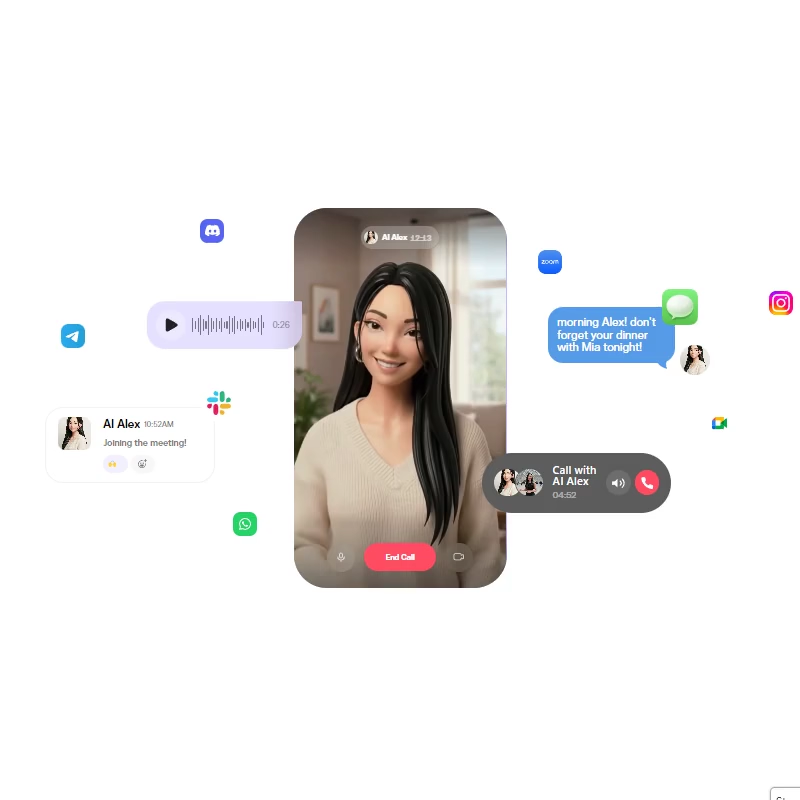
Rather than chasing ever-larger general-purpose models focused on broad knowledge or task automation alone, Pika emphasizes building persistent, personalized AI agents that function as true creative partners: entities users "birth" with custom personalities, voices, appearances, and memories, then collaborate with across messaging, calls, and real-time video.
This approach transforms AI from a tool into something closer to a living extension of the creator’s own workflow.
And now, Pika took another meaningful step in that direction by introducing Community and Support Chats directly into the Pika Agent experience, now live in its mobile app.
Starting today, getting the most out of your Pika Agent is no longer a single-player experience. Pika Community and Support Chats have entered…the chat. pic.twitter.com/hbnhbIhLk8
— Pika (@pika_labs) May 27, 2026
What began as a largely solitary process, like crafting an agent, refining its traits, and guiding it through video generation, task execution, or idea development, has shifted toward a more connected, multiplayer environment.
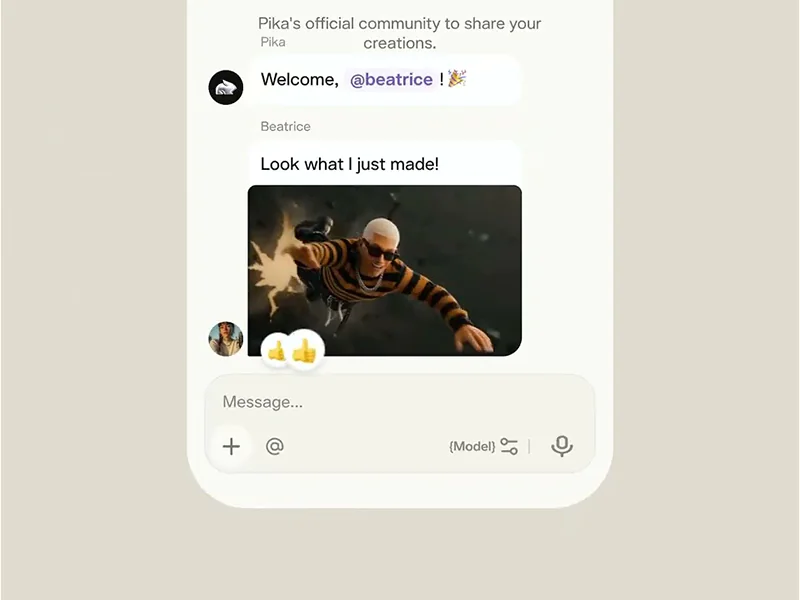
Users can now engage in a dedicated human-only Pika Community chat to share their latest AI-generated videos, exchange tips and inspiration, react with emojis, and build relationships with fellow creators.
Alongside it sits an official Pika Support channel, where team members offer real-time troubleshooting and guidance.
The accompanying demo video illustrates the update with elegant simplicity: a clean mobile interface toggling between the lively community feed, filled with shared creations and reactions, and the support chat, where direct assistance from Pika staff appears readily available.
This addition directly responds to user feedback about common hurdles in generative AI work, from steep learning curves and technical glitches to the isolation that can accompany experimental creative processes.
By layering these human-centric spaces onto the agent foundation, Pika lowers barriers without disrupting the core one-on-one interaction that defines its agents.
Pika's uniqueness becomes even clearer against this backdrop.
While many platforms in the generative space compete on raw output quality, prompt engineering sophistication, or access to frontier models, Pika centers on human-AI symbiosis.
For creators navigating today's crowded landscape of text-to-video tools, agent builders, and multimodal platforms, the timing feels particularly apt.
High-quality generation is becoming table stakes; sustained success increasingly depends on iteration, community insights, and quick resolutions to friction points. Pika's move acknowledges this reality, making advanced agent use more accessible and enjoyable. Whether users are producing short films, designing interactive experiences, delegating routine work, or exploring real-time collaboration, the addition of these chats accelerates momentum and reduces the intimidation factor that still accompanies bleeding-edge AI.
Ultimately, in an era dominated by model size races and feature checklists, Pika's focus on thoughtful, human-centered design stands out.
It prioritizes not just what AI can produce, but how people experience and grow alongside it: solo when desired, yet seamlessly supported by peers and experts when needed.
Not everyone is happy though, since introducing a social touch to the existing tool doesn't really improve results or capabilities. But regardless, the update invites users to dive deeper into the evolving Pika Agent platform, where creativity flows more naturally through conversation, community, and shared discovery.






















































































































































































































































































