Indonesia, the vast archipelago country in Southeast Asia, has the fourth largest population in the world. And among its around 280 million people, most of them are Muslims.
And most Muslims don't uphold the range of gender identifications present in the modern days' society.
As a result of this, LGBT (lesbian, gay, bisexual, and transgender) is not considered welcome in Indonesia.
And this time, the British embassy in Indonesia has caused public outcry when it raised an LGBT flag on its premises, and uploaded it on its official Instagram account.
In the post accompanying the photo, the embassy said the UK believed all people "should be free to love who they love".
"Sometimes it is important to take a stand for what you think is right, even if disagreement between friends can be uncomfortable," adding that "harassment and violence are a routine part of LGBT+ lives, everywhere. This must change."
The rainbow flag was flown alongside the British flag at the country's embassy in Jakarta on May 17, to mark the International Day Against Homophobia, Biphobia and Transphobia (IDAHOBIT).
In Indonesia, this approach is unwelcome, and quickly garnered backlash.
Among them, include the Alumni 212 Brotherhood, an influential conservative Islamic movement, who said that the raising the said flag sullied the "sacred values of Indonesia."
The chairman of Indonesia's top Islamic scholars body, the Indonesian Ulema Council, said the diplomatic mission was disrespectful for openly supporting LGBTQ rights.
"We must reprimand them that as a guest, one must know their place and understand the norms in the country where they're at," Cholil Nafis said.
Because of outcry, Indonesia summons UK's ambassador to hear a formal explanation, and to also urge foreign missions to respect local "sensitivities."
This was confirmed by Teuku Faizasyah, a spokesperson for the Minister of Foreign Affairs, who said that British ambassador Owen Jenkins has indeed been summoned by Retno Marsudi, Indonesia's Minister for Foreign Affairs.
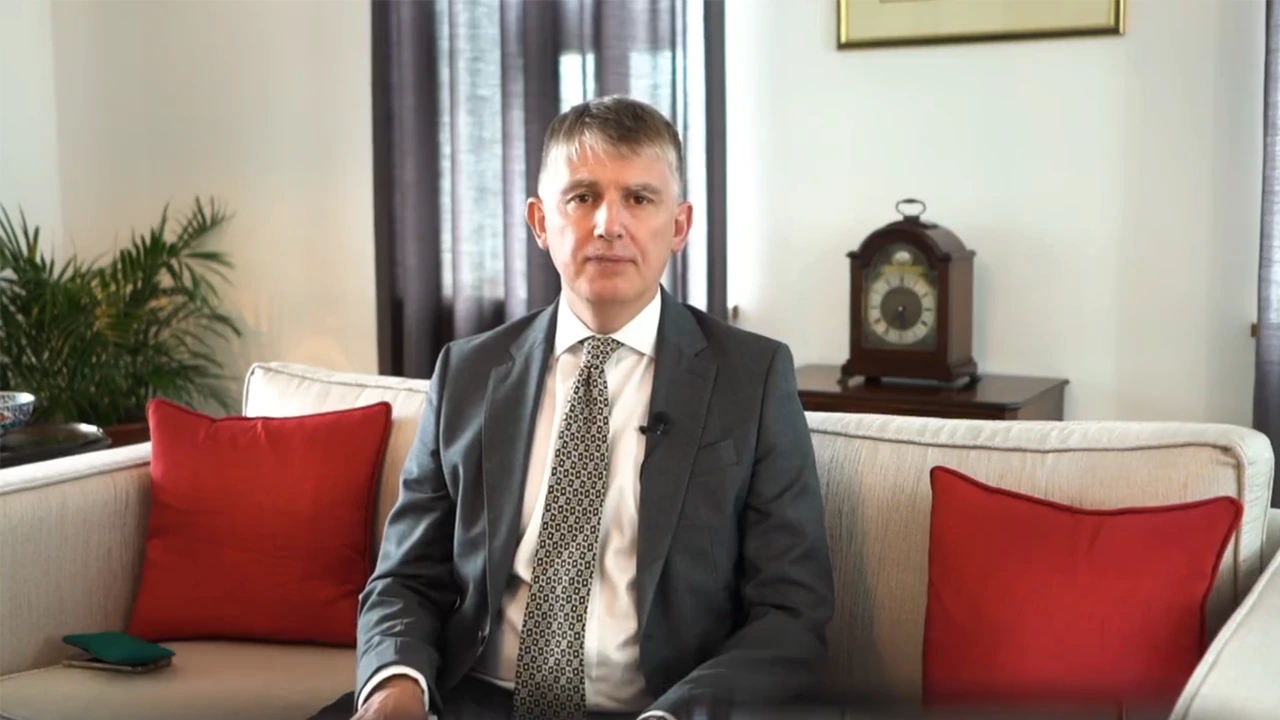
"The action, along with the publication (of the picture) through the official social media account of the British embassy, is highly insensitive," said the spokesperson.
"The foreign ministry reminds foreign representatives to be respectful of the sensitivities among Indonesians on matters relevant with their culture, religion and belief," he said.
Faizasyah said that though an embassy is sovereign territory, the Vienna Convention on Diplomatic Relations stipulates only that nation's flag can be flown.

It's worth noting through, that homosexuality is not illegal in Indonesia, and is generally considered taboo, with the exception of the sharia-ruled Aceh, which has a strict rule considering LGBT.
But as years past, Indonesia is becoming less tolerant of its LGBT community.
For example, some Indonesian politicians have become increasingly vocal about Islam playing a larger role in the state, according to activists and human rights groups.
And a week before the LGBT flag was raised in the British embassy in Indonesia, Mahfud Md, Indonesia's Coordinating Ministry for Political, Legal, and Security Affairs, said a revision of the criminal code is being deliberated by parliament to include some articles aimed at the LGBT community, a move backed by some conservative lawmakers.
His remarks happened after a backlash over a popular podcast, where its host, Deddy Corbuzier, interviewed a gay couple.
The podcast was scrapped because of the heavy criticism, and Corbuzier apologized.
Corbuzier also posted a separate Instagram post to clarify, and admitted that he has lost a significant number of followers since he uploaded the podcast featuring the gay couple.
This was justified by a 2020 survey from Pew Research Center, that concluded 80% of Indonesians believe homosexuality "should not be accepted by society".