In the glittering halls of Beijing's Great Hall of the People in China, a single one-minute video posted by Elon Musk managed to capture a moment that feels equal parts diplomatic theater and strangely intimate human drama.
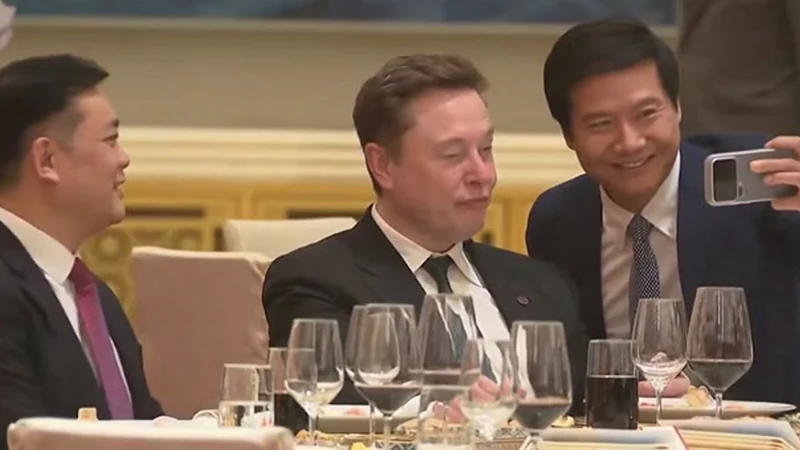
The clip shows the Tesla and SpaceX chief casually chatting, smiling that familiar half-grin, glancing at his phone, taking selfies with others, and reacting with unfiltered charm while seated among presidents, premiers, and fellow tech titans during the state banquet honoring President Donald Trump's visit with Chinese President Xi Jinping.
It is a rare sight indeed: seeing so many tech leaders (who are also billionaires) gathered under one roof.
Most notably, these highly-influential people were representing the sharpest edges of American and Chinese innovation in the same formal setting, bridging two economies that have spent years locked in tense rivalry.
— Elon Musk (@elonmusk) May 15, 2026
The full official White House list of U.S. business executives who traveled with President Trump and participated in the Beijing events (including the May 14, 2026 state banquet at the Great Hall of the People) includes the following.
- Elon Musk: CEO of Tesla and SpaceX (tech/AI/electric vehicles/space).
- Tim Cook: CEO of Apple (tech/consumer electronics).
- Jensen Huang: CEO of Nvidia (tech/semiconductors/AI).
- Cristiano Amon: CEO of Qualcomm (tech/semiconductors).
- Sanjay Mehrotra: CEO of Micron Technology (tech/semiconductors/memory).
- Chuck Robbins: CEO of Cisco Systems (tech/networking).
- Dina Powell: President and Vice Chair of Meta (tech/social media/AI; executive-level leader).
- Jacob Thaysen: CEO of Illumina (tech/genomics/biotech sequencing).
- Jim Anderson: CEO of Coherent (tech/optics/lasers for semiconductors and industrial tech).
- Larry Culp: CEO of GE Aerospace (advanced manufacturing/tech in aviation).
- Kelly Ortberg: CEO of Boeing (aerospace/tech).
- Ryan McInerney: CEO of Visa (fintech/payments tech).
Unlike the other CEOs, Musk and Huang directly travelled with Trump on Air Force One.
Non-tech/finance/agriculture members of the full delegation (also present) included Larry Fink (BlackRock), Stephen Schwarzman (Blackstone), Jane Fraser (Citigroup), David Solomon (Goldman Sachs), Brian Sikes (Cargill), and Michael Miebach (Mastercard).
These 18 executives formed the core high-powered business group; Trump personally introduced many of them to Xi Jinping.
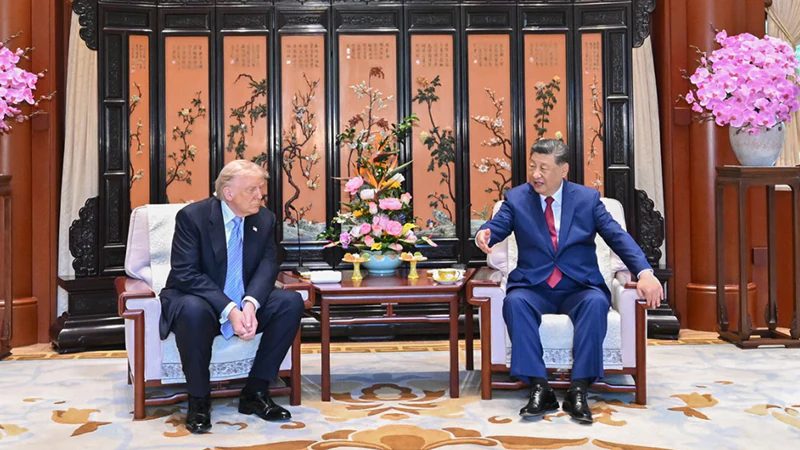
Chinese executives who attended the state dinner and mingled/rubbed shoulders with the U.S. delegation (per on-site reporting and CCTV footage) were not always direct one-to-one matches but represented key sectors like tech, electronics, autos, and manufacturing.
The confirmed attendees included:
- Yang Yuanqing: Chairman and CEO of Lenovo Group (tech/PC and devices; direct counterpart to U.S. hardware leaders like Apple and Dell).
- Lei Jun: Founder and Chairman of Xiaomi (tech/smartphones, EVs, consumer electronics).
- Liang Rubo: CEO of ByteDance (tech/social media/AI; TikTok parent).
- Jia Shaoqian: Chairman of Hisense Group (electronics/appliances/displays).
- Zhou Qunfei: Chairwoman of Lens Technology (tech/display glass for screens).
- Lu Weiding: Chairman of Wanxiang Group (auto parts/EV components).
- Cao Hu: Chairman of Fuyao Glass Industry Group (auto glass manufacturing).
Additional aviation/industrial leaders include Liu Tiexiang (China National Aviation Holding) and He Dongfeng (Commercial Aircraft Corporation of China).
These Chinese leaders sat near or interacted with U.S. counterparts at the banquet tables, creating the rare mixed U.S.-China tech billionaire scene captured in Musk’s viral video.
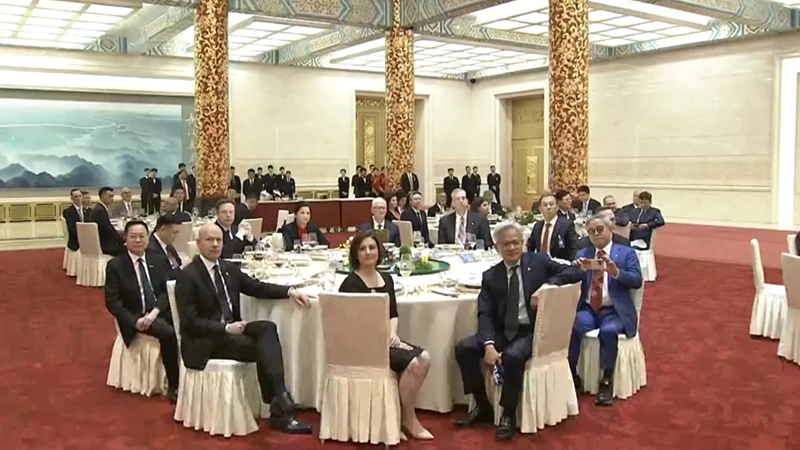
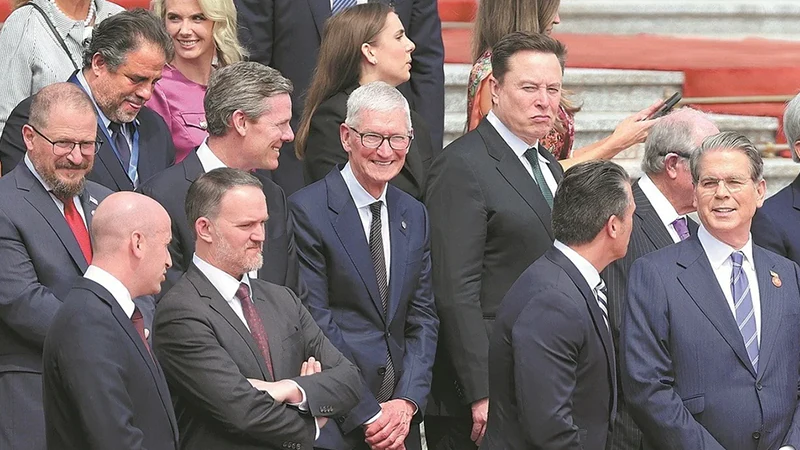
No single exhaustive "pairing" list exists, and that seating was diplomatic rather than industry-matched.
These powerful business figures from the U.S. did not travel halfway around the world simply for ceremonial handshakes, or business matters, or photo opportunities with their Chinese counterparts.
After all, the event was more about Trump-Xi.
However, the groups above represent the full set of named executives, attending a gathering considered one of the largest concentrations of U.S. and Chinese tech power under one roof in recent years.
Their purpose in China is crystal clear and relentlessly practical: to secure deeper footholds in the world’s second-largest market at a pivotal moment.
For the U.S. CEOs, the banquet and surrounding talks represent a chance to press for expanded market access, smoother regulatory approvals for advanced AI chips and electric vehicles, stabilized supply chains, and fresh investment pipelines that could protect and grow their massive stakes in everything from consumer electronics to autonomous driving technology.
Chinese leaders, in response, have emphasized that their doors will open even wider to American businesses, framing the gathering as a mutual win that deepens economic ties while signaling stability amid global uncertainties.
President Trump's decision to bring this high-powered delegation along on the state visit carries its own calculated purpose.
Surrounded by executives whose companies represent trillions in combined value, Trump is wielding corporate muscle as a tool of diplomacy, pushing Beijing to deliver concrete commitments on trade openness, reciprocal investments that could bring jobs and capital back to the United States, and resolutions to long-standing frictions over technology transfers and tariffs.
By personally introducing the CEOs to Xi and spotlighting their presence at every key event, the president aims to score tangible economic victories, project strength to his domestic audience ahead of midterm elections, and reframe U.S.-China relations as a partnership of mutual prosperity rather than pure competition.
It is business-first diplomacy in its purest form, where the presence of the world's richest and most influential executives becomes leverage for national interests.
But behind the glamour, all that orchestrated grandeur, and trillion-dollar deal-making, Musk's viral clip peels back the curtain to something far more relatable.
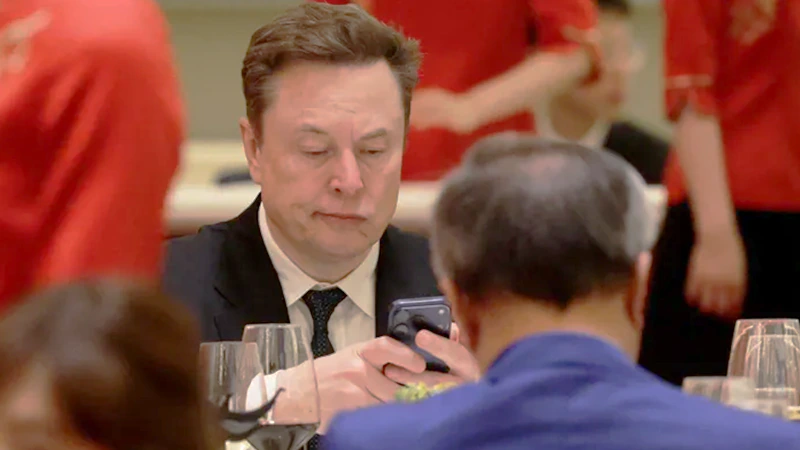
Musk, the richest man in the world, whose fortune exceeds that of many attendees combined, sat among heads of state at the banquet table.
Yet in a quiet moment, phone in hand and seemingly lost in thought, he appeared almost solitary: a reminder that immense wealth and influence do not necessarily shield one from the quiet isolation that can accompany extraordinary success.
The contrast is magnetic: the rich and the powerful assembled in one of the most exclusive rooms on Earth, yet the video's charm lies in how it humanizes the loneliness that can linger even at the center of history.
In the end, what started as a state banquet has become something far more memorable—a fleeting glimpse into the very human side of those shaping our technological and geopolitical future.
I am the WiFi
— Elon Musk (@elonmusk) May 15, 2026














































































































































































































































































