It all started, as so many of these buried truths, with the internet refusing to let the story die.
For years, amateur researchers and internet sleuths had been dissecting every aerial photo and leaked document from Jeffrey Epstein's private Caribbean playground, Little Saint James, fixating on that odd blue-and-white striped building topped with a gleaming golden dome perched on a hill.
Some called it a temple, others a music pavilion or a chapel; conspiracy forums spun wild theories about its purpose while mainstream outlets shrugged it off as just another eccentric flourish from a disgraced financier.
Read: More Than 3 Million Jeffrey Epstein Files Released, And The Internet Begins Its Sleuthing
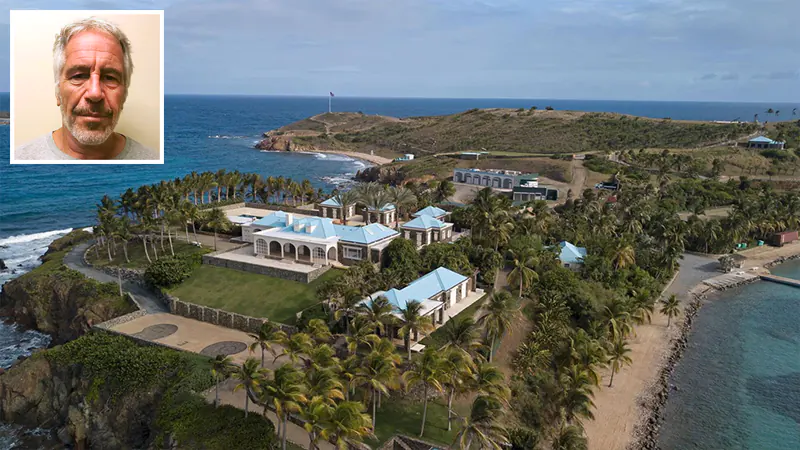
But the public pressure never faded: petitions, FOIA demands, and relentless online sleuthing helped push Congress to pass the Epstein Files Transparency Act. When the U.S. Department of Justice finally unsealed another massive tranche of documents in late January 2026, the internet lit up once more, and this time the revelations went far beyond the expected names and flight logs.
What surfaced was something almost unimaginable: proof that Epstein, already convicted of sex crimes and operating a trafficking network from that very island, had gone to extraordinary lengths to acquire sacred relics from Islam's holiest site for what he explicitly called his "mosque."
The emails, dated February and March 2017, read like any high-end art deal at first glance, until it's later realized that the "art" in question was no ordinary tapestry.
Epstein's assistant informed a customs broker in crisp business language: "We are receiving 3 pieces from the Kaaba."
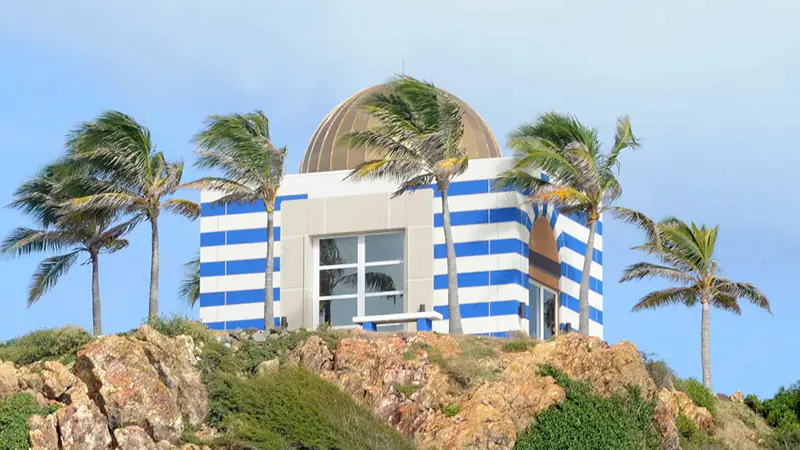
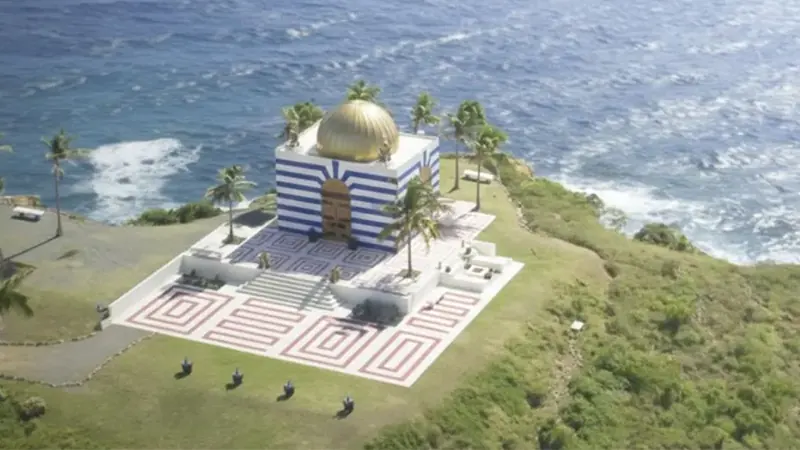
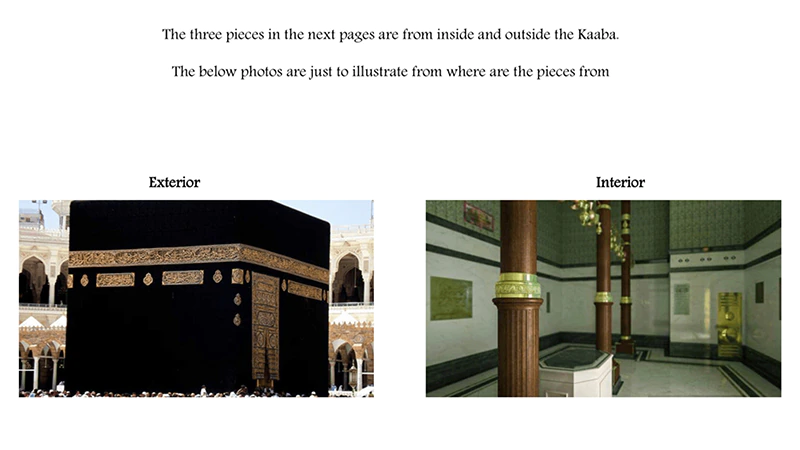
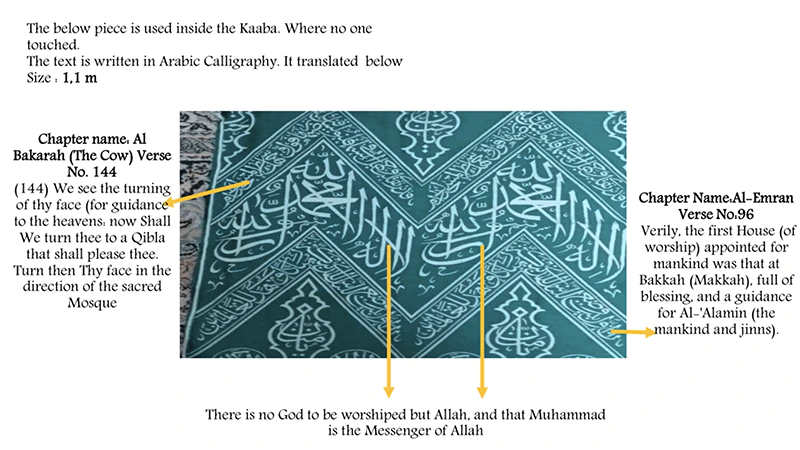
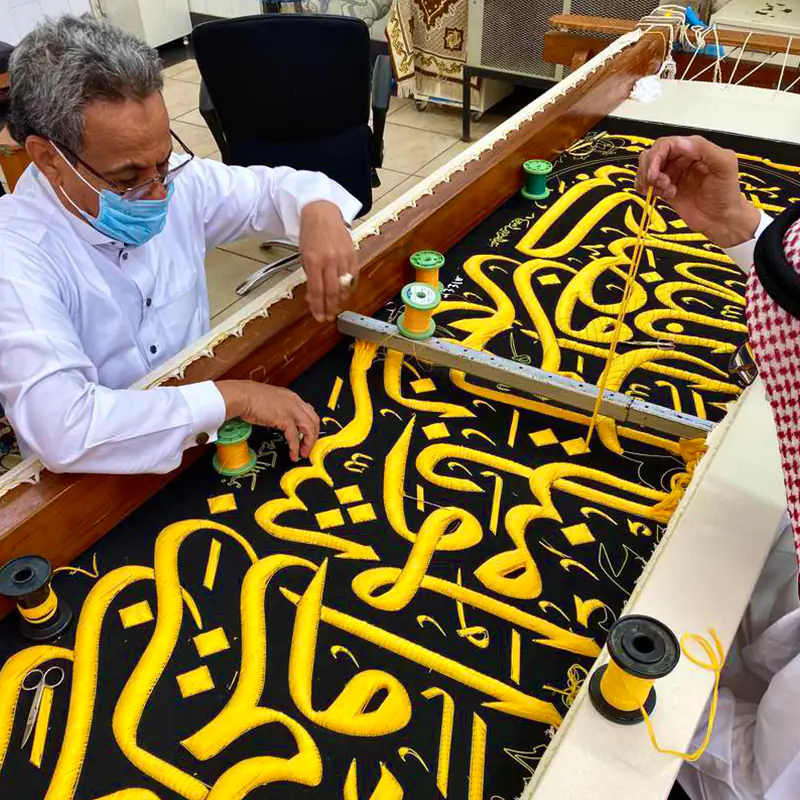
Accompanying documents included photos of embroidered textiles, each meticulously described. One piece had been used inside the Kaaba itself, the cube-shaped structure in Mecca that Muslims worldwide face during prayer and circle during the Hajj pilgrimage. Another was a full Kiswa, or Kiswah, the black, gold-embroidered cloth that physically draped the exterior of the shrine. A third was fresh from the royal workshop in Mecca, crafted from the same materials but never hung.
These weren't cheap knockoffs or tourist souvenirs.
Instead, the Kiswa is replaced every year at a cost of around five million dollars by hundreds of artisans using over 1,500 pounds of raw silk and 250 pounds of gold and silver thread.
Old pieces are treated as holy relics, sometimes gifted to dignitaries, museums, or distributed in charity auctions, their panels carrying Quranic verses and the weight of millions of pilgrims’ prayers, tears, and hopes.
And Epstein allegedly had it, or at least he was offered three fragment types of the Kiswah.
To have it shipped was no easy task either.
According to the email, logistics were allegedly handled with the precision of a luxury import: air freight via British Airways cargo from Saudi Arabia straight to Epstein's Palm Beach, Florida residence, where the items were valued at $10,980.
In the email, they cleared customs, which according to an email, classified innocuously as "artworks."
From there, according to the email, were destined for the island, "for the Mosque."
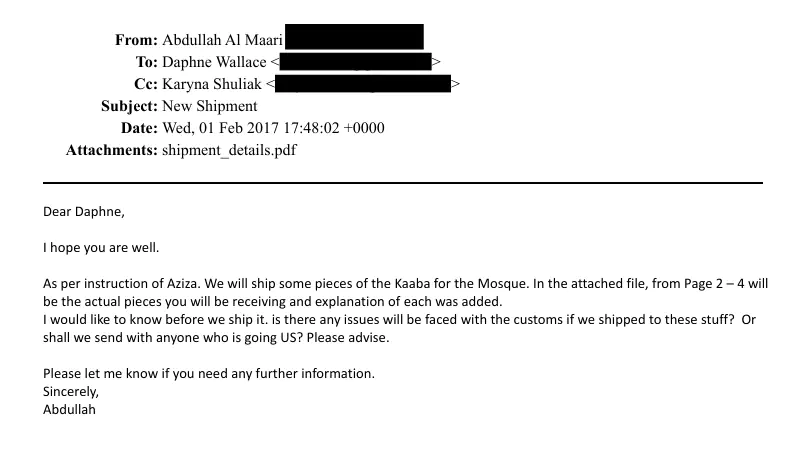
Coordinating it all was a UAE-based businesswoman named Aziza al-Ahmadi, who worked closely with a Saudi contact, Abdullah al-Maari. Al-Ahmadi, reportedly of Saudi origins herself, had ties that reached into the royal court through a consultant named Raafat Al-Sabbagh.
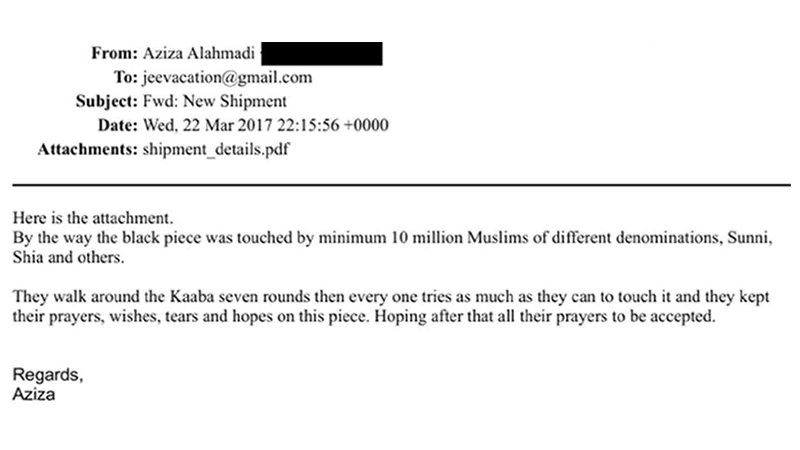
In one email sent directly to Epstein on March 22, 2017, she laid bare the profound sacredness of what she was sending:
In other words, the pieces of Kiswah that were shipped to Epstein's island, weren't just fabric. Instead, they were the vessels for the collective devotion of the Islamic world.
Al-Ahmadi and her network also shipped prayer mats, tents, Arab-style sofas, tables, and even tiles from a historic mosque in Uzbekistan, all explicitly earmarked "for the mosque." After Hurricane Irma battered the Caribbean in September 2017, she even followed up to check on the island's condition, promising to send a replacement tent once Epstein's team confirmed the structure had survived amid the wreckage of docks, pavilions, and roads.
This wasn’t a one-off whim.
Epstein's obsession with the blue-and-white building, and with Islamic design in general, spanned years and was documented in painstaking detail across the files.
Construction ideas dated back to 2009, when he was serving time in a Palm Beach jail for earlier sex offenses; back then he envisioned a hammam-style bathhouse with "Islamic gardening." Plans evolved through a "music room" phase called 5 Palms, then a chapel or pavilion, but by the mid-2010s the vision had crystallized around a Middle Eastern aesthetic.
He hired a Romanian artist, Ion Nicola, and sent him reference images of the Yalbugah Hammam in Aleppo, Syria, a 15th-century structure, instructing him to replicate its dome and arches.
Epstein even mused about customizing the interior calligraphy: in emails riddled with his trademark typos, he wrote, "Remember we saw the aribic writing in black and white… instead of allah, i thought j’s and e ‘s."
The golden dome, the striped facade, the Quranic tapestries, everything was meant to evoke a mosque, and in multiple correspondences he and his team referred to it precisely that way.
Allegedly, the Kaaba pieces were to be hung inside, transforming the space into something that blended sacred Islamic elements with his personal imprint. All of this unfolded on Little Saint James, the island that doubled as the epicenter of his sex-trafficking operation, where young girls were flown in and abused under the cover of his vast network of enablers.
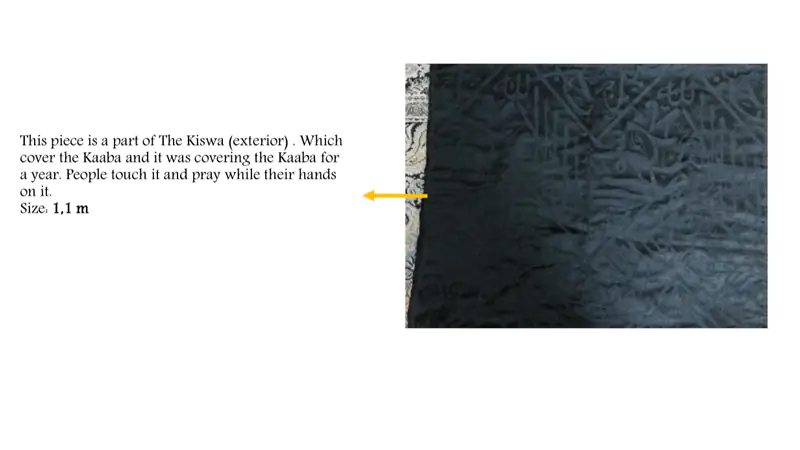
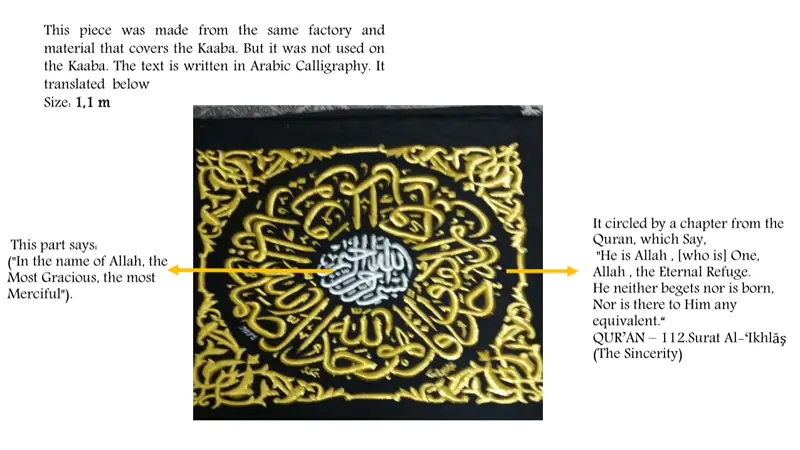
Epstein's path to these relics traced back through his broader Middle Eastern networking, which the files show he cultivated aggressively.
Through Norwegian diplomat Terje Rod-Larsen, he was introduced to Al-Sabbagh and al-Ahmadi. In 2016, this led to a meeting with then-Deputy Crown Prince Mohammed bin Salman (now the Saudi crown prince) during which Epstein pitched himself as an advisor on everything from Aramco's public offering to radical economic ideas like a new "shariah" currency for Muslims.
He even joked in later texts about the kingdom ignoring "the jew directions," a pointed reference to his own secular Jewish background and self-perceived influence.
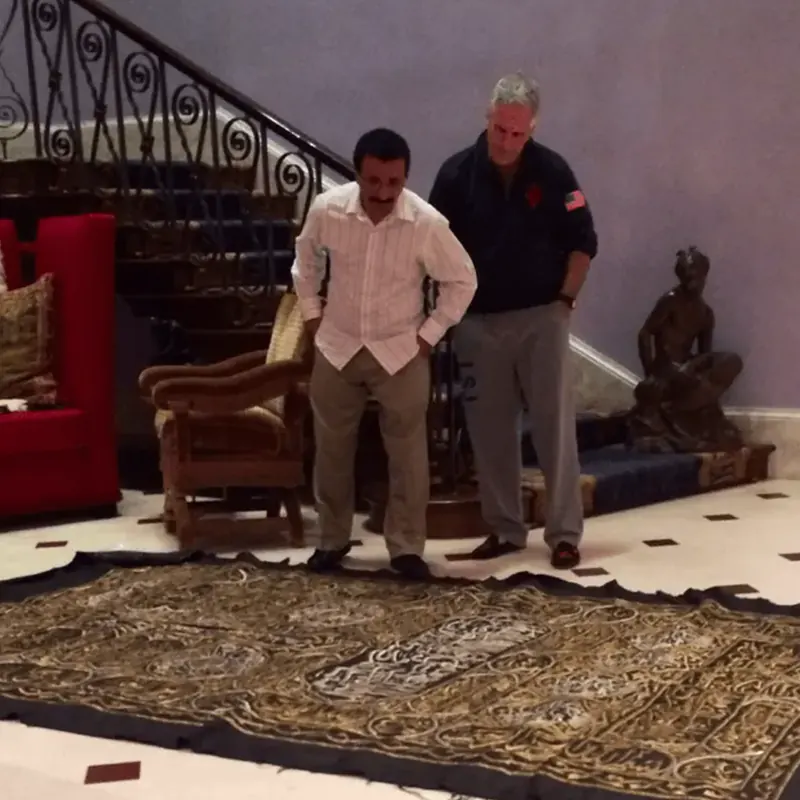
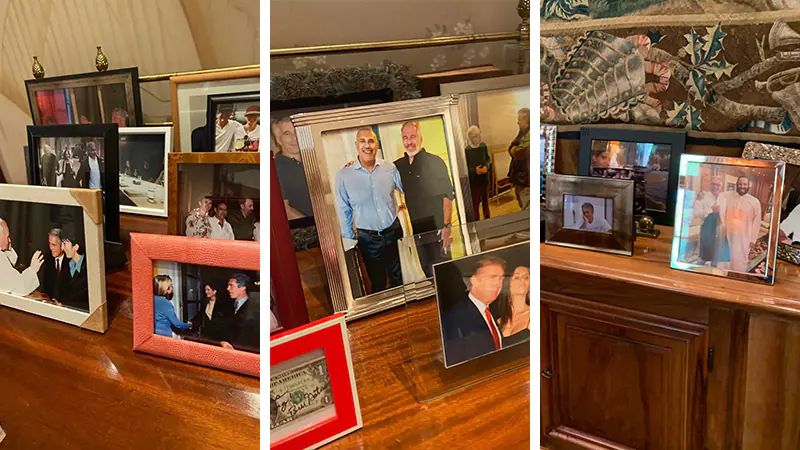
A separate 2014 photo released in the files captures Epstein standing in his New York townhouse alongside prominent Emirati businessman Sultan Ahmed bin Sulayem, then-CEO of DP World.
Both men, hands in pockets, gaze down at a large piece of fabric spread across the floor, black with intricate gold embroidery that experts and investigators immediately recognized as resembling the Kiswa.
Bin Sulayem later resigned from his high-profile role in 2026 amid the fallout from these associations. How exactly al-Ahmadi secured the Kaaba pieces remains murky; neither she, the Saudi government, nor the intermediaries have publicly commented, despite requests from major outlets.
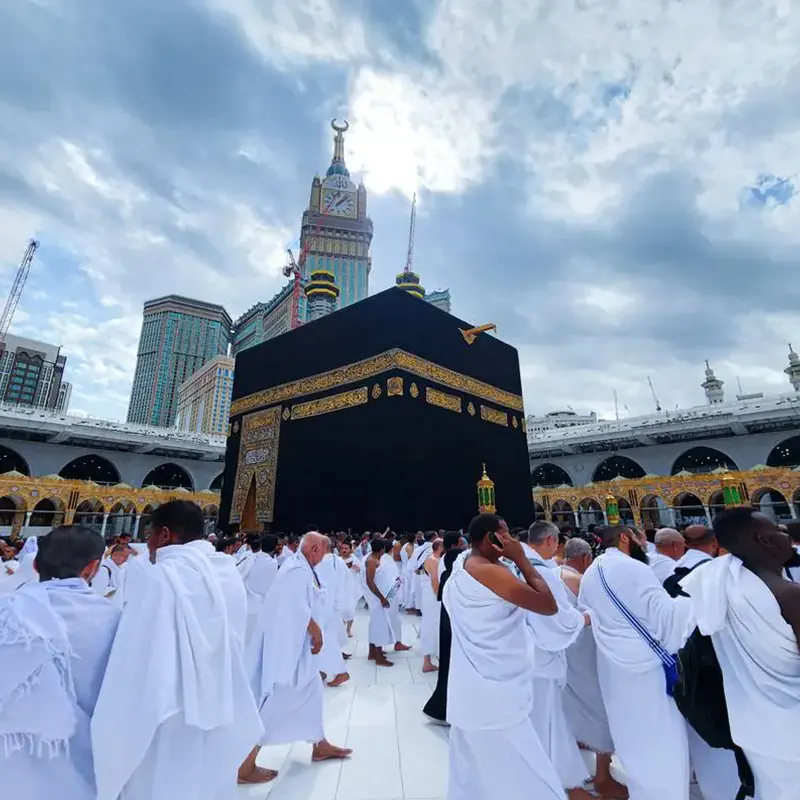
The religious and cultural weight of the Kiswa cannot be overstated. For over a millennium, the Kaaba has stood as the physical center of Islam.
Considered the "House of God," it was built by Prophet Ibrahim and his son Ismail. All around the world, Muslims pray toward it, and the annual pilgrimage draws millions who dream of touching or kissing the Black Stone, and also the Kaaba's Kiswah. The black cloth, once white in the Prophet Muhammad’s era before shifting through red and green, now spans thousands of square feet in 47 embroidered panels.
When replaced each year, the old Kiswa is cut into pieces that carry immense spiritual value; gifting or even possessing them is an extraordinary honor reserved for the faithful or institutions of note.
It's exactly those fragments, touched by pilgrims from every corner of the Muslim world, that ended up in the hands of a man later exposed as one of the most notorious sex offenders in modern history.
Of course, when the Epstein Files were exposed, the news quickly triggered widespread outrage across Muslim communities, online forums, and religious commentary circles.
Many have called it blasphemous, a desecration enabled by power, money, and connections that bypassed any sense of reverence.
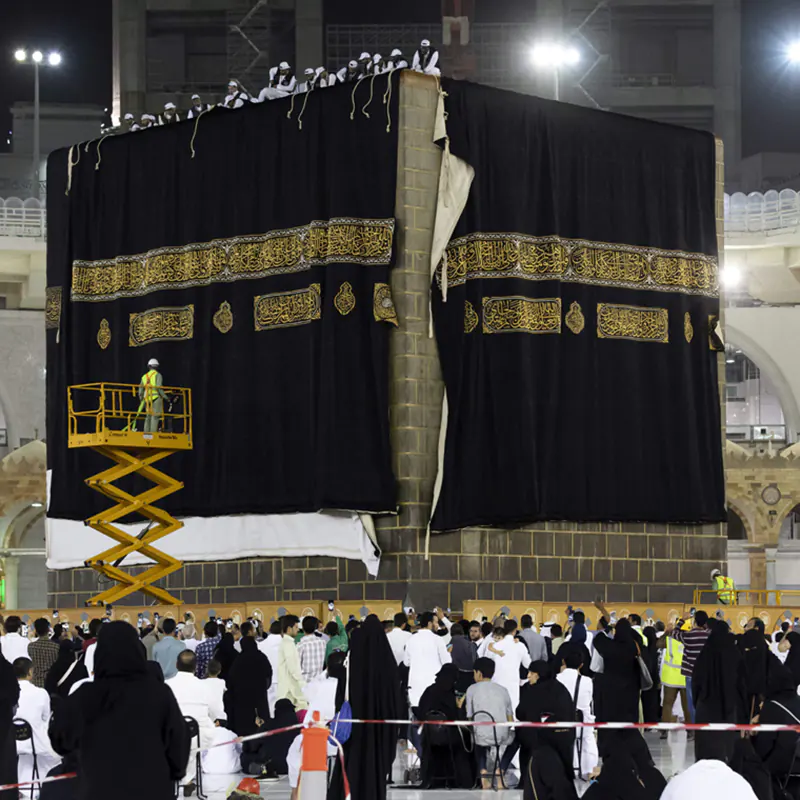
The internet, true to form, has turned these documents into a firestorm: viral threads dissecting the emails, side-by-side comparisons of the island structure with real mosques, and calls for accountability from Saudi and UAE authorities have kept the story alive long after the initial DOJ drop.
What makes this chapter of the Epstein saga so chilling is how it humanizes, yet simultaneously dehumanizes, the man behind the crimes.
Here was someone who, while orchestrating the abuse of dozens of girls on that same island, was curating a private "mosque" as if collecting sacred trophies from a faith he did not practice.
The files paint a picture of a man whose eccentricities masked something darker: an insatiable appetite for the rare, the forbidden, the powerful.
The blue-and-white building, damaged in the 2017 hurricanes but rebuilt in his vision, stood as a physical embodiment of that obsession until his 2019 arrest and death.
Now, as researchers and journalists continue to comb through the millions of pages now public thanks to that hard-won transparency law, the internet's role feels almost prophetic.
What began as online speculation about a strange Caribbean dome has become documented proof of how far Epstein's tentacles reached: into royal courts, sacred workshops, and the very fabric of one of the world's major religions.
The leaks didn't just expose names; they pulled back the curtain on a level of audacity that no amount of official denial can fully erase. And as more details inevitably surface through the digital echo chamber, one question lingers louder than the rest: in a world where power can procure even the holiest of objects, what else money and influence can buy?
It's worth noting that when the Kiswah is replaced, the previous cloth is cut into smaller pieces. These fragments are typically distributed as official gifts to dignitaries, institutions, and museums, or retained in storage and archives under government supervision.
It's also worth noting that case that involved Jeffrey Epstein acquiring the Kiswah should be treated like any other high-profile cases, in which uncertainties linger.
With his vast network of influential people and powerful people, ranging from business people to politicians and even monarchs, it would be extremely difficult to unearth everything a circle as exclusive as this.
In this case, some analysis and fact-checks say available images and claims do not conclusively prove the items were genuine Kiswah, and that no official confirmation from Saudi authorities is available. What's more, there is no clear confirmation from officials overseeing the Kaaba about any such transfer, and the fact about the purpose is clear.
While reports mention an unusual building on Epstein's island with Islamic design elements, there is no definitive "proof" of how the items were used.
The 2026 Epstein Files include documents that are related to Epstein sending emails discussing shipments of items described as pieces of the Kiswah. The emails, created in 2017, do show coordination by UAE-linked contacts to send three framed items from Mecca to Epstein’s Florida residence, with one email explicitly emphasizes the religious significance of the cloth, claiming it had been touched by millions of worshippers.
However, the documents don't really conclude that the Kiswah fragments were actually sent to Epstein, not the transaction was fully established.
Some claims circulating online go beyond what the documents actually prove, and parts of the files remain uncorroborated or ambiguous.














































































































































































































































































