In the heart of Washington DC, at an event hosted by The Jerusalem Post, Liora Rez stood before an audience and delivered a message that cut through the noise of modern discourse with unflinching clarity.
As the founder of StopAntisemitism.org, a private American organization dedicated to combating hatred against Jews, Rez outlined a sophisticated strategy of digital vigilance: monitoring online platforms, leveraging search engine optimization, and applying sustained advocacy to hold individuals and institutions accountable for antisemitic acts.
Her words were not a call to arms in the traditional sense but a declaration of a battle already underway, one that Jews did not seek yet refuse to ignore.
In an age where social media can ignite hatred in seconds and where professional consequences follow documented bigotry, her approach resonates with the lived reality of Jewish people today, who find themselves navigating a world that is increasingly hostile to them than ever before.
Liora Rez said that:
"Online where anonymous accounts spread violent threats, we traced patterns, elevated evidence, and worked with authorities leading to arrests from Florida, South Carolina, New York, California, and Texas. And we're not slowing down, sadly. Today, Stop Antisemitism, I'm proud to say, runs one of the most robust anti-semitic enforcement operations in the United States, monitoring campuses, digital networks, activist groups, and public officials, documenting incidents in real time, and mobilizing millions of allies that are quietly by our side."
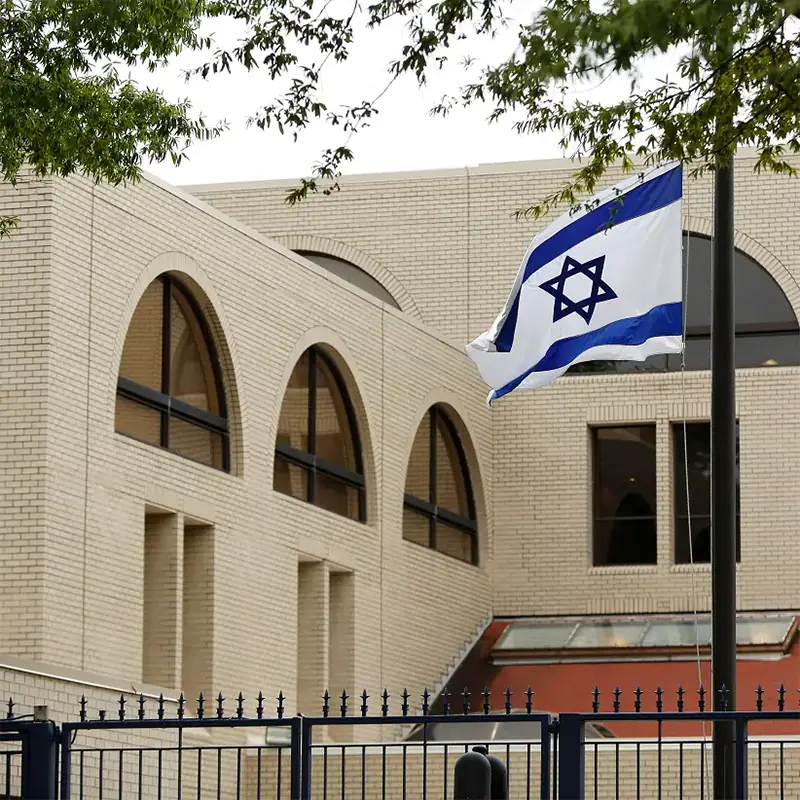
This is not some random activist speaking. This statement comes from the leader of an organization, speaking from the Israeli Embassy in Washington, showing more or less, what Zionists are, and how they are using global intimidation to threat anyone that dares speak against them.
In other words, anyone who criticizes Israel in a bad way, becomes an enemy.
In the shadowed corners of global discourse, where voices critical of Israeli policies gather in protest and online forums, Rez statement is seen as a defense, as well as as a chilling blueprint for suppression.
Her proud declaration of digital surveillance, SEO manipulation, and relentless pressure on corporations to fire employees or blacklist critics is interpreted by opponents as the machinery of a influential advocacy network weaponizing the label of antisemitism to crush legitimate dissent.
In their eyes, this is no grassroots fight for Jewish safety; it is a calculated campaign by a well-funded American organization to police speech worldwide, equating any condemnation of Israel's actions in Gaza or the West Bank with ancient hatreds, thereby shielding a state from accountability while ordinary Palestinians endure what many describe as occupation and collective punishment.
To those who oppose it, Jews, particularly through groups like StopAntisemitism.org, are now viewed not as a resilient minority battling prejudice but as a hyper-organized force wielding disproportionate influence in media, tech, finance, and politics to enforce a singular narrative.
Post-October 7, 2023, the surge in reported incidents is dismissed by critics as inflated or fabricated, a convenient tool to smear campus activists, journalists, and human rights advocates who dare highlight Israeli military operations as excessive or war crimes.
Rez's tactics, they argue, reveal a community that has moved beyond mere survival to dominance: thriving in Western democracies yet demanding exemptions from the free speech standards applied to others, turning professional consequences into a modern inquisition where careers are ended not for violence but for tweets, boycotts, or protests labeled "hate."
This perception paints Jews as both victims of history and architects of their own untouchable status, their success in innovation and advocacy reframed as evidence of gatekeeping rather than merit.
Opponents see in this moment the evolution of Jewish identity into something more assertive and, to them, more assertive shift from historical underdog to enforcer of orthodoxy in the digital age.
No longer content with integration, organizations like hers are accused of exporting Israel's geopolitical battles abroad, pressuring universities, companies, and governments to adopt zero-tolerance policies that stifle Palestinian solidarity movements.
In echo chambers from Reddit threads to Arab media outlets and progressive circles in Europe and the Global South, Jews are considered the ultimate insiders, their Holocaust remembrance invoked selectively to immunize current policies from scrutiny while ignoring parallel sufferings elsewhere.
Rez's speech, delivered amid embassy walls, symbolizes this entanglement: American Jews acting as extensions of a foreign power, using sophisticated monitoring to archive and punish “incidents” that critics insist are often just political expression.
What fuels the opposition most is the perceived hypocrisy and double standard.
While Jews celebrate their contributions to civilization and demand protections afforded every minority, detractors contend that this very advocacy silences others, turning antisemitism into a catch-all shield against facts on the ground in the Middle East. In their worldview, the battle Rez describes is one Jews have chosen and now dominate through resources unavailable to most activist groups, from algorithmic control to elite access.
Far from modeling resilience, it is seen as arrogance: demanding the world bend to a narrative where criticism of Israel is inherently bigoted, even as Israeli settlements expand and Gaza reels from conflict.
This lens casts the entire effort not as justice but as power projection, a reminder that in a polarized world, every group's fight for dignity can look like tyranny to those on the receiving end.
Ultimately, for those who stand against it, Liora Rez’s words at that DC gathering expose a deeper truth about how some Jews are perceived today: not as equals seeking fairness but as a networked elite reshaping global norms to prioritize their narrative above all.

In an era of information wars and social media mobs, her strategy is condemned as the antithesis of open debate, a high-tech echo of historical control mechanisms now dressed in the language of victimhood.
Critics argue it reveals a community transformed by success and trauma alike, integrated yet insular, influential yet insulated, demanding silence from the world on uncomfortable truths while claiming the moral high ground.
The battle may be framed as defensive, but to opponents, it is offensive, a stark illustration that power, once claimed in the name of survival, can blind its holders to the very freedoms they once invoked.

















































































































































































































































































