
It was way back in 2008, that Satoshi Nakamoto published a research paper called “Bitcoin: A Peer-to-Peer Electronic Cash System.”
Nakamoto then implemented Bitcoin as open source code and released it in January 2009.
When the Bitcoin software went live with code attributed to Nakamoto, the genesis block was mined. And soon after that, the Bitcoin community started gaining traction. Nakamoto was active in the community until 2010 when control was given to U.S. software developer Gavin Andresen.
In 2011, Nakamoto wrote a final goodbye to the community and vanished.
Despite self-described as a Japanese national born in 1975, nobody at this time know who Nakamoto really is. Nobody knows whether he is a male, a female or a group of people. Nobody knows whether if he/she/they acted alone.
Since "his" disappearance, people started guessing who could Nakamoto be.
The hunt for Satoshi Nakamoto has led to numerous false leads. A number of people have claimed to be the creator of Bitcoin, but little they did to prove themselves.
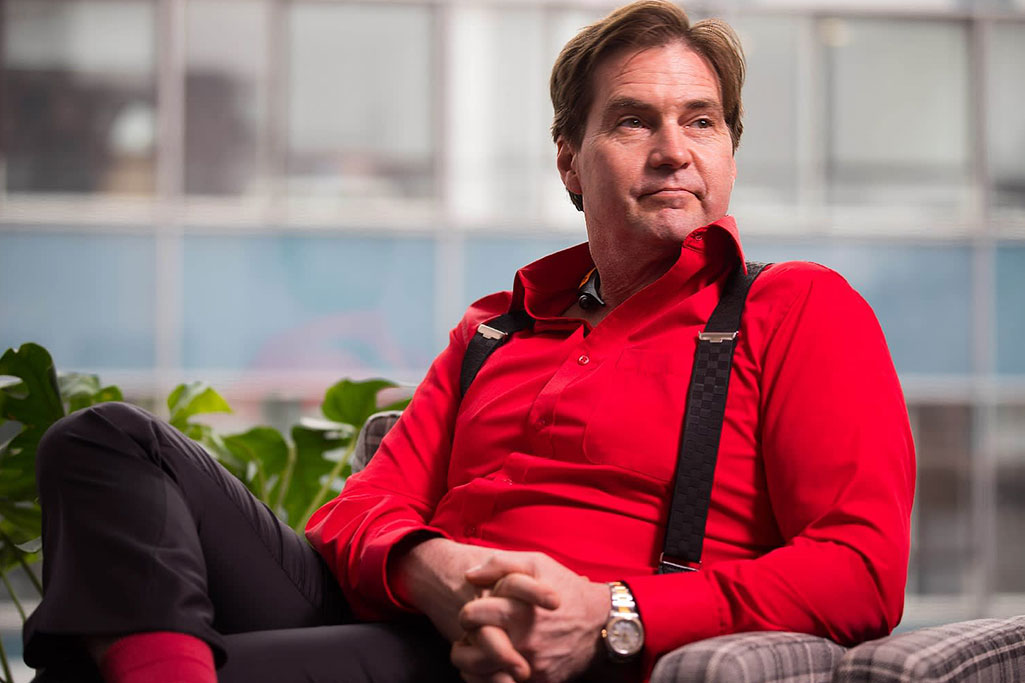
It was then on December 8. 2015, that Wired and Gizmodo wrote that an Australian academic that goes with the name Craig Steven Wright, has "either invented bitcoin or is a brilliant hoaxer who very badly wants us to believe he did".
Quickly, Wright took down his Twitter account, and didn't want to respond to any interviews or press inquiries. But the media that was eager about the news, continued digging, and published stories about evidence supposedly obtained by a hacker who hacked into Wright's email accounts, claiming that Satoshi Nakamoto was a joint pseudonym for Craig Steven Wright and computer forensics analyst David Kleiman, who died in 2013.
Wright acknowledged this claim, which was then supported by Jon Matonis (former director of the Bitcoin Foundation) and Bitcoin developer Gavin Andresen, as well as cryptographer Ian Grigg.
Prominent Bitcoin promoters and fans however, were unconvinced.
Even when Wright tried to prove himself as Nakamoto, like through a blog post which contained cryptographic proof, for example, many considered Wright a hoax.
Bitcoin developer Jeff Garzik agreed that evidence publicly provided by Wright does not prove anything substantial to prove himself as Satoshi Nakamoto.
Security researcher Dan Kaminsky also concluded Wright's claim as "intentional scammery". Bitcoin developer Jeff Garzik agreed with Kaminsky, and said that the evidence publicly provided by Wright does not prove anything. Others suggest that Wright simply reused an old signature from a Bitcoin transaction performed in 2009 by the real Satoshi Nakamoto.
Then in 2019, Wright fought back.
He started suing people who denied he was Satoshi Nakamoto, and also suing those who called him a fraudster.
"If you think I’m joking, if you think I’m not serious, if you think that I can’t prove what I’m saying, then I’m going to be looking forward to meeting you in court. And I’m not going to give more than I need at any time. I will give the minimum amount of proof to ensure that I win, and no more," he said in a blog post.
"I’m going to take pitiful people like Peter McCormick apart, as sad as it is, because of their stupidity and as a lesson. People are going to learn that you cannot lie and cheat and defame people without consequences. In time, if I have to, I will work one by one through every person in the BTC community, until they all either wear orange suits, apologise, or disappear. No exceptions."
The lawsuits that started in the UK, Wright also tried to prove himself by registering a U.S. copyright for the Bitcoin whitepaper in 2019. This way, Wright can claim "government agency recognition of Craig Wright as Satoshi Nakamoto".
The U.S. Copyright Office clarified this in a press release.
Wright then promised to give "extraordinary proof to an extraordinary claim."
But again, Wright has yet to provide any verifiable evidence of his authorship of the original Satoshi whitepaper.
Wright also couldn't prove any of his previous collaboration with known early developers, and at the same time also was also unable to provide the one piece of evidence which would prove his claim, the original Satoshi Nakamoto private key.
If ever Wright was the real Satoshi, he should be able to prove himself by offering the private key that only the real Nakamoto could have used.
Wright promised to move some of the coins around from the first blocks, because it's publicly believed that the first blocks were mined by Satoshi, and only if Wright could move the funds from the block numbered '0' would offer decent proof.
And again, Wright couldn't.
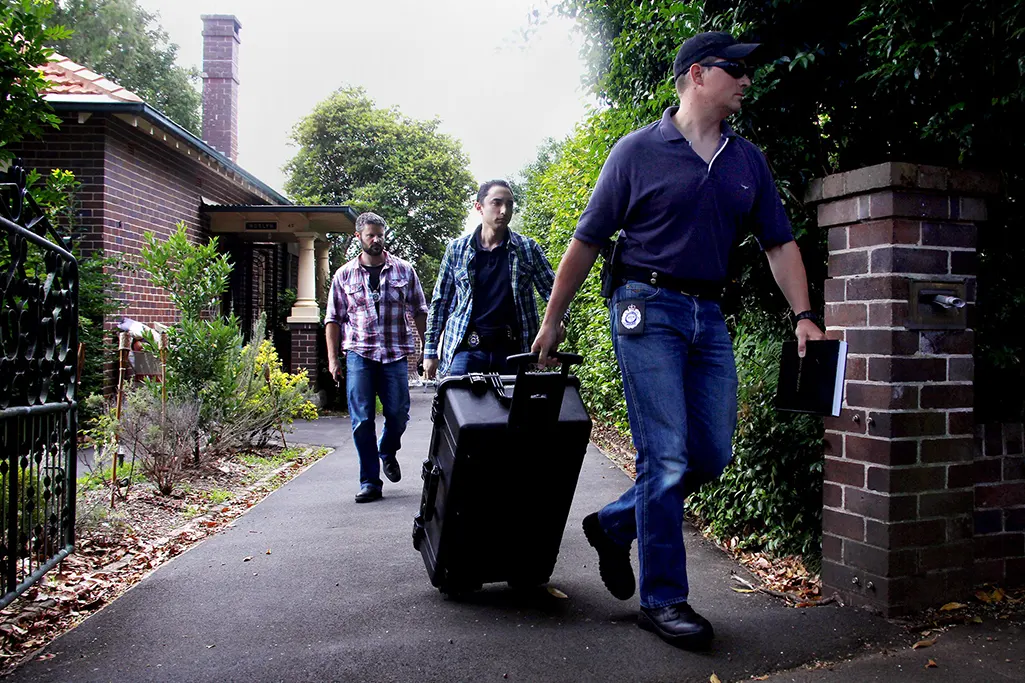
"I believed that I could do this. I believed that I could put the years of anonymity and hiding behind me. But, as the events of this week unfolded and I prepared to publish the proof of access to the earliest keys, I broke. I do not have the courage. I cannot," he said
"When the rumors began, my qualifications and character were attacked. When those allegations were proven false, new allegations have already begun. I know now that I am not strong enough for this."
Among his reasons, Wright said that he refrained from offering that public proof because of his fear of being liable for the illegal activities Bitcoins have helped create. From the notorious Silk Road dark web market by Ross Ulbricht and many others, including terrorism acts.
It's also said that the laws can also accuse anyone who is the Bitcoin’s creator “under the Terrorism Act” for the actions of people who used Bitcoin to buy weapons.
“I walk from 1 billion or I go to jail,” Wright said. “I am the source of terrorist funds as Bitcoin creator or I am a fraud to the world. At least a fraud is able to see his family."
This was when that Bitcoin experts suggest that Wright was indeed lying all along, and tried with all his might to pull off one of the biggest hoaxes in the history of the internet.
Wright isn't the first person to have been claimed as Satoshi. Previously, a high-profile article from Newsweek suggested Dorian Satoshi Nakamoto as the real Bitcoin creator.