Like it or not, Google is becoming increasingly more aggressive towards ad blockers on its Google Chrome.
This is because now, the browser is advancing its long running transition away from the Manifest V2 extension platform by removing the final technical workarounds that have allowed some older ad blockers to remain functional. Expected updates in Chrome versions 150 and 151 are expected to eliminate remaining code references and flags tied to the previous system.
This step follows years of phased changes and marks the point at which only extensions built for Manifest V3 will operate fully in the browser.
The move builds on a process that Google initiated several years ago to update its extension framework.
Official documentation on the Chrome for Developers site outlines the Manifest V2 deprecation timeline, noting that new Manifest V2 extensions stopped being accepted in the Chrome Web Store as early as 2022.
Disables began rolling out on beta channels in 2024, with broader enforcement across stable versions occurring through 2025. By Chrome 138, Manifest V2 extensions were disabled for users on all channels, although certain flags and enterprise policies provided limited avenues for continued operation in specific cases until now.
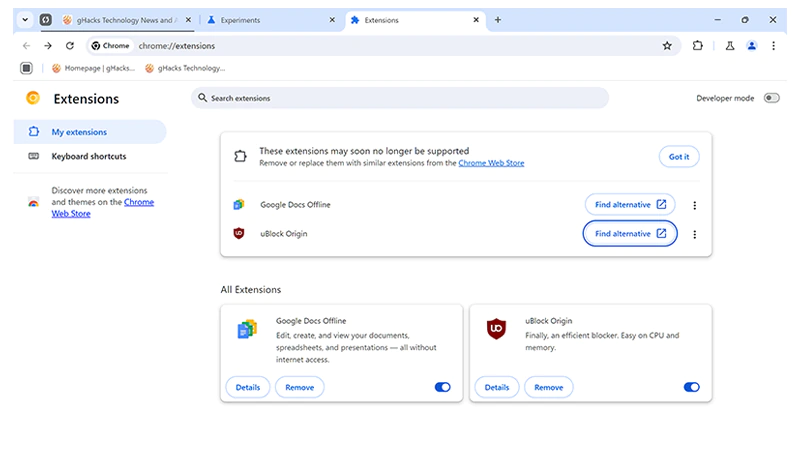
It all began from a notable Chromium code commit that removes support for the ExtensionManifestV2Disabled flag among other references.
In comments on that commit, a Google engineer stated that Manifest V2 extensions are no longer allowed in any supported version of Chrome. The explanation cited the complexity and technical debt of maintaining the older functionality, along with security risks, including bugs identified specifically in the Manifest V2 environment.
The comment also noted that other browsers could continue supporting these extensions if they choose to do so.
These changes particularly affect ad blocking extensions that depended on Manifest V2 capabilities.
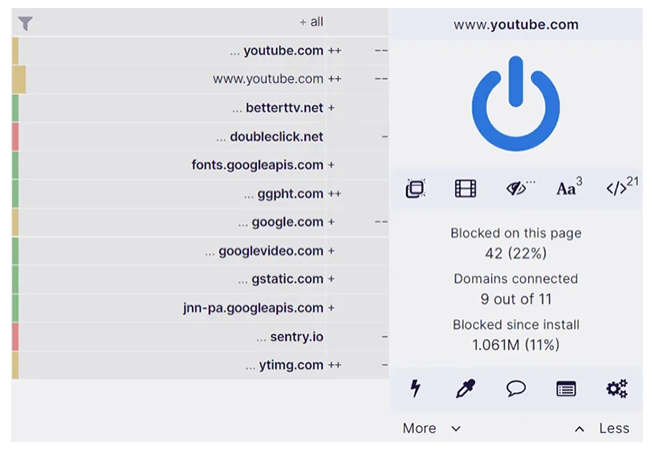
The original uBlock Origin extension, widely used for its dynamic filtering and extensive customization options, will no longer function in Chrome once the updates take effect. Manifest V3 replaces more flexible network request handling with the declarativeNetRequest API.
This system relies on static, predefined rule sets rather than permitting extensions to apply dynamic modifications through JavaScript in the same comprehensive way.
As a result, extensions lose some of the real time adaptability that characterized earlier implementations.
A Manifest V3 compatible version called uBlock Origin Lite has been developed and is available for Chrome users. Information on the official uBlock Origin website describes this edition as having reduced functionality, including limitations on dynamic filtering, element picking, and rapid rule updates compared with the full version. The full uBlock Origin remains available on browsers such as Firefox and Brave, where Manifest V2 support continues.
Google has described the Manifest V3 framework as a means to improve security, performance, and privacy for users.
By shifting to service workers, limiting remote code execution, and adopting declarative APIs, the company aims to reduce risks associated with powerful extension permissions that could be misused. These points appear in the company's developer resources and communications around the extension platform updates.
At the same time, the technical constraints have led to discussions about impacts on content blocking effectiveness for tools that previously operated with greater flexibility.
Users who have relied on older ad blockers may explore Manifest V3 alternatives listed in the Chrome Web Store or evaluate other web browsers that maintain broader support for established extension features.
As Chrome completes this cleanup of legacy code, the browser aligns fully with its updated extension standards while the wider ecosystem offers varied options for those prioritizing specific blocking capabilities.

















































































































































































































































































