
Since scientists discovered that human DNA is unique to different people, researches that involve blood and other bodily fluids escalated. And it was in 1990s that the police began using people's DNA to identify criminal suspects.
In the modern world of the internet and with the widely-available spit kit, people can easily become genealogy enthusiasts, where they can get results from their DNA and discover lots of data from it by uploading the information to online databases.
And here for the first time, a database for DNA public repository is used to convict a man of a double murder from the late 1980s.
On June 11th, jury selection began the trial of William Earl Talbott II, who was arrested in 2018 for the 1987 murders of a young Canadian couple after police began suspecting him after matching his DNA from a discarded cup to samples from the crime scene.
The forensic firm here used a genealogy website to trace killer's unidentified DNA back to a particular branch of his family tree.
At this time, the legitimacy of the method has not been tested in the court law, but is considered a major flashpoint in the potentially precedent-setting case.

It happened back in 1987.
At that time, Tanya Van Cuylenborg, 17, and her boyfriend, Jay Cook, 20, left Victoria, British Columbia using a bronze 1977 Ford Club van, for what was supposed to be their overnight trip to the Seattle area. The next day, the couple hadn’t returned home as planned.
On November 20th, the two were officially reported missing.
For days later, the investigators found Van Cuylenborg’s body, wrapped in a blue blanket, half-naked in a ditch besides a rural road about 90 minutes from Seattle. She had been raped, bound with plastic ties, and fatally shot in the head.
The van was found a few blocks away.
Plastic ties of the same type used to bind Tanya, plastic gloves, and various receipts, including the Bremerton-Seattle ferry ticket, confirming the belief that the couple had taken the second ferry.
Her boyfriend Cook, was found a couple of days later, dead after fatally beaten with rocks, strangled, and with his mouth stuffed with a pack of Camel Lights cigarettes.
Nothing much happened in the next several years.

In 1994, the advances in DNA science allowed the forensics to piece together a DNA profile based on the semen police had found on Van Cuylenborg’s pants and from inside the van.
Years later, after the the FBI created CODIS as its DNA database, the authorities tried to match the DNA from the scene, but found no result.
But with the fact that such database exists in more than one places, the authorities were seeing new opportunities to solve the murder case.
Websites like 23andMe and Ancestry.com, for example, have offered a full genetic workup, with testing kits delivered to customers with results available weeks later in the form of a completed DNA profile. Other companies also tried to offer similar database, allowing people to upload their genetic information to public repositories on the internet.
While their goal is mainly to offer hope for those looking to connect with long-lost relatives, or discover biological parents or siblings, genealogists can use these public databases of donated DNAs to identify suspects in cold cases.
When the police and genealogists teamed up to produce all possible surnames based on the DNA profile of the collected semen. They were still found no clues.
It was Parabon Nanolabs, a forensic consulting firm, that offered Detective James H. Scharf of the Snohomish County Sheriff’s Office a match found from GEDmatch, using techniques called phenotyping and genetic genealogy.
Because Willam Earl Talbott II had never submitted his DNA sample to any database, he was identified as the murder not through his own DNA, but from his cousins DNAs that are available on GEDmatch's DNA public repositories.
The Investigators used their DNA to suspect Talbott by first building a family tree.
There was no genetic link between the cousins, but it was reported that the two strands together by a marriage. And here, the couple had four children, three daughters and a son, William Talbott II, a man who was previously unknown to the police.
The cousins who were apparently, Talbott's parents, lived only 6 miles away from the bridge where Van Cuylenborg was found.
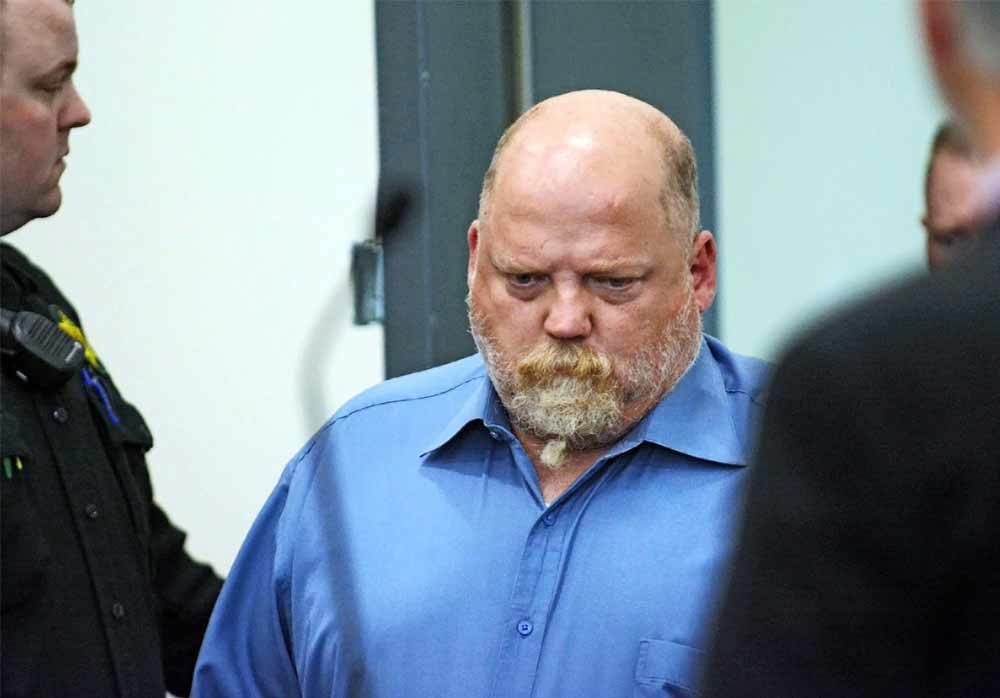
Suspecting Talbott, the police started following him to find ways to get his DNA. This was when the police got hold of a dropped paper cup that Talbott discarded.
Analyzing the DNA found on the cup, the investigators found that Talbott whose DNA is 16% Native American, is a match to the killer's DNA found at the crime scene. A cheek swab when Talbott was in custody, further confirmed the match.
"Yesterday, the killer had his last sleep in his own bed, his last coffee break, his last day of freedom," said Jay Cook's sister, Laura Baanstra. "For my family and I, it is our first day without the weight, the burning, the hurting, that comes from not knowing who killed my brother Jay."
When he was convicted, the 56-year-old Talbott is a longtime truck driver. His friends, family and neighbors weren't suspecting Talbott to have done such gruesome murders in the past.
The internet has given ways for people to upload personal information, which in turn gave opportunities that were otherwise impossible. But privacy advocates expressed concerns about using public DNA databases in police investigations.
They said that uploading DNA data can expose personal details of an entire family, from both close and distant relatives, without their consent. Furthermore, there is also an issue about ethical and philosophical when using DNAs for this.
Another similar case was one from 1967. A Parabon genealogist, CeCe Moore, helped solve a decades-old cold case by also digging deep through online DNA repositories. The information led to the arrest of Frank Edward Wypych, the killer of Susan Galvin.
But unlike Wypych, Talbott was alive when he was suspected.
Talbott was originally eligible for the death penalty. But since the Washington State Supreme Court declared death penalty as unconstitutional, Talbott faced a maximum of life in prison.
Previously, Parabon also used a similar method to help catch Joseph James DeAngelo, the 'Golden State Killer' who committed at least 13 murders, more than 50 rapes, and over 100 burglaries in California from 1974 to 1986.