 Jakarta is a city with a thousand words, in particular because it has almost everything. But the one thing it lacks indeed made the capital city of Indonesia famous: traffic.
The government has made various changes to the transportation system, but none have made a significant improvement. With the numerous methods of transportation, some newer contenders stepped right in the m middle of the war, the they are giving transportation via the internet.
While Jakarta has many other transportation methods such as buses and taxis from local companies, Uber stepped in. The company allows people to reserve transportation straight via their mobile devices, and they're seen as competitors especially because their fares usually come below than regular taxis.
Go-Jek or GrabBike have even lower fare because the startups are subsidizing them keep the fare much lower and to win customers.
These tech-related transportation services literally changed transportation in Jakarta. While most people that are daily urban commuters would say for the better, not everyone is liking them. With mobile apps delivering transportation available right on your doorstep, people can get through traffic with ease with the on-demand motorcycle taxis the Indonesian call "ojek", or battle the traffic in their comfortable car. The choice is theirs.
People that aren't liking them are those who feel "excluded", and those that have been hurt by the changes. Usual buses, mini-buses taxis, three-wheeled Bajajs and also the traditional "ojek" say that their income have decreased since tech stepped in. Ever since they started competing against those ride apps that are run by well-funded companies, they're business is meeting their fate.
While there are many peaks in which people ask the government to put a law against them, and to create the diversity which would be a healthy competing ground for everyone, on March 14th, 2015, thousands of public transport drivers took their anger on the streets of Jakarta to protest.
Taking It To The Streets
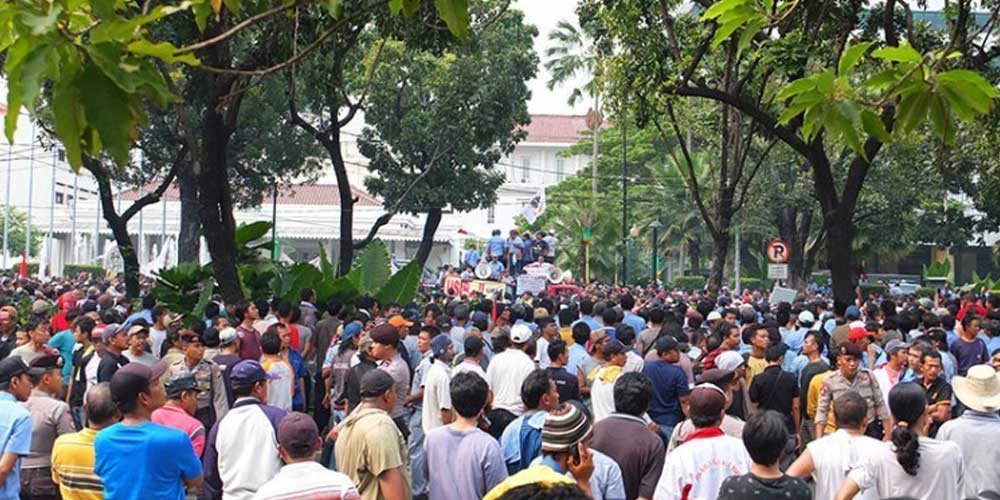
Started at 8AM in Jakarta, the crowd gathered in front of the City Hall before marching toward the presidential palace. Around 9 to 11AM, there were about 1,500 people which were mostly public transport drivers had showed up. According to policemen on the scene, the crowd was just getting larger by the minute.
What they want to protest is the unnequality. They say that their income had decreased significantly in the past few months to a point in which they often don't make enough money to pay back the owner of the vehicle. Bajaj drivers think that it's totally unfair for GrabBike and Go-Jek to charge so little for their rides.
Matching their fares is impossible for those traditional transportation methods.
For example, Bajajs were able to pick up passengers pretty easily from local markets and train stations or bus stations. With people ordering transportation via apps, there is a long line of Bajajs that weren't able to get customers like they used to.
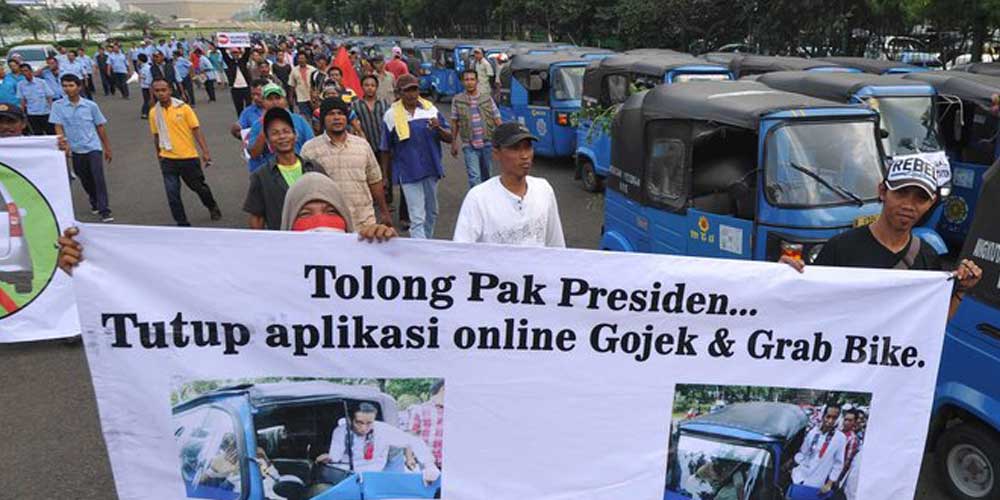
A price should be set, according to the drivers. They demand those transportation startups to register all their vehicles as public transportation vehicles, with the corresponding official yellow license plates. They also ask the government to limit what they do, or forbid them from operating at least until their legal status is made.
"They must get yellow license plates, pay for an operating license, pay taxes, then we can say we are in fair competition," said a Kopaja bus driver.
be more strict with these startups and forbid them from operating while their legal status is still pending.
During the protest, the protesters swept through any public transportation vehicles that weren't joining them, calling them not "loyal friends".
A Decision To Limit, The Decision To Allow
Buses, taxis and every other transportation method people in Jakarta were used to, were long available before tech came to intervene.
At the point, Jakarta's Governor Basuki Tjahaja Purnama (Ahok) that endorses technology and digitization in the administration he endorses, came into a difficult situation. What he wants is a "smart city" program, and for that matter he publicly endorsed the local business Go-Jek.
Ahok has negotiated with Malaysia's Grab and U.S.' He laid down some rules for them so they can operate legally within the city. According to him, car-based transportation services are illegal until those rules are met.
Being demoed, Ahok further highlight his decision. He wants to local media to increase their efforts to catch those unlicensed drivers.
The Ministry of Transportation asked the IT Ministry to block user access to services that aren't yet legal. The Tech Minister Rudiantara responded but refused to use blocking as a method of control. "From our ministry's perspective, this isn't relevant. When it comes to regulatory matters, that's up to the transportation ministry or the national transportation agency to handle."
Go-jek and others that are the on-demand two-wheeled taxis, are said to be the ones that hurt their businesses the most. In the past, Go-Jek has had its own controversies against traditional "ojek". But at the ministry's report, startup wasn't mentioned. The reason is because Go-Jek only offers motorcycle rides, and has long been an informal industry that thrives on its own. Since "ojek" are two-wheeled taxis that practically are motorcycles owned by citizens and the driver is mostly the owner, they were able to slip regulators. There is no practical way for the government to license its business, and for that no new law could be initiated against the drivers.

















































































































































































































































































