Getting yourself anonymous or untracked on the web is difficult enough when almost every websites and web services out there are deploying everything in their disposal to know their visitors better.
Speaking in technical terms, every web users share all of the same information with web pages they visit. And with all of the tracking, sharing and analytics widgets and codes, websites are recording engagements to give a "better" benefit for their users.
For those privacy concerned people, surfing the web while preserving their personal information is already difficult. While tracking methods by websites and web services are already enough to keep people at their toes, Facebook is one of the web giants with the most users, is now making them even more difficult to 'hide'.
The company has announced on May 26th, 2016, saying that it's starting to push its ads to every person out there - even if they don't have a Facebook account. Previously, the social giant was only showing targeted ads to its users. Now it says that it needs an extra data to make ads better, and that means to track everyone on the web down.
"Bringing People Better Ads" as Facebook described it, the change will impact everyone.
The move is part of the expansion of Facebook's Audience Network which allows publishers and developers to reach more people through Facebook ads. To initiate the strategy, Facebook now tracks people's browsing behavior to collect information about them, and that include how they use the "Like" button and other of its codes.
"Our buttons and plugins send over basic information about users' browsing sessions," said Facebook's ads and business platform vice president Andrew Bosworth. "For non-Facebook members, previously we didn't use it. Now we'll use it to better understand how to target those people."
Audience Network is Facebook's ad network for mobile apps. To target ads, it uses the same targeting method that powers Facebook in delivering ads, but now to go "beyond Facebook and into mobile apps,"
Launched in 2014, what it did was only to show ads to those people that are having Facebook accounts. Its success over the years has made Facebook the second largest mobile ad network after Google. But Facebook saw that 'border' as a drawback.
When talking about how Facebook tracks users within its "walled-garden" services, it's pretty obvious: Facebook has control of everything inside its 'garden'. But when it goes beyond its walls, Facebook needs to analyze more criteria because Facebook doesn't have any (that much) data on people outside its walls.
One of the ways is Facebook in leveraging the use of its Like button Facebook introduced in 2009. Since its launch, many websites around the world have been installing this plugin to enhance engagements. The plugins, whenever and wherever they show up, sends all information to Facebook. It records how people are interacting with it. Previously, those plugins were only tracking Facebook users. By lifting the limitation, Facebook can now track everyone, including those that never had or never used Facebook.
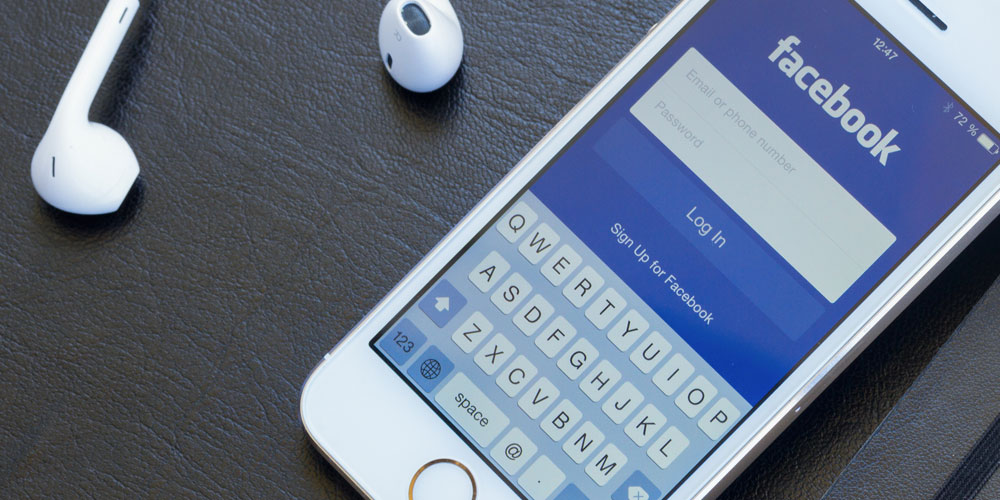
Trust Facebook, Or Not To Trust It?
Facebook in tracking non-Facebook users have caused many claims to land on the company.
For example, in 2015 a report at a Belgian court gave Facebook 48 hours to stop tracking non-users. And as a consequence, Belgians without Facebook accounts are now unable to view any Belgian Facebook pages. And in February, the French data protection agency CNIL, gave Facebook three months to stop tracking non-users in France.
But whether or not the company just said out loud that it wants to track non-users, the process of tracking have been commencing for a long time. This is nothing new. Just like many web services out there, they're all using their own tracking methods like previously mentioned. And for Facebook, it has been tracking people all along.
After all, Facebook uses cookies.
The announcement is seen as simply a method to bring itself into line with the EU regulations.
Facebook's deputy Chief Privacy Officer Stephen Deadman said:
But what makes this thing matter is because Facebook is big in both its size and reputation. It has influence that most others don't. And because Facebook is having its own ad network, privacy is nevertheless a concern.
Facebook said that it does not sell its users' personal data to make money from advertisers. However, the company itself use that data to make money from its own ad network. As a matter of fact, the company has made over $5 billion in revenue in its most recent quarter alone.
If you do want to keep out of these tracking method, Facebook did give some pointers. For example, users in North America and Europe could opt out via the marketing industry's relevant self-regulatory body such as the Digital Advertising Alliance, Digital Advertising Alliance of Canada and the European Interactive Digital Advertising Alliance
People that are signing up to them should have all networks to stop tracking them. But again, this is like trusting a fox to guard a hen's house.
Another method is the more traditional but more advanced. People need to put their browsers to incognito mode or private browsing in order for the browsers to disregard any cookies and history. People could leverage anonymity by uninstalling Flash, use add-ons to have more control on cookies and scripts, install ad-blocker, or use browsers that have reputation to put privacy as a focus such as the Tor browser.
And as for Facebook users, they can visit Facebook settings or tap the AdChoices icon next to an Audience Network ad.






















































































































































































































































































