
 The point of a live video is for people to see it "live". And for the social giant Facebook that is aiming to get more into real-time engagement, is shifting to push more live videos to users' News Feed as a complementary to its Live video feature.
In short, the social giant want to make sure than your friends actually see your footage.
Facebook's News Feed is where users put the most attention. With an endless stream of contents posted and shared by friends and Pages, users cant actually get lost between its time frames. A live video that is created for a "live" audience could be buried somewhere between those posts, and Facebook isn't liking it anymore.
With the News Feed having the ability to attract the most eyes, Facebook hopes to garner all those attentions to surface on-going video streams.
Facebook's Live video was previously launched for celebrities in August 2015 before slowly rolling it out to people with Verified Profiles and Pages. In January 2016, the feature came to all Apple's iOS users. And Facebook's attempt to push Live videos to its News Feed comes after the company gave Android users the option in late February.
What Facebook and Live do is to notify broadcasters' friends or fans when they're broadcasting a new footage. Facebook cuts the clutters and spam by only sending them push notification if the stream comes from a close friend, Page they have recently interacted with, or purposefully subscribed to their Live videos.
With the change, other users will have those Live videos being prioritize in their News Feed, and they should be able to catch them live while the streaming (recording) is still in progress. This way, they can leave comments to the broadcaster to see.
Live is essentially a way for its users to broadcast live video from their mobile devices. Because the feature is built inside Facebook's core app, users won't have to download any separate apps to watch those live videos. Video's will stream right on their Facebook feeds.
Facebook initiates the strategy makes a lot of sense since users happen to stream Live videos three times longer than saved ones.
In a blog post, Facebook's Product Manager Vibhi Kant and Software Engineer Jie Xu wrote: "People spend more than 3x more time watching a Facebook Live video on average compared to a video that's no longer live. This is because Facebook Live videos are more interesting in the moment than after the fact."
To initiate the effort, Facebook is changing how its News Feed works by making its algorithm to prefer on-going broadcasts a bit more than before.
A Change Aiming For A Bigger Audience, And Competitors
While showing live videos streams could be one of the most-wanted feature to some users, Facebook is betting big.
Facebook on its own is a huge success. It's advantages for having numerous features baked straight in its core is making the social giant a "giant" if compared to almost anything on the web. While it's doing great with its might, Facebook's News Feed wasn't built for real-time contents - it was designed to show the best contents it thinks for each of its users. This is because the News Feed algorithm prioritizes relevance over timeliness.
So if Facebook sees a content that it thinks should appeal to a user, even if it's an hour or days ago, it'll show it no matter what. Making users interact with others around live events has never been Facebook's niche.
This major weakness is somehow Twitter's and Periscope's main advantage. While the two aren't comparable to Facebook in many ways, they're both inherently real-time platforms. Something that Facebook couldn't do.
But Live is changing this. Prioritize contents that it thinks will appeal users doesn't work with Live, and this is Facebook's way to even the balance. The algorithm will rank streaming Live higher in the feed than old saved streams. And after those live streams end, Facebook will treat them as the usual saved footage.
Since live videos are already proven useful and common to show video game playthroughs, Facebook Live is again entering the territory of Google's YouTube and Amazon's Twitch.
But what makes Facebook Live videos a bit different to competitors is that it allows users to permanently save and show off their streams rather than deleting them after a specific amount of time.
One of the many means to expand
It's a big bet. But if it thrives, it'll allow Facebook to expand its dominance in many more places previously difficult for the social giant to enter.
As a start, Facebook sees Live as a potential to help celebrities leverage their brands and connect with their followers, previously initiated by its Mentions app.
"'Live' is going to be an awesome thing for public figures ... imagine your favorite public figure or politician having the power to broadcast from their pocket, go live, have an audience of thousands of people," said CEO Mark Zuckerberg in a Q&A event. "I think you're going to see a lot of that on Instagram and Facebook."
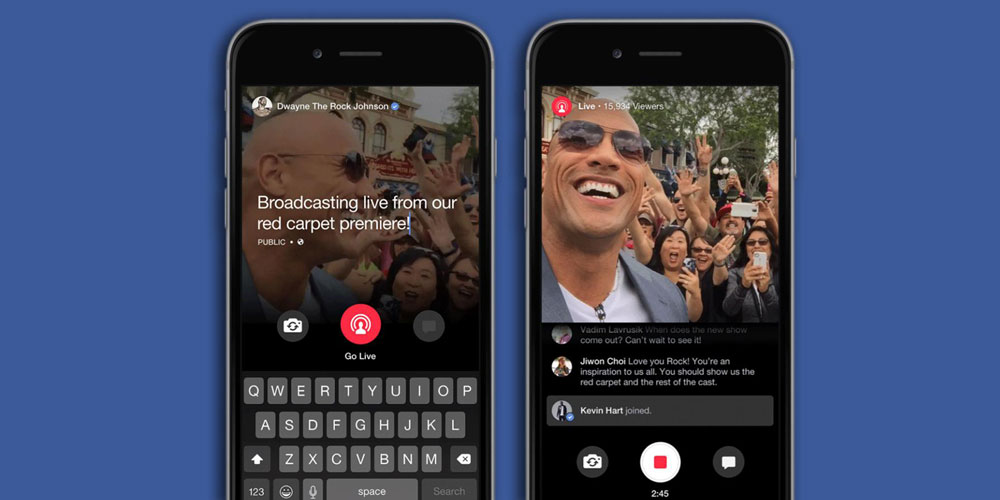
While this isn't the first time Facebook has tried recruiting famous people to use some part of its service, but it's the first time the company uses a pitch as an incentive.
Facebook's COO Sheryl Sandberg that was in Los Angeles, was also chatting up talent agencies about this plan where she's trying to sign up a small group of test subjects.
While this may not promise a huge sum of money in return for the social giant in a short term, it's a big deal because now the company can attract brands and companies that were previously shy on ads and licensing contents or paying creators. The main idea is in a long-term: Facebook thinks the service will generate more ad revenue for the company. Since Facebook is not paying celebrities directly, it can share the ad revenue with those who generate it, in the same way as content creators.
Initially, Live isn't having any ads and the company still hasn't figure out how it wants them to show. So at the meantime, Facebook doesn't want to oversell the amount of money that people can make on the platform.
While money is certainly the goal, Facebook is not directly approaching it aggressively. Facebook's move is not similar to Netflix or YouTube, it's trying to approach its goal by keeping people away from competitors.
And for many reasons, with Facebook packing a huge amount of features under its sleeves, it really does have the advantage. Other features, like trending topic, live broadcasting for journalist and a sports scores hub, help Facebook feel more current than it did in the past.